One day an email landed in my WhatsApp inbox from a collector in Lisbon. His parents had given him a Casio W-95 for his birthday back in 1991 or 1992, and it had spent most of the years since then sitting in a drawer. He wanted to wear it again, but it came with a few problems. The battery drained fast, the beep was weak and crackly, and when he asked Casio for help, they turned him down because the model was simply too old to service.
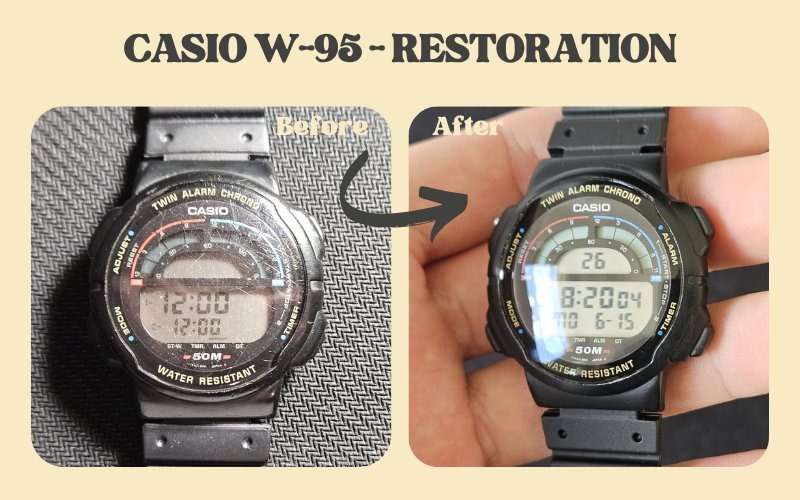
Before he shipped anything across Europe, we ran some basic diagnostics together remotely. I walked him through a fresh CR2016 battery and an AC reset, which brought the core functions back to life. That sorted the easy part, but it also exposed the real trouble: the buttons. The “mode” key fired at the lightest touch and would not spring back, while “adjust” had gone stiff and heavy. That pointed to one thing, a full teardown and a proper clean.
The W-95 is one of those honest early-90s digitals that Casio seemed to build to outlast its own service department, so writing it off was never an option. 😄 He posted it over to me in Poland, and the real work began.
What Did the Watch Look Like When It Arrived?
When the package arrived from Lisbon and I finally had the watch in my hands, the faults from our remote session were easy to confirm. The “mode” button fired on the lightest touch and stayed down, while “adjust” took real force to move. The beep was there, but thin and crackly rather than the sharp tone a W-95 should give.
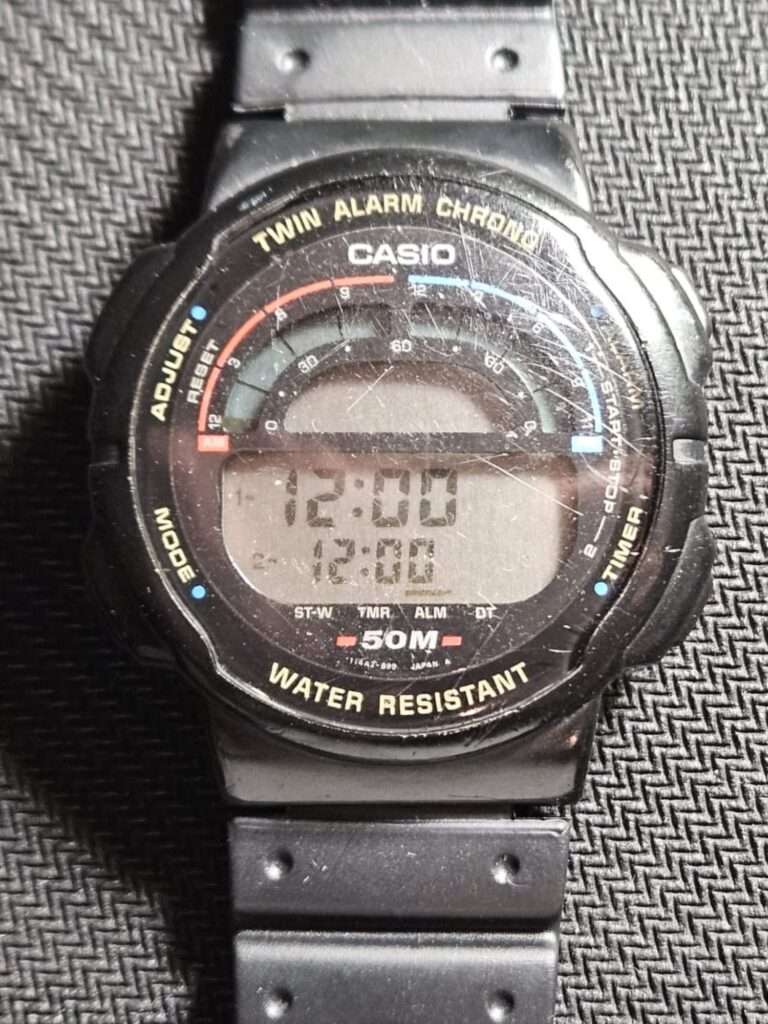
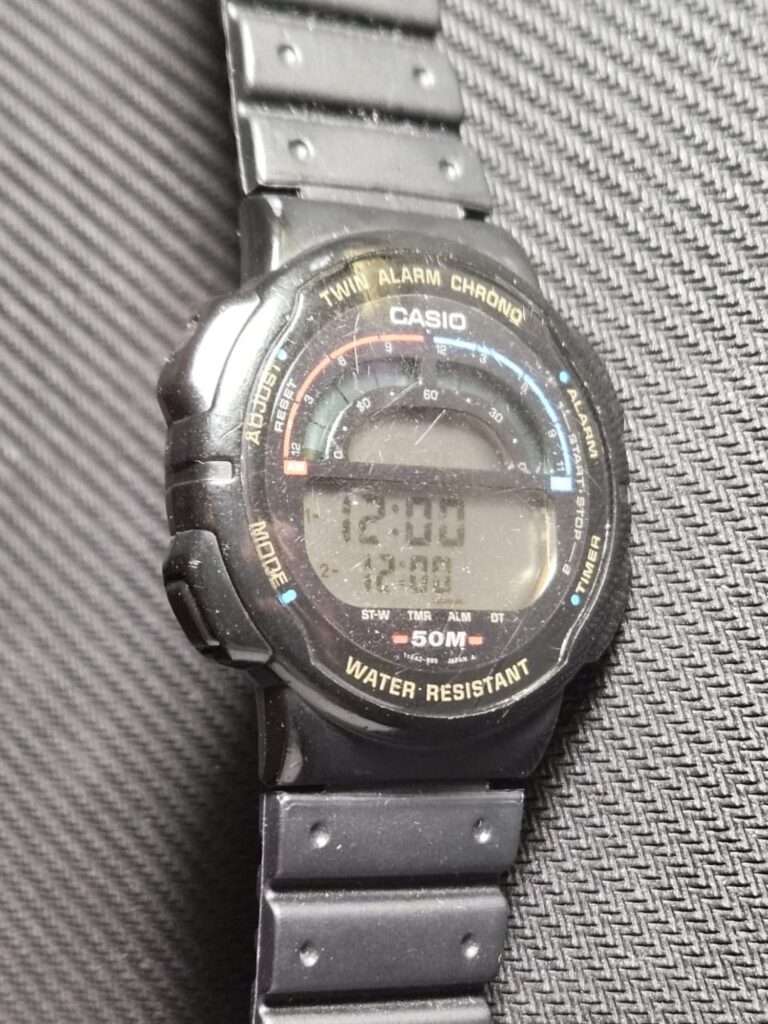
The cosmetic side told the story of a watch that had been worn hard and then forgotten. The acrylic crystal carried a web of scratches with a few deeper gouges, the case had picked up its share of knocks, and the metal caseback was scuffed and dull. The strap was the saddest part: the original black resin band with the Casio name on it, worn out and almost impossible to replace today using fair prices.
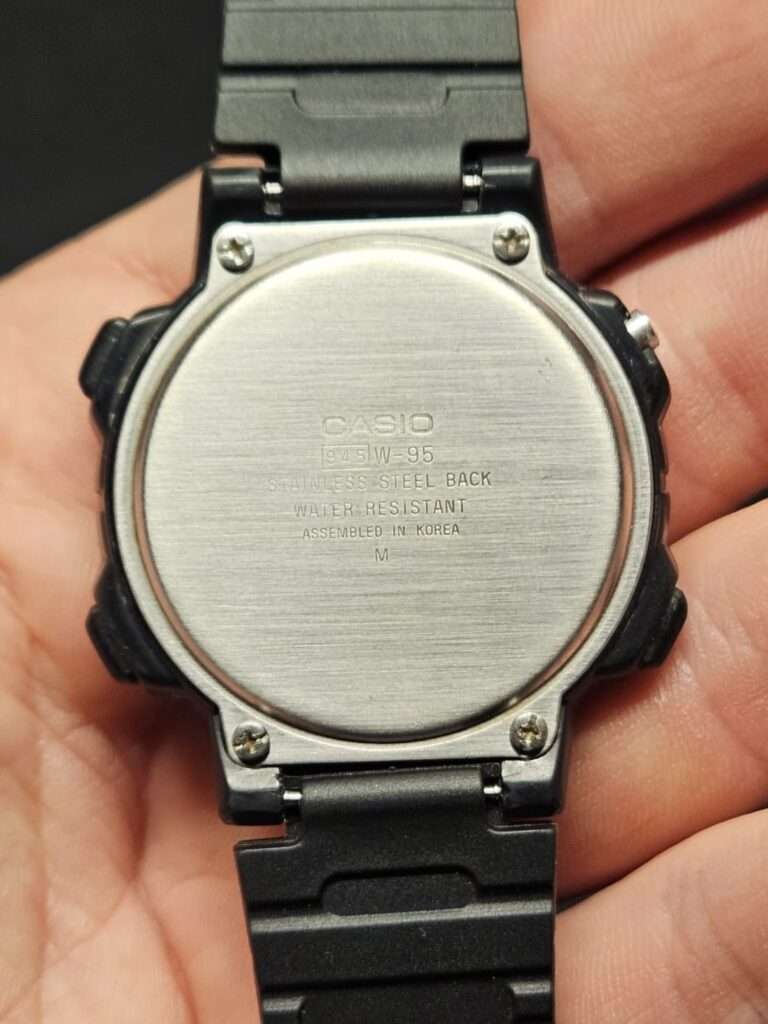
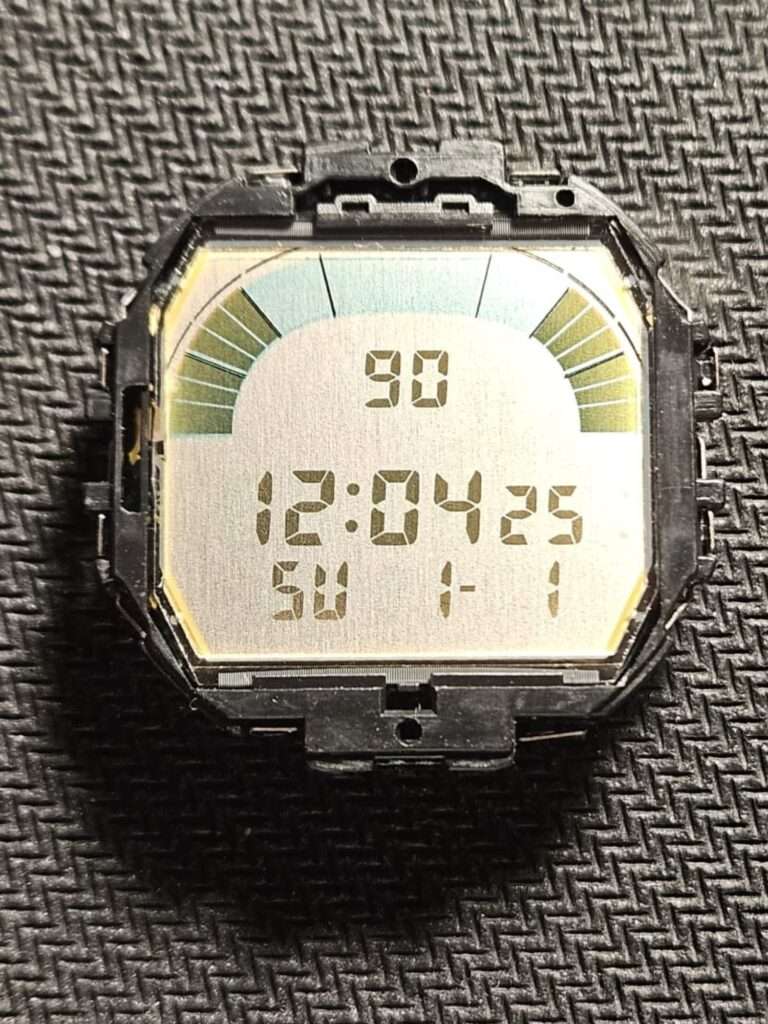
None of it was beyond saving, though. The module was complete and the screen came up clear once powered, so this was a watch that needed time and patience more than rare donor parts. With the full picture in front of me, I could start the work.
Casio W-95 – Restoration Process
With the diagnosis confirmed, I could move through the work in a logical order: get the watch running properly first, then make it look the part. Here is how it went, step by step. 🛠️
Step 1: Disassembly, Cleaning, and the Buttons
With the watch open on the bench, I gave the whole module a full strip-down and clean, paying special attention to the area around the buttons. That is where the answer was hiding. The original button gaskets had gone hard with age, and together with years of built-up grime they were jamming the keys. A stiff “adjust” and a hair-trigger “mode” suddenly made sense.
A surface clean would never have fixed this, so I replaced the tired gaskets with better ones pulled from one of my donor watches. I lubricated them, reseated them in the case, and tested the action. Both buttons now pressed and sprang back exactly as Casio intended.
Step 2: Fixing the Sound
The weak, crackling beep was next, and at first it sounded like a dying buzzer. It was not. The real cause was a poor connection between the metal cage contact point inside the module and the piezo buzzer on the caseback. A fault like this is sneaky, because a bad contact mimics a buzzer that is on its way out.
Once I cleaned up and restored that connection, the sound came back to full, clean volume. The W-95 beeped sharp and loud again, the way it would have on the day it left the factory.
Step 3: Replacing the Polarizing Film
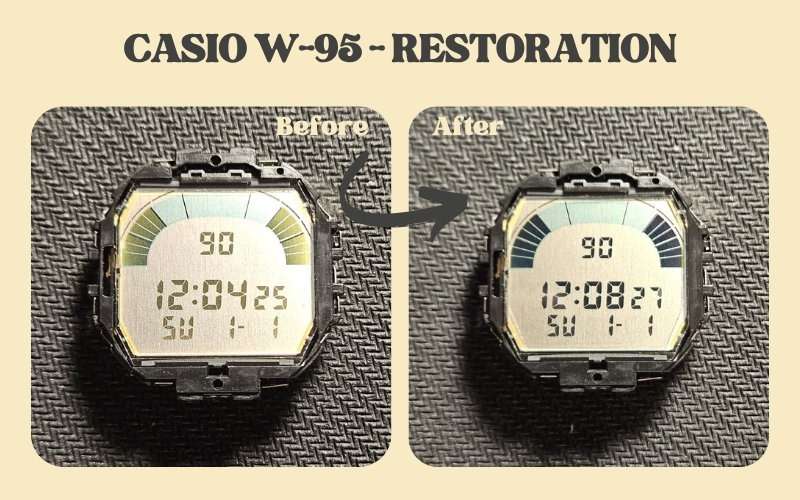
While the module was still open, one more detail caught my eye. The display was not as crisp as it should be: the segments showed up in a washed-out, brownish tone instead of solid black. The culprit was the polarizing film, which had aged and lost its punch over the decades. I peeled off the tired old film and fitted a fresh polarizer in its place. The change was instant, the segments snapped from faded brown to crisp, clean black, and the whole screen became far easier to read at a glance.
Step 4: Polishing the Acrylic Crystal
The acrylic crystal needed the most patience of all. I started with the super glue method, using cyanoacrylate to deal with the deepest gouges. With a thin pin I placed tiny drops of glue directly into each gouge, filling them from the inside out. This builds the scratch back up with fresh material instead of just sanding it away.
Once the glue had fully cured, I worked through the grits in order: 800, 1000, 1200, 1500, 2000, 2500, 3000, 4000, 5000, and finally 7000. The coarser papers knocked back the excess glue and brought the surface level with the rest of the crystal, then each finer paper erased the marks left by the one before it, until the repaired spots blended in completely.
The last step was the satisfying one. I used Polywatch on a felt pad to polish the crystal, and that is what brought back the clarity and depth. The acrylic finished with a smooth, glassy shine you would never guess had been full of scratches.
Step 5: Refinishing the Case and Caseback
For the case and caseback I used the same opening process as the crystal. The super glue method went into the deeper scratches first, the same thin pin and tiny drops, filling each one from inside before it cured.
The sanding went a different way, though. This time I stopped at 2500 rather than climbing all the way to 7000. The case was never meant to shine like glass, so a mirror polish would have looked wrong on a tool watch like the W-95. A matte, satin finish suits it far better.
To get there I reached for a white melamine magic eraser, working the metal both wet and dry. It evened everything out into a clean, uniform satin surface that matches the character of the watch.
Step 6: Replacing the Strap
The strap was the one part I could not save. The original black resin band with the Casio name simply is not out there anymore, at least not in a wearable state. Rather than send the watch back on a tired, crumbling strap, I sourced a matched replacement in the same pattern and fitted it. It keeps the right look on the wrist, even if it is not the factory original.
The Result
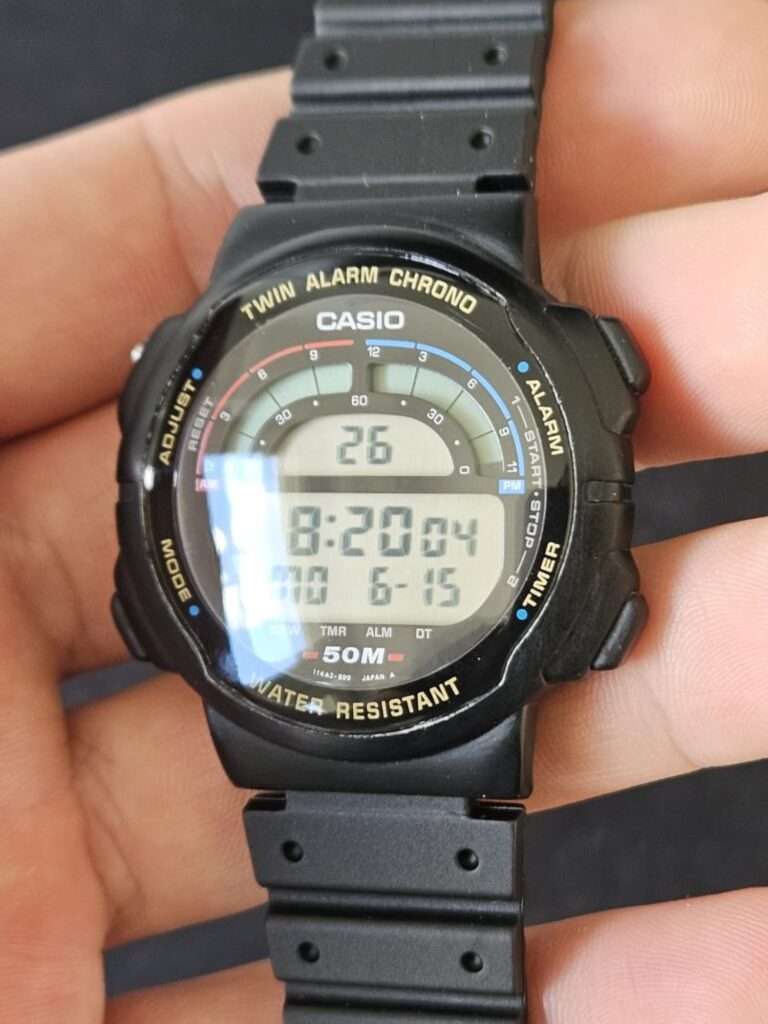
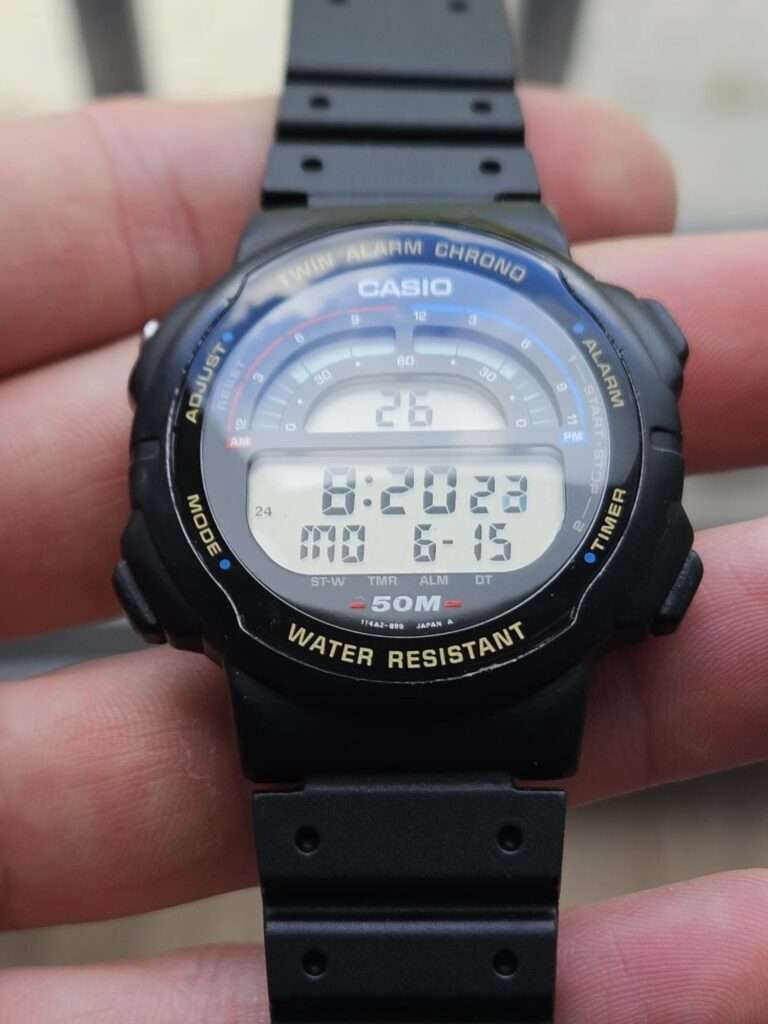
After all of it, the W-95 came back to life. The buttons press and spring back with a clean, positive click, the beep is sharp and loud again, and the screen reads clear and crisp. The crystal is glassy where it used to be a mess of scratches, and the case carries an even satin finish that suits a tool watch far better than a mirror shine would. After years in a drawer, it is ready for daily wear once more, and the collector in Lisbon was genuinely happy to have it back.
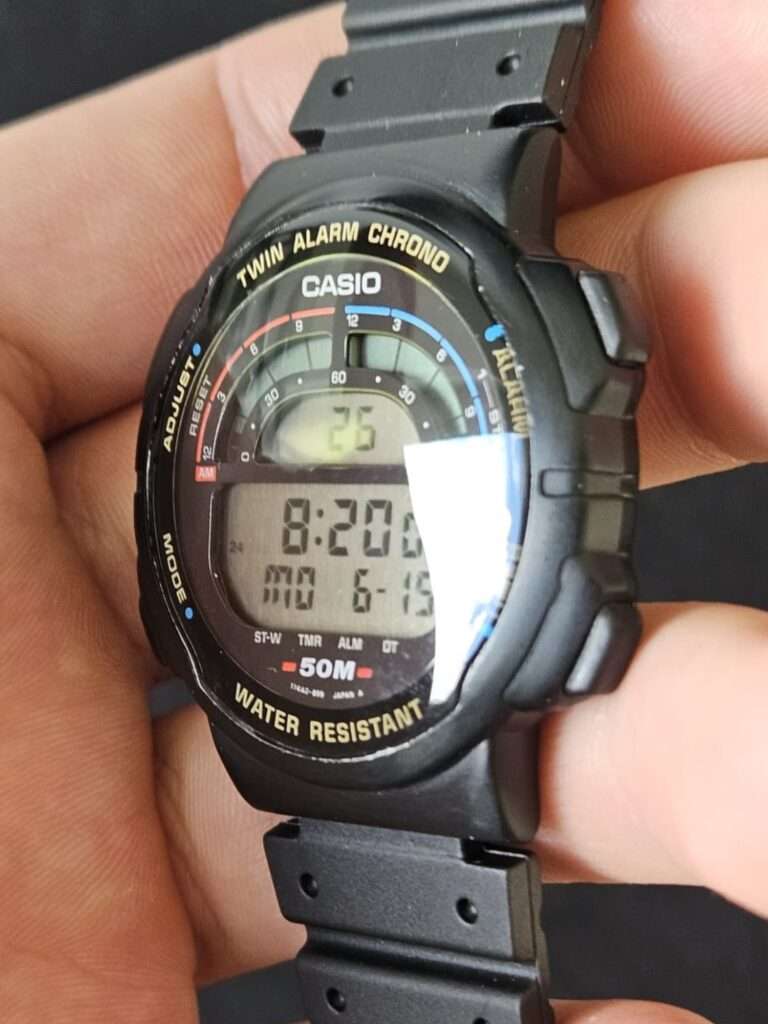
The one honest note is the strap. It is a faithful match in the same pattern, but it is not the factory original, because that part has effectively vanished from the market. If anyone reading this is sitting on a stash of original W-95 resin bands, you know where to find me. 😄
What I like most about this one is that Casio had written the watch off as too old to service, and yet a teardown, a set of donor gaskets, a fixed buzzer contact, and a lot of patience were all it took to bring it back. That is the whole appeal of these old digitals.
Would you chase down an original strap for as long as it takes, or fit a clean replacement and just wear the watch? Let me know in the comments.
Want Your Vintage Casio Restored?
This Casio W-95 is one example of the restorations I do. I restore vintage Casio watches for collectors and enthusiasts around the world, everything from straightforward cleanups to more complex repairs like swapping hardened button gaskets from donor stock and bringing a dead piezo buzzer contact back to life.


You can see more of my previous projects here: 👉 casiorestore.com/projects-restorations
I work mainly with collectors across Europe and shipping is not a problem. I have already completed restorations for collectors from the UK, Scotland, Sweden, Ireland, Spain, France, and more. Every project is discussed individually, so we always agree on the scope and price before starting. 🛠️
The process is simple:
- Write to me on Instagram: @vintage.casio.restore
- Or send me an email: vintagecasiorestore@gmail.com
- Describe the problem with your watch, send clear photos, and tell me your country.
If your vintage Casio deserves a second life, I will be happy to help. 👍

Daniel is the person behind Vintage Casio Restore, a project dedicated to restoring and documenting vintage Casio digital watches from the 80s and 90s. Based in Poland, he combines technical precision with a passion for retro design, bringing forgotten models back to life and sharing their stories online.Outside the workshop, Daniel works in a digital agency, managing SEO and content strategy for technology clients, blending his professional experience with his love for classic tech and design.
Leave a Reply