
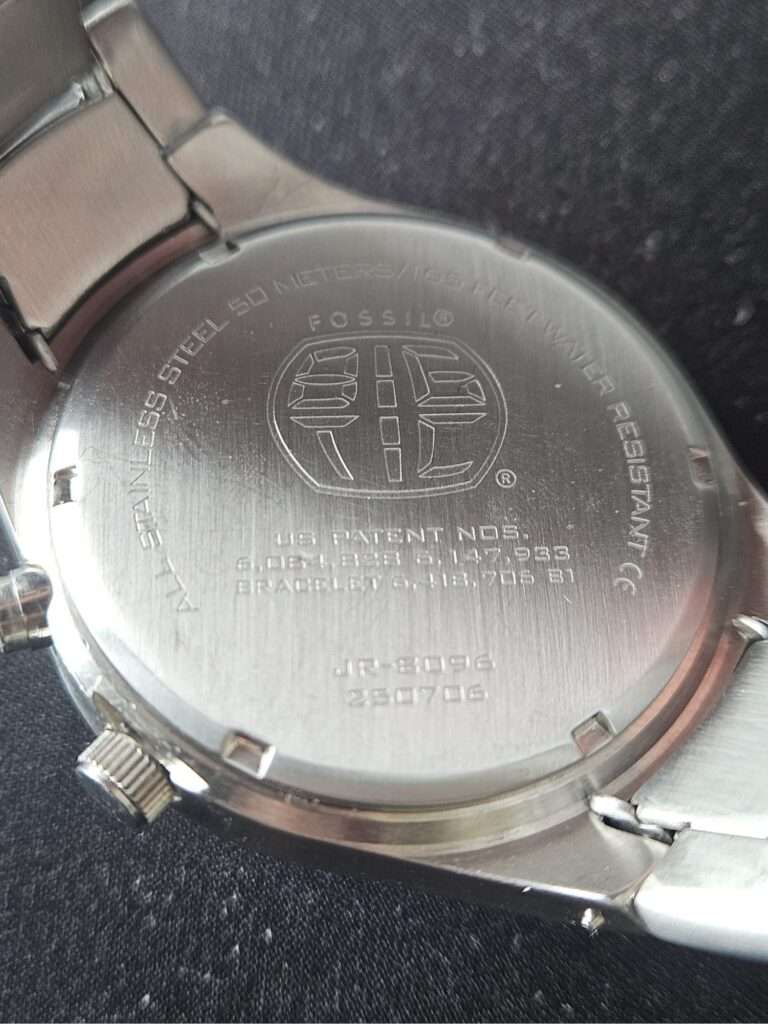
One day at a flea market, I spotted a Fossil Big Tic JR8096 sitting on a vendor’s table. Not a Casio, but this one deserved an exception.
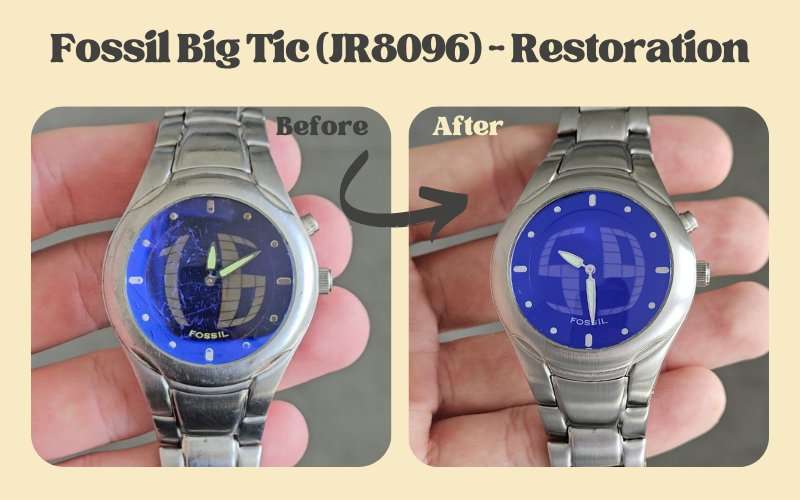
The Big Tic runs two independent modules: analog hands for hours and minutes, and a separate LCD displaying the seconds. Quirky dual-module design, a look straight out of the early 2000s, the kind of watch a Casio collector notices immediately and most people walk straight past. 😄
The vendor said it only needed a new bracelet link. The price reflected that. I bought it and made my first mistake right there. The Big Tic has no seconds hand on the analog side, so there is no obvious way to tell at a glance whether the analog module is running. I should have set the minute hand to 12:00, waited a moment, and checked. I didn’t. Only after the money changed hands did I find out the analog module was dead.
I already knew this restoration would be different from my usual Casio projects. Most of what I work on is plastic and acrylic. This one was stainless steel and mineral glass, harder materials, different rules, less room for error. But that was exactly the reason to take it on. 🛠️
What Did the Watch Look Like When It Arrived?
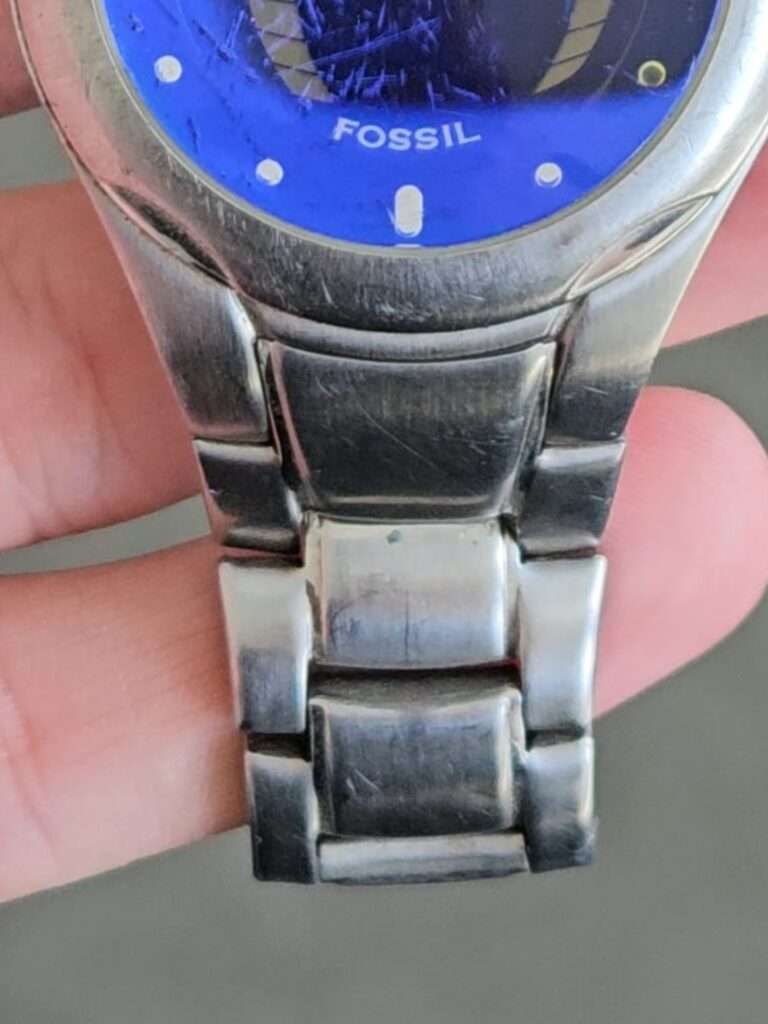
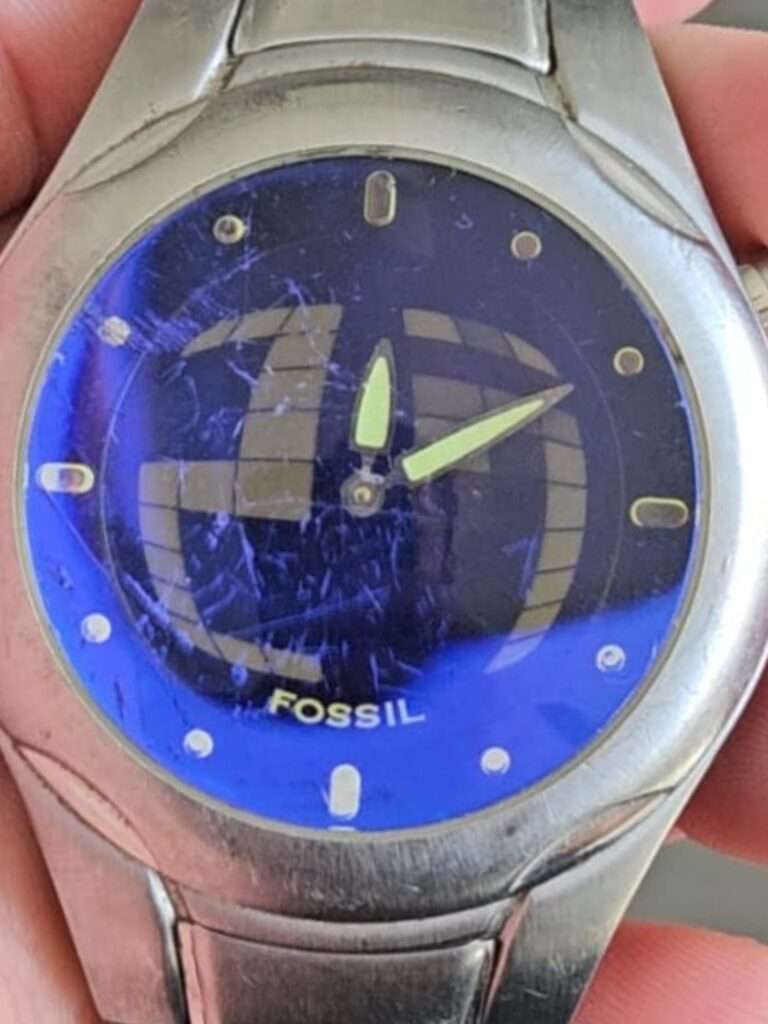
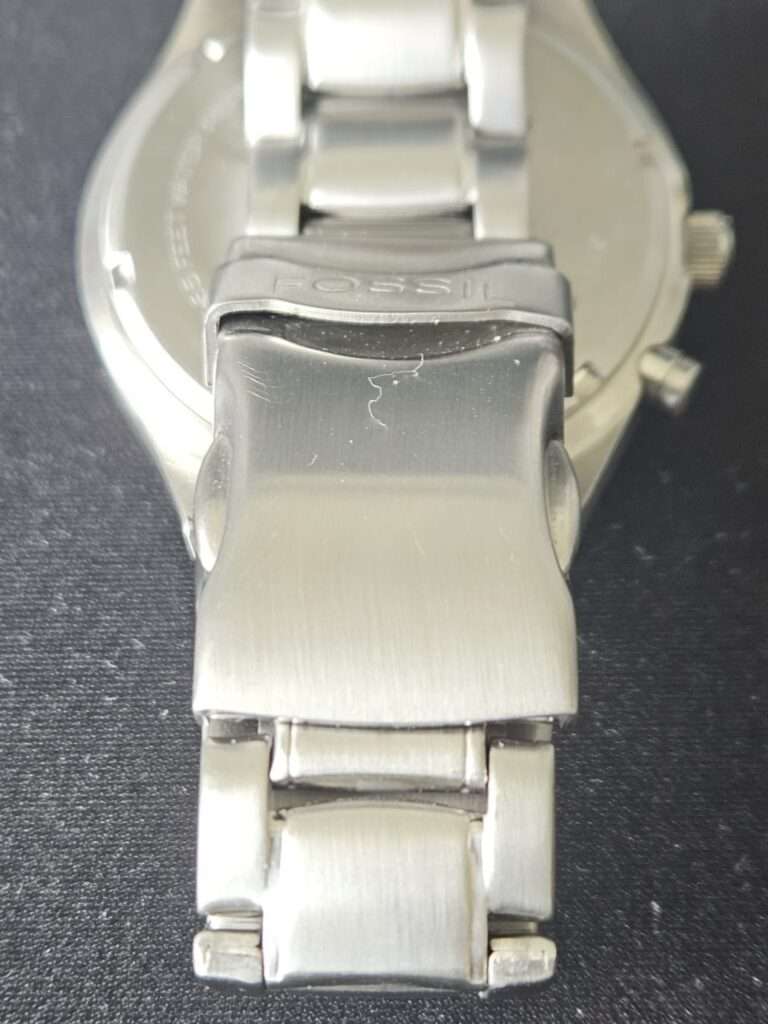
The bracelet, case and clasp were deeply scratched. The kind of wear that comes from years of actual use, not storage. The mineral glass was scratched, dull and cloudy where it should have been clear. One bracelet link was missing, the vendor had mentioned that upfront.
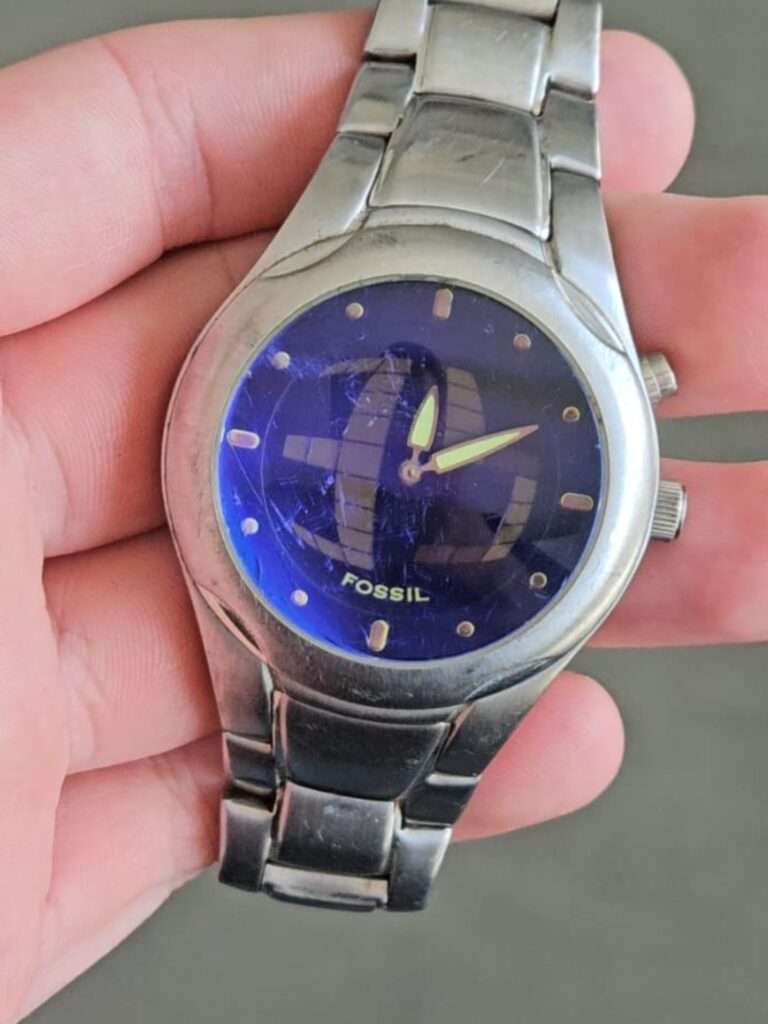
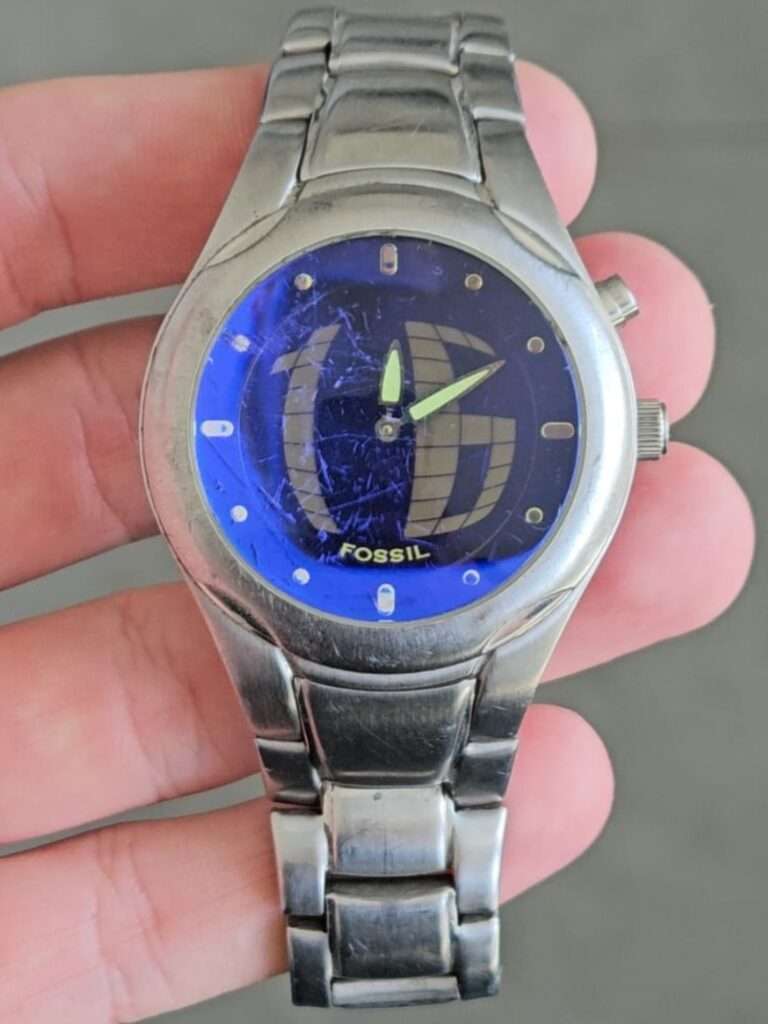
The bigger problem was inside. When I opened the case and pulled the analog module, I found a leaked battery, a contaminated gear train and a damaged coil. No cleaning this one back to life. The whole module needed replacing.
The digital side was fine. LCD working, seconds ticking. At least something was. 😄
Fossil Big Tic JR8096 – Restoration Process
Step 1: Disassembly and Diagnosing the Analog Module
The first thing I did was disassemble the watch and try a fresh battery in the analog module. Nothing happened.
After a closer look it was clear why. The old battery had leaked, the gear train was dirty and contaminated, and the coil was damaged. I tested the coil and confirmed it was gone. No point trying to clean or repair it.
I needed a replacement module. After some searching I found an original Ronda 762 on AliExpress, the correct module for this model, with H5 hand height and no seconds hand. Good price, free shipping. I ordered it and moved on to the visual restoration while waiting for it to arrive. 🛠️
Step 2: Refinishing the Case, Bracelet and Clasp
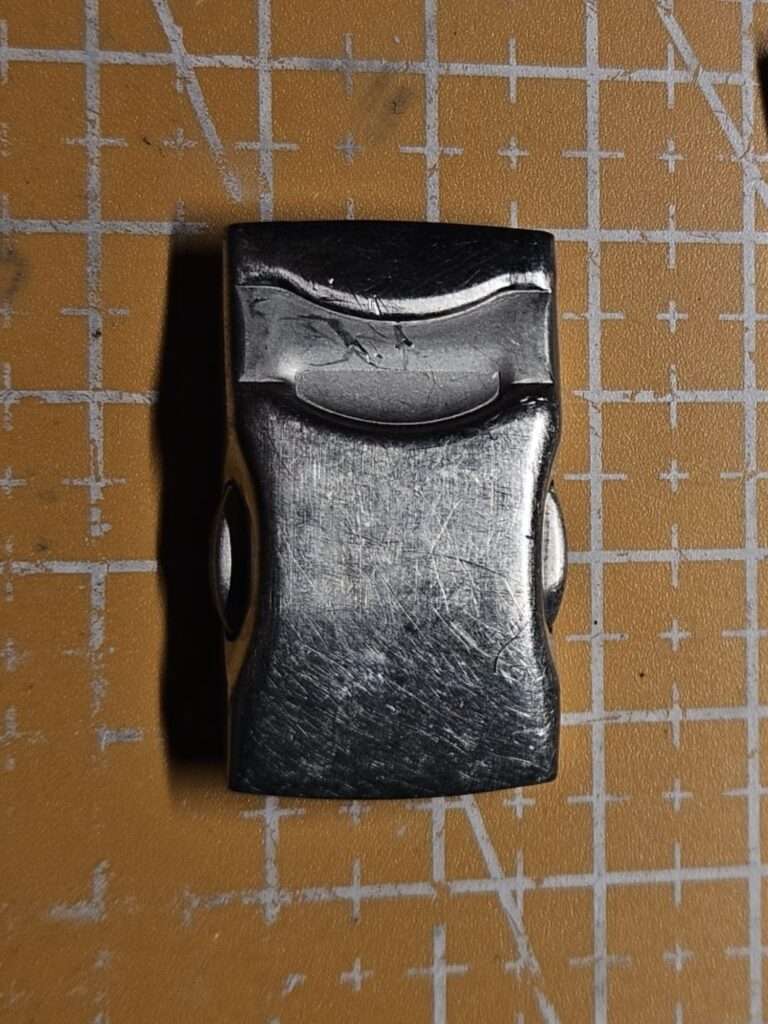
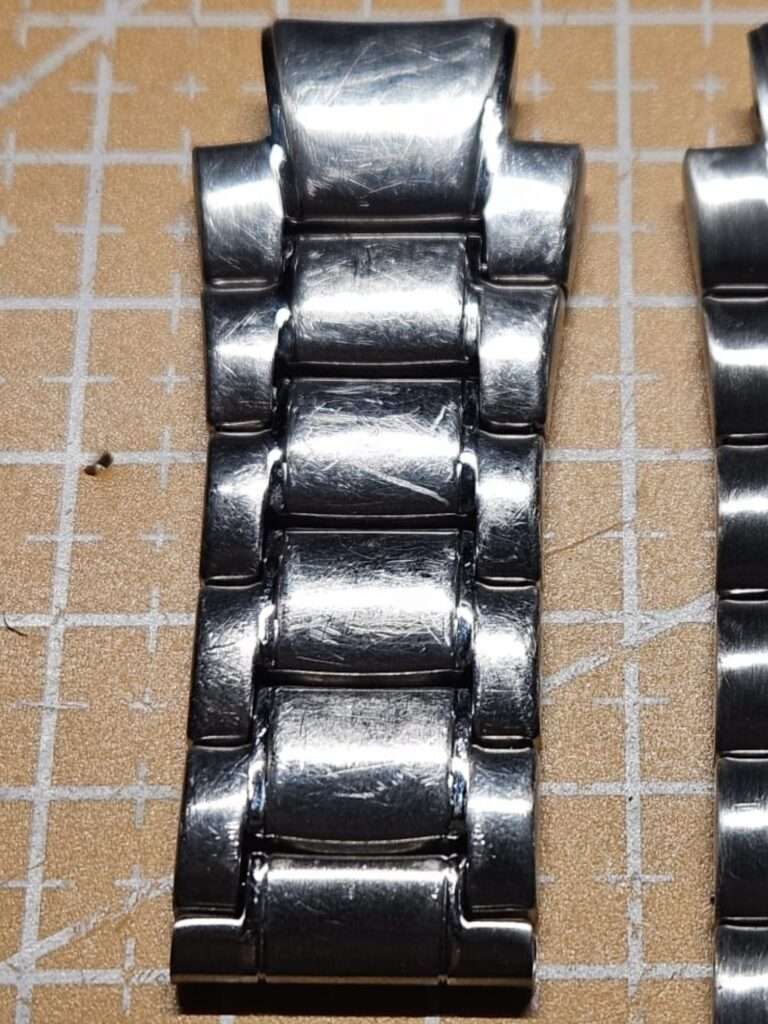
This was the part I was most curious about. Most of my Casio projects are resin cases and acrylic crystals. Stainless steel is a different material and requires a different approach.
I sanded the bracelet, case and clasp using my Pakside hand sander with hook-and-loop sandpaper sheets. I started at 240 grit and worked through the full sequence: 240, 400, 600, 800, 1000, 1500 and 2000 grit. Each pass removed the scratches left by the previous one. It takes time but there is no shortcut here.
The original finish on the Big Tic is satin, not polished. To bring that back I used an abrasive pad and rubbed in one direction only. That single direction is what creates the satin look. If you go back and forth you lose it.
The tricky part was keeping the flat surfaces clean and separate. I used copper tape to mask off the areas I wasn’t working on, sanded the side edges of the case first, then masked those and worked the front. I did the same with the bracelet and clasp.
The bracelet was actually the easiest part. Flat links, clear direction, satisfying result. 👍
Step 3: Polishing the Mineral Glass
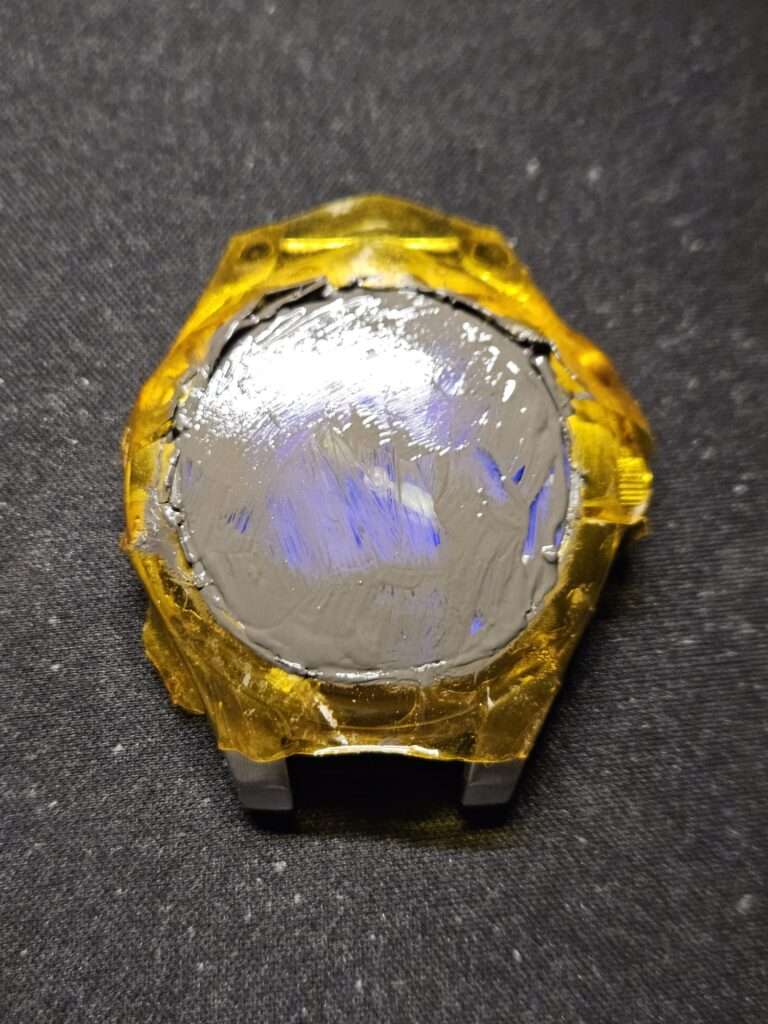
This was the step I was least confident about. Mineral glass is much harder than acrylic and does not respond the same way. With acrylic you can use Polywatch paste and be done in minutes. Mineral glass needs more work.
I remembered a guide posted on Reddit in r/casiovintage about polishing deeply scratched mineral glass. I had saved it for later and this was finally the moment to use it. You can find it here:
The guide recommended starting with low grit sandpaper and finishing with Polywatch Mineral Glass paste. I followed it closely.
First I masked the area around the crystal with copper tape, leaving only the glass exposed. Then I sanded the crystal starting at 240 grit and worked up to 2000-3000 grit, wet sanding through each step. After that I applied Polywatch Mineral Glass Repair paste, polished it out, and finished with Polywatch Mineral Glass Finish.
There was one extra challenge. The guide was written for a flat crystal. The Big Tic has a spherical crystal, curved across the surface. Sanding a curved surface evenly is harder than sanding a flat one. I had to adjust my technique and work more carefully around the edges.
The result was dramatic. The crystal went from cloudy and dull to clear. A few scratches are still visible at certain angles, I want to be honest about that. But compared to where it started, the difference is night and day. I had no idea mineral glass could be polished this well. 😄
Step 4: Fitting the New Movement and Assembly
The Ronda 762 arrived while I was finishing the visual restoration. Good timing.
I fitted the new movement into the case, set the hands and assembled the watch. First power-up after assembly, the analog movement was running. Hours and minutes tracking correctly, digital seconds ticking independently on the LCD. Both modules working together for the first time since I bought the watch. 👍
The whole thing came together better than I expected when I first opened that package at the flea market. 🛠️
Final Result
The Fossil Big Tic JR8096 came out better than I expected when I first spotted it at that flea market.
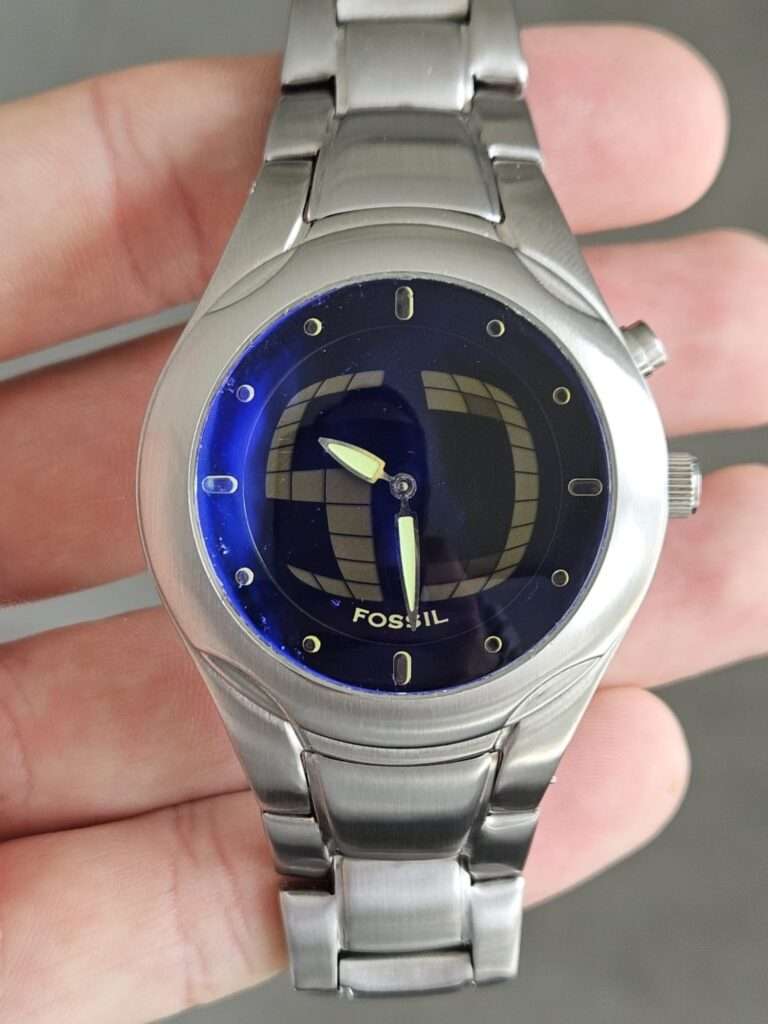
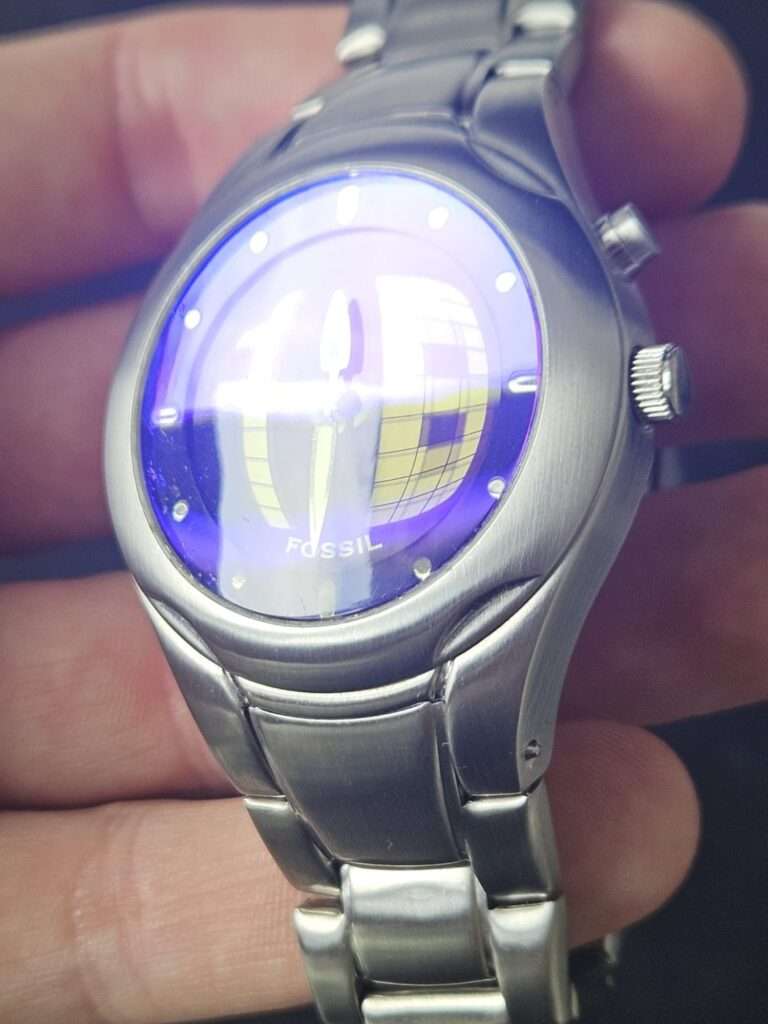
The bracelet, case and clasp have their satin finish back. No more deep scratches, no more dull surfaces. The crystal is clear, a few scratches visible at certain angles but nothing like what it was before. The missing bracelet link is replaced. The analog movement is running, the LCD is ticking, both modules working exactly as they should.
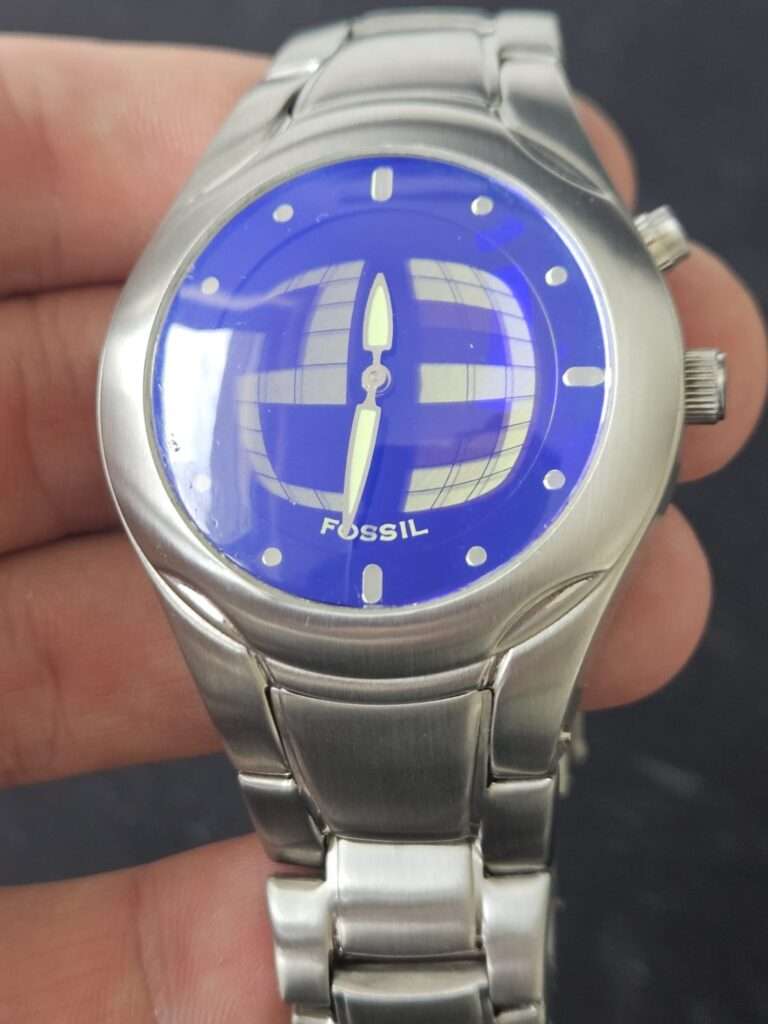
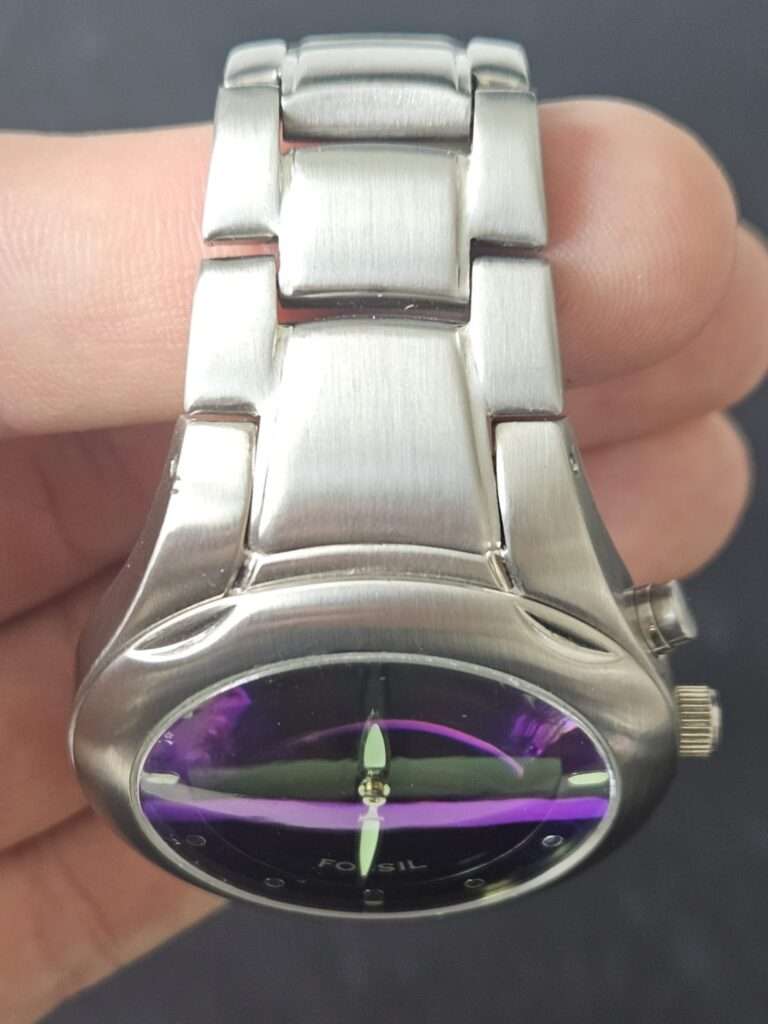
This one was different from my usual Casio restorations. Stainless steel and mineral glass pushed me to learn techniques I had never used before. The copper tape masking, the full sanding sequence on steel, polishing a spherical mineral crystal for the first time. Every step taught me something new.
The Big Tic is a quirky piece of early 2000s design that most people have never heard of. A dual-module watch that never got the attention it deserved. Glad I took the risk at that flea market, even if I made a rookie mistake getting there. 😄
Have you ever worked with mineral glass? Did you manage to polish it out completely or did a few scratches survive the angle test too? Drop a comment below, I am genuinely curious. ⌚
Want Your Vintage Watch Restored?
This Fossil Big Tic JR8096 is one example of the restorations I do. I restore vintage watches for collectors and enthusiasts around the world, everything from straightforward cleanups to more complex repairs like movement replacements, crystal polishing and case refinishing.
You can see more of my previous projects here: 👉 casiorestore.com/projects-restorations


I work mainly with collectors across Europe and shipping is not a problem. I have already completed restorations for collectors from the UK, Scotland, Sweden, Ireland, Spain, France, and more. Every project is discussed individually, so we always agree on the scope and price before starting. 🛠️
The process is simple:
- Write to me on Instagram: @vintage.casio.restore
- Or send me an email: vintagecasiorestore@gmail.com
- Describe the problem with your watch, send clear photos, and tell me your country.
If your vintage watch deserves a second life, I will be happy to help. 👍

Daniel is the person behind Vintage Casio Restore, a project dedicated to restoring and documenting vintage Casio digital watches from the 80s and 90s. Based in Poland, he combines technical precision with a passion for retro design, bringing forgotten models back to life and sharing their stories online.Outside the workshop, Daniel works in a digital agency, managing SEO and content strategy for technology clients, blending his professional experience with his love for classic tech and design.


Leave a Reply