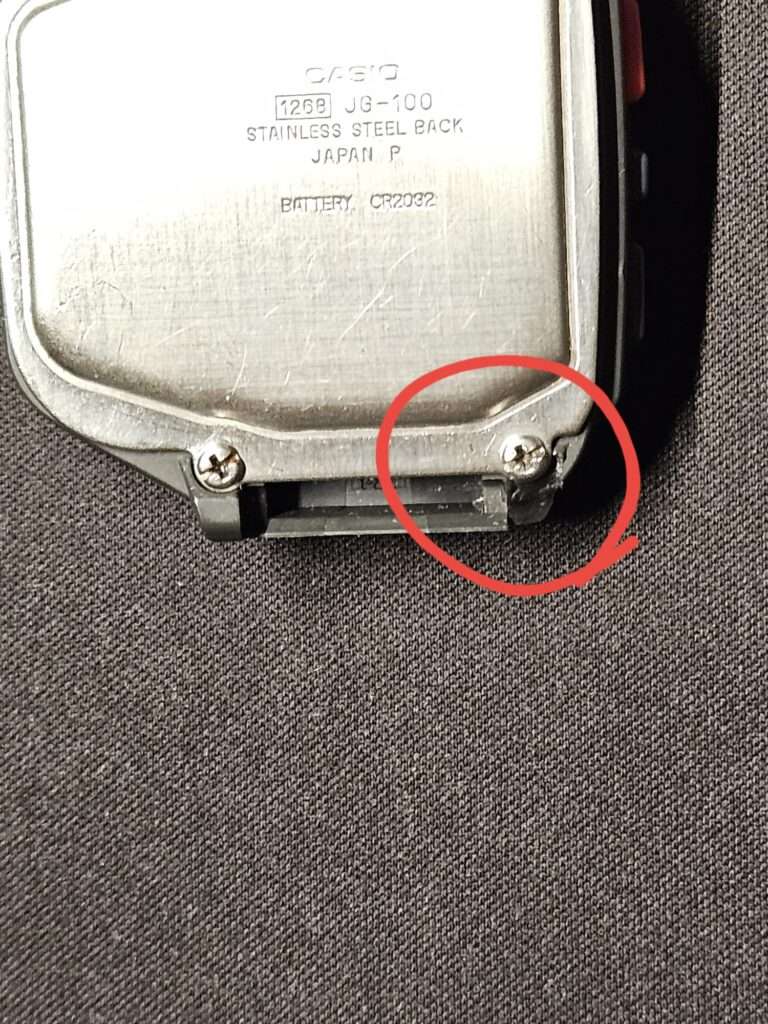
I found this Casio JG-100 during a late-night search on eBay. The listing had only a few photos, but one thing was clear. One lug was broken. For most buyers this is the end of the story. For me it was a familiar challenge. I fixed several broken lugs before, so I felt ready to try again.
The lower price made the decision easier. The damage scared away other collectors, so the auction stayed quiet. I placed my bid and won the watch. Right after that something unexpected happened. Because the seller was from the UK, I had to pay an extra fee. It annoyed me enough to write a small rant on Reddit 😅. Even with this extra cost, the total price still felt good for a JG-100, especially if I could restore it properly.
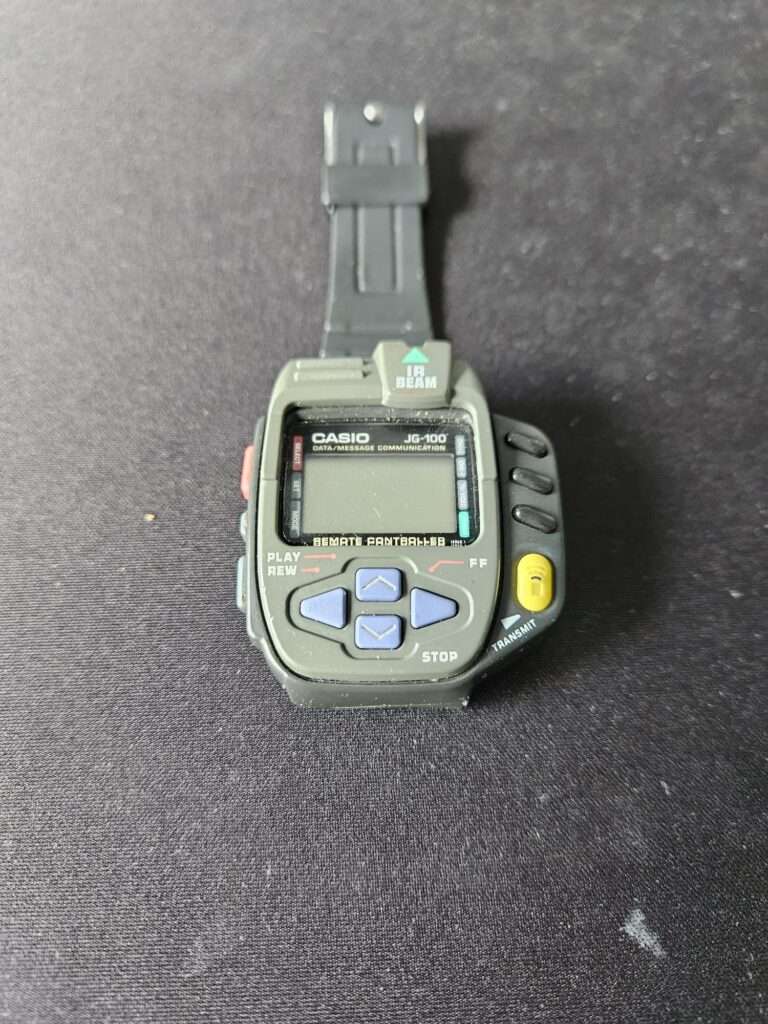
I always liked the JG-100 because it represents that fun 90s era of Casio. Big case, IR functions, gaming features, and a design that looks like a mini gadget from a sci-fi movie. Saving a watch like this is always worth the effort.
When the package arrived, I tested the module right away. A quick battery swap with a CR2032 brought it back to life. This confirmed that the watch was a good candidate for a full restoration. After that I started planning the project, with the broken lug being the main repair. This kind of reconstruction takes time and patience. Baking soda, super glue, careful shaping. But it works, and I wanted to give this JG-100 a second life.
What Was the Condition of the Watch When I Got It?
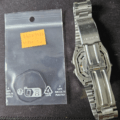
The Casio JG-100 arrived in a small padded envelope. I opened it carefully and checked the case right away. The broken lug was easy to see. The part that holds the spring bar and screw was completely missing. This was the main problem and the reason for the low price.
The rest of the case looked better than I expected. The resin had normal wear for a 90s watch. It had small scratches but no deep damage or cracks. The shape of the case was still strong. This is always a good sign for a restoration.
Next I checked the crystal. It had several scratches across the surface. None of them were very deep. I knew I could remove them with Polywatch and a microfiber cloth. No need for sandpaper in this case.
When I pressed the buttons, I felt something was wrong. Each button was stuck. They did not move or click. It felt like glue inside. I suspected dried sugar from a drink. This is common with old watches that were used during sports or school days. A good cleaning would be necessary.
The listing said the watch did not work. I was not surprised. Many JG-100 watches stop because of an empty CR2032 battery. I planned to test this first before starting any other work.
Overall the watch had one serious issue, the broken lug. The rest of the problems were smaller and fixable. With some time and the right tools, I knew this watch could be saved and worn again.
Restoration Process
1. Battery Replacement and Module Check
I always start with the module. It is the heart of the watch. I removed the caseback and swapped the old battery with a fresh CR2032. The display turned on right away. This confirmed my first guess. The watch stopped only because of an empty battery. With the electronics working again, I could focus on the physical restoration.
2. Full Disassembly
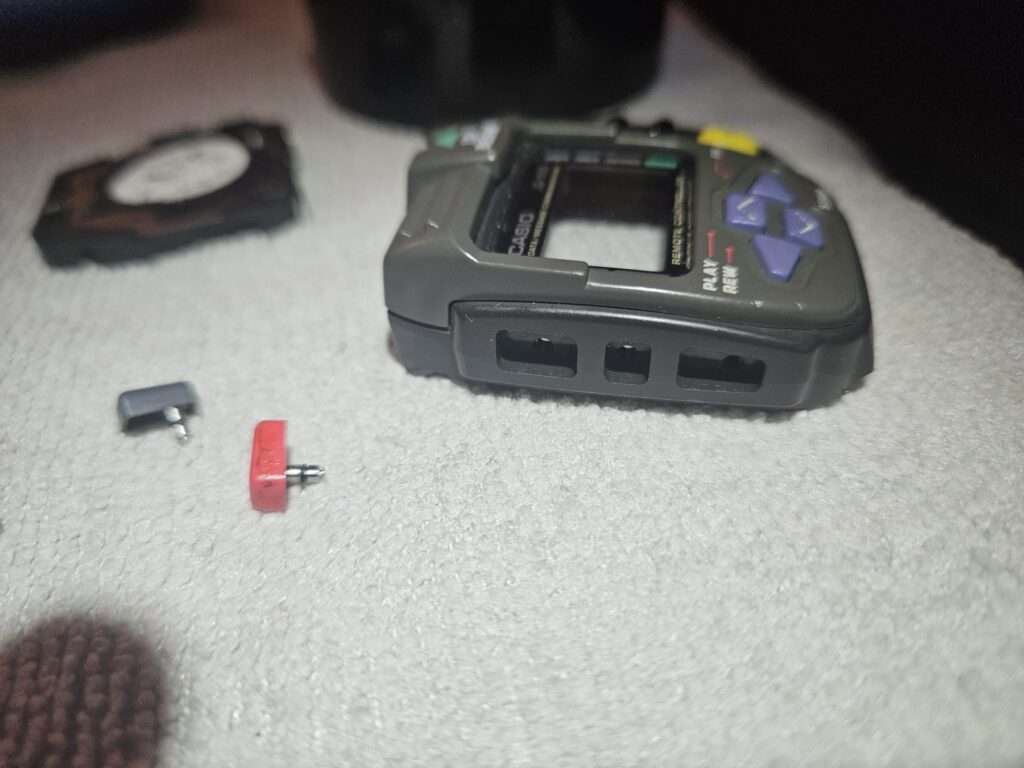
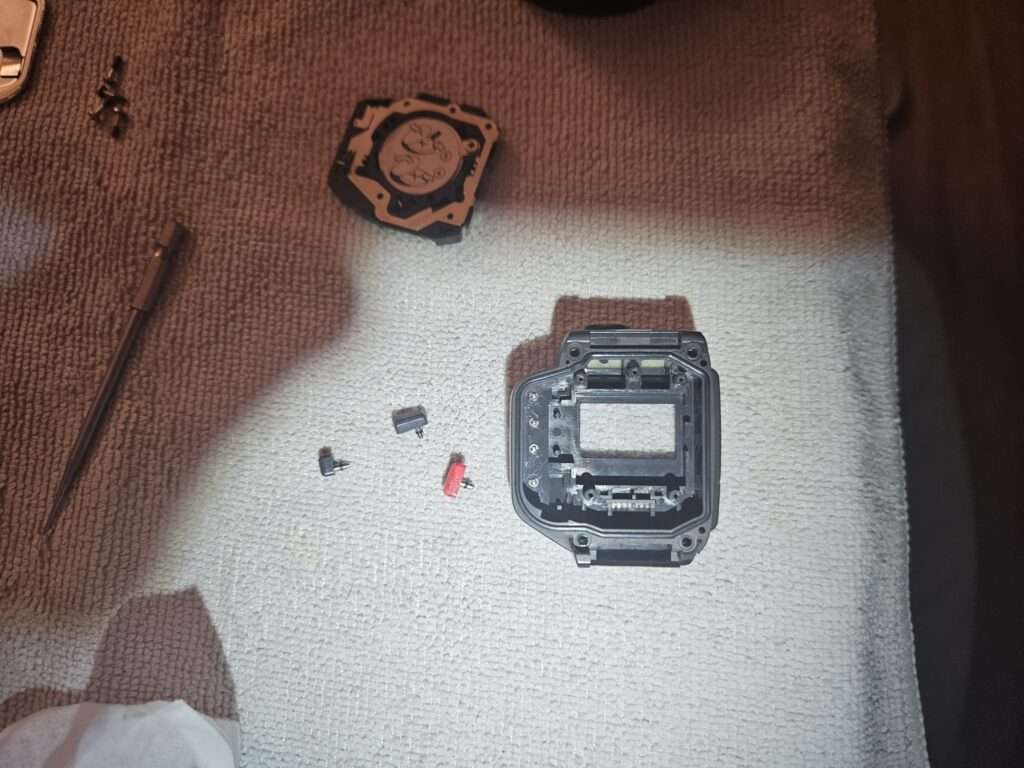
Next I removed the module from the resin case. I took out the buttons, springs, and metal parts. I do this carefully because the JG-100 has many small components around the button system. Full disassembly makes cleaning easier and gives better results.
3. Cleaning the Case and Buttons
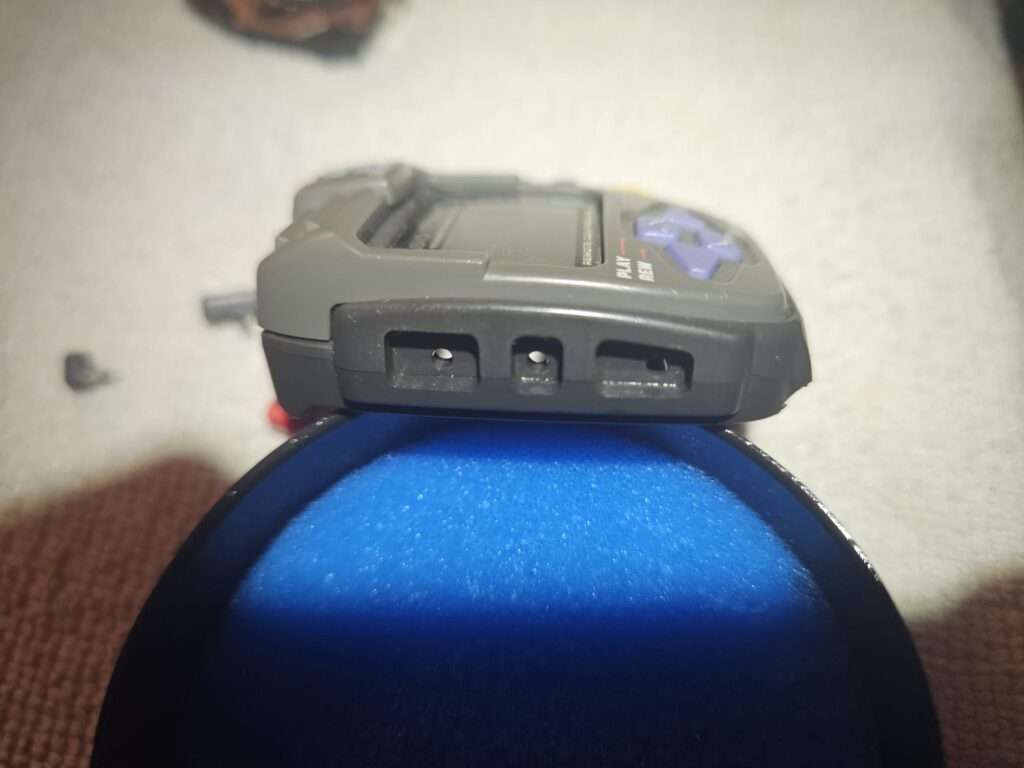
All buttons were stuck when I tested them earlier. When I opened the case, I found dried sugar inside the button channels. This is common when a watch gets wet from a sweet drink. I cleaned everything with warm water and soap. Then I used a brush to clean the small corners. After drying the parts, I checked the buttons again. They clicked nicely and moved without resistance. This is always a good feeling during a restoration 👍.
4. Crystal Polishing
The crystal had light scratches. I used Polywatch and a microfiber cloth. I polished the surface in small circles. After a few minutes the scratches started to fade. I repeated the process until the crystal looked clean and clear again. No sandpaper was needed for this watch.
See my tutorial about: How to Polish Acrylic Watch Glass
5. Rebuilding the Broken Lug
This was the hardest part of the whole project. The screw area was missing, so I had to rebuild it from zero. I started by installing the caseback and placing the screw in the correct position. This helped me keep the original alignment.
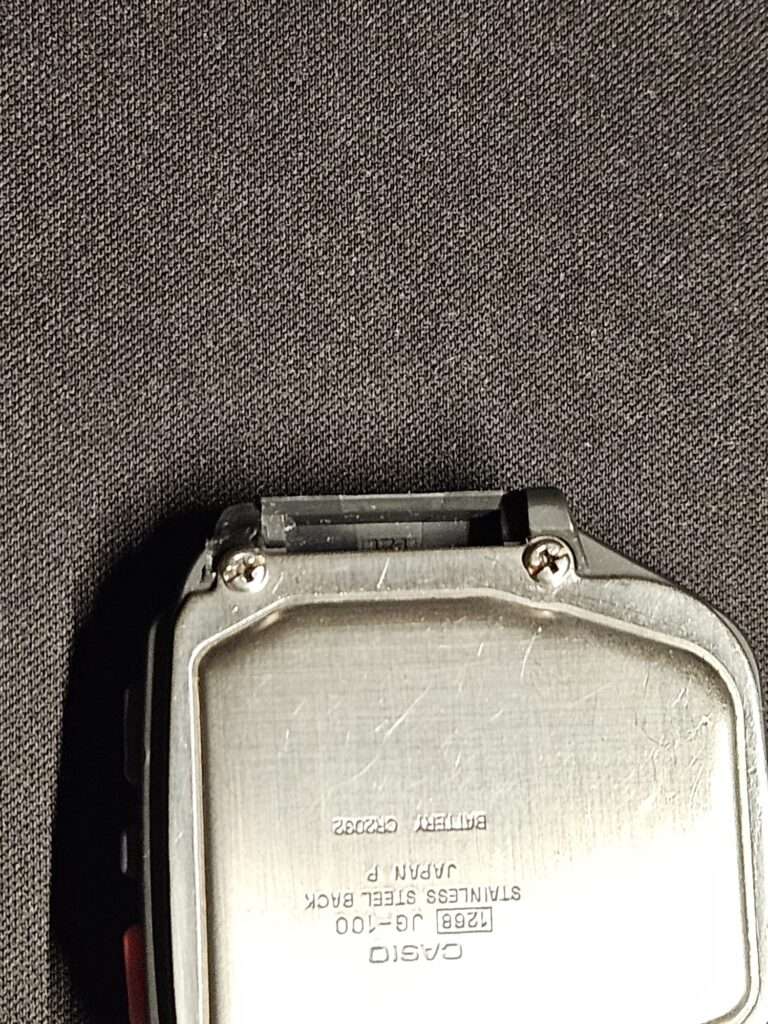
Then I added a small amount of baking soda around the screw. I put one drop of super glue on it. The mixture became hard in a few seconds. After that I removed the screw. This left a clean new hole for the bar screw.
Next I continued rebuilding the outer shape of the lug. I added more baking soda and glue in small layers. When I had enough material, I started shaping it. I used files and sanding sticks. I worked slowly to match the original form of the JG-100 case.
If you want to see exactly how this method works step by step, I recorded the whole repair in my YouTube video. You can watch the lug reconstruction process here:
It shows every layer, every tool, and how the shape returns to normal.
5. Color Matching and Finishing
The new material was white, so I needed to paint it. I mixed gray and black nail polish to get a color close to the case. I applied a thin layer and let it dry for one to two days. This waiting time is important because the paint must fully harden.
After drying, I sanded the area again to remove any uneven surface. As a final step I used a wet white magic sponge to give the restored lug the same matte texture as the rest of the case.
6. Final Assembly
When all parts were ready, I installed the bars and the strap. I placed the module back into the case. Then I checked every button. All of them worked smoothly. The crystal was clear. The lug felt strong and solid. The watch looked ready for daily use again.
Final Result: How Did the Restored JG-100 Turn Out?
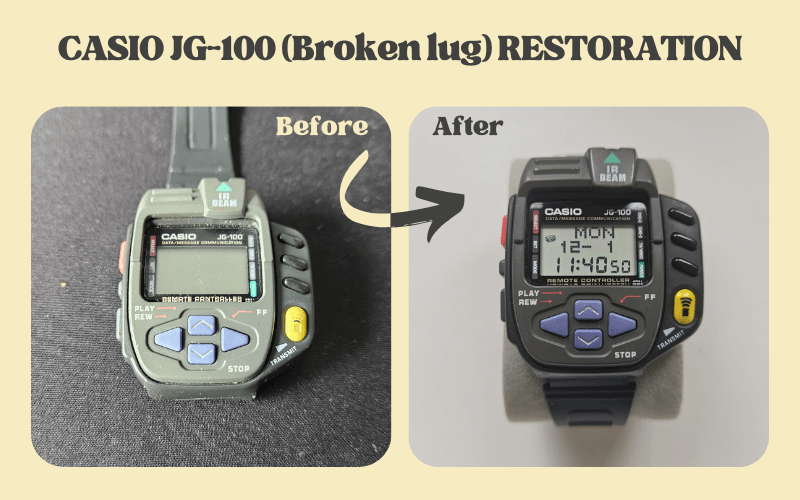
After the full restoration, the Casio JG-100 looked and felt completely different from the watch that arrived in the mail. The new lug was strong and stable. It held the bar without any movement. The shape matched the original design, and the color blend was close enough that you do not notice the repair unless you look very closely.
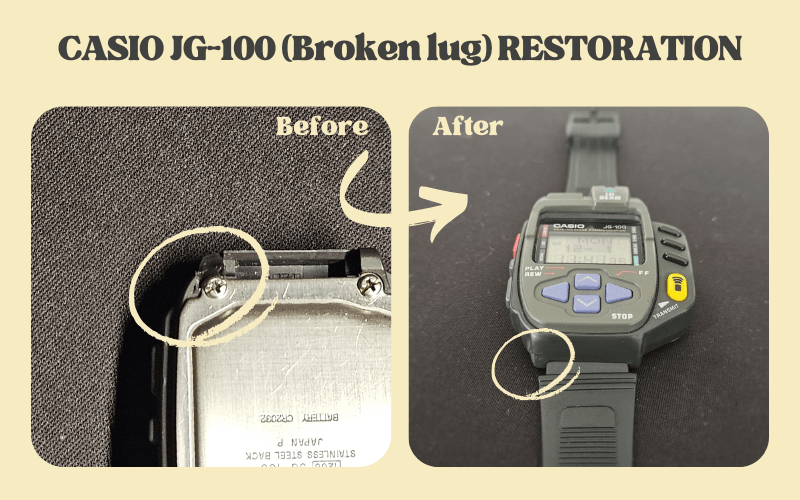
The buttons worked perfectly again. Each one clicked with the typical soft Casio feel. This is always satisfying after cleaning out sticky sugar. It brings the watch back to its normal personality.
The crystal became clear after polishing. The surface had no visible scratches. It gave the display a clean and sharp look again. This always makes a vintage Casio feel fresh.
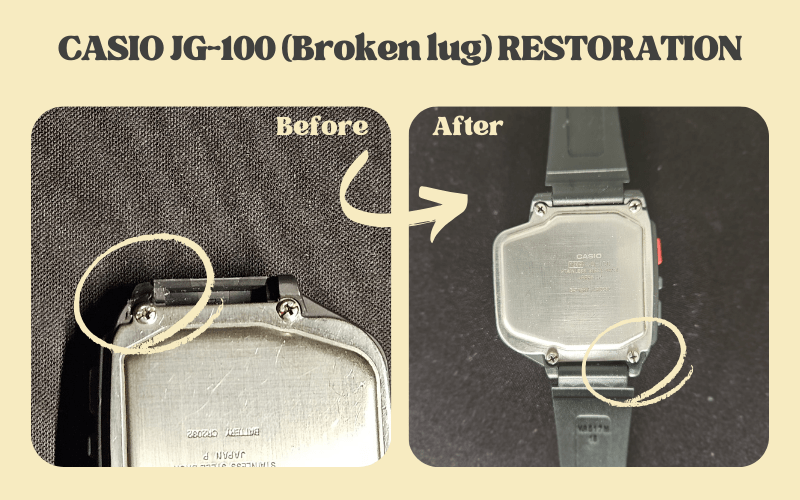
The module worked with no issues after the battery swap. All features responded well. The JG-100 menus, the IR functions, the small games, everything moved as expected. It is fun to see this 90s gadget come alive again 🛠️⌚.
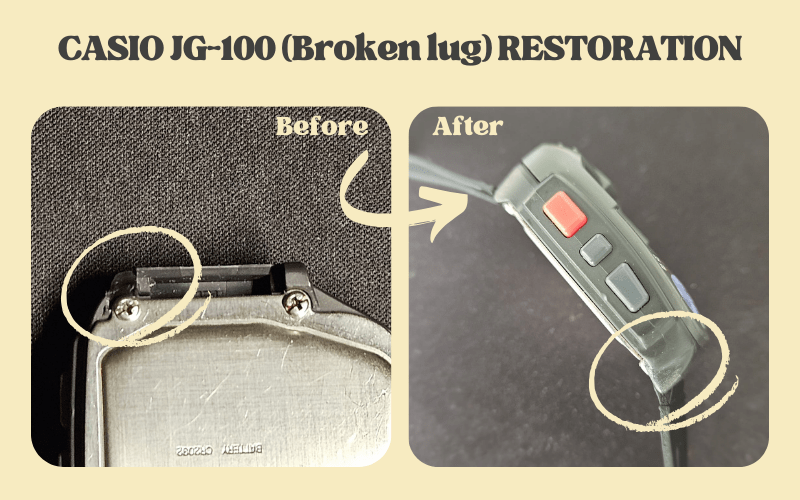
When I put the strap on and wore the watch for the first time, it felt great to see it back on the wrist. This model has a unique charm. Big case, unusual functions, and that classic 90s look. Saving a watch like this is always satisfying because you know it would probably end up forgotten in a drawer if no one restored it.
Need Help Restoring Your Own Casio?

If you have a vintage Casio with a broken lug, stuck buttons, a dead module, or any other issue, I can help you fix it. I offer this type of restoration service to collectors who want to save their watches but do not have the tools or experience.
The process is simple:
- Write to me via Instagram (@vintage.casio.restore) or email me (vintagecasiorestore@gmail.com) and tell me the problem.
- Add the model name of your watch.
- Tell me your country.
We can arrange everything through cheap postage to Poland, and I will take care of the rest. Many collectors already sent their watches this way, and it works smoothly.
If you want to save your old Casio and bring it back to life, feel free to contact me anytime 👍.
FAQ — Casio JG-100 Restoration & Vintage Casio Repairs
Can a Casio JG-100 with a broken lug be restored?
Yes. A broken lug can be rebuilt using a layered method with baking soda and super glue. When shaped and finished correctly, the repaired lug becomes strong enough for daily wear.
Is the baking-soda and super-glue method durable?
Yes. When applied in thin layers and shaped properly, the material becomes strong and bonds well to vintage Casio resin. Many restored watches continue to be worn without issues.
My Casio’s buttons are stuck. Can this be fixed?
Most stuck buttons are caused by dried dirt or corrosion inside the channels. Full disassembly and cleaning usually restores smooth clicking. Only in rare cases are buttons permanently damaged.
The listing says the watch doesn’t work. Is it usually just the battery?
Often yes. Many 90s Casio models use CR2032 cells, and a dead battery is the most common issue. Replacing the battery and checking the module is always the first step.
Can scratches on a vintage Casio crystal be polished out?
Light to medium scratches can usually be removed with Polywatch. Deeper scratches may require sanding before polishing, but most JG-100 crystals clean up well.
How long does a full restoration take?
A typical restoration takes a few days, including cleaning, lug repair, shaping, and reassembly. Paint on the repaired lug needs 24–48 hours to harden before final finishing.
Do you offer repair services for other Casio models?
Yes. Many vintage Casio models can be restored, including G-Shock, DataBank, IR watches, and rare 90s gadgets. Broken lugs, stuck buttons, and cosmetic restoration are all possible.
How do I send my watch for restoration?
Contact via Instagram (@vintage.casio.restore) or email (vintagecasiorestore@gmail.com) with your model name and country. Collectors worldwide send watches to Poland using tracked shipping.
Is the repair safe during shipping?
Yes. Ship watches without batteries in a padded envelope or small box. Thousands of collectors safely send watches internationally this way.
Will the repaired area look original?
The restored lug is shaped to match the original form and painted to blend with the case’s color and texture. When worn, the repair is barely noticeable unless inspected closely.

Daniel is the person behind Vintage Casio Restore, a project dedicated to restoring and documenting vintage Casio digital watches from the 80s and 90s. Based in Poland, he combines technical precision with a passion for retro design, bringing forgotten models back to life and sharing their stories online.Outside the workshop, Daniel works in a digital agency, managing SEO and content strategy for technology clients, blending his professional experience with his love for classic tech and design.
Leave a Reply