
One day I was browsing Vinted — a second-hand marketplace — and I came across a listing from Finland. A Casio STW-100. Non-working, worn, but priced reasonably. I looked at it for a moment, then bought it. That’s usually how it starts. 😄
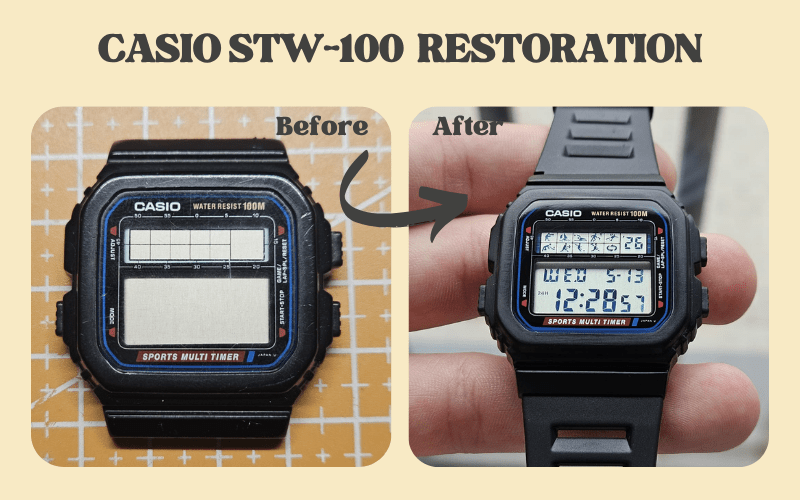
A few weeks later, the package arrived. I put it on the workbench and took a closer look. The watch was worn — scratches, dirt, the usual signs of a life actually lived. But the case was intact. No broken lugs, no missing parts. Visually, nothing scary.
I dropped in a battery, did an AC reset, and waited. The display came on. Faint, unstable, pulsing. Something was wrong inside.
That was the beginning of one of the longer restorations I’ve done. Not complicated in the traditional sense, but patient work. The kind where you put the watch in a drawer, order some parts, come back to it weeks later, and try again.
This is that story. 🛠️
The Watch’s Condition on Arrival
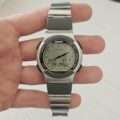
Visually, the STW-100 was worn but honest. Scratches on the crystal, dirt in the case, the kind of surface damage that builds up over decades of actual use. Nothing broken, no torn lugs, no missing parts. The kind of condition where you know the cosmetic work will be straightforward.
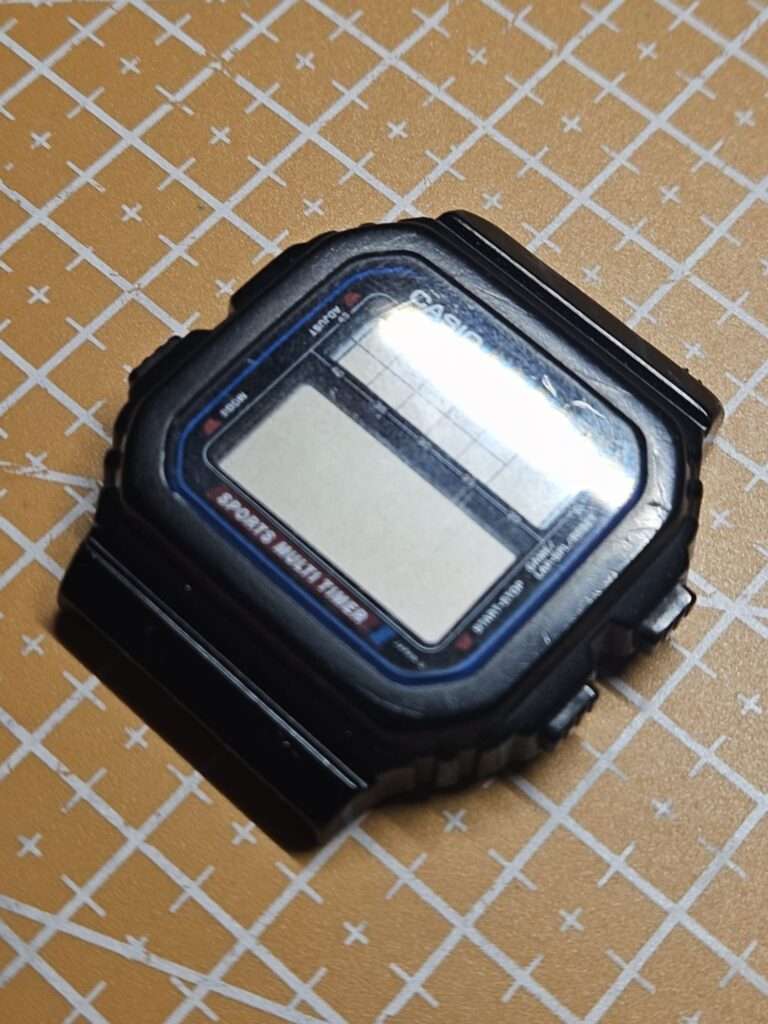
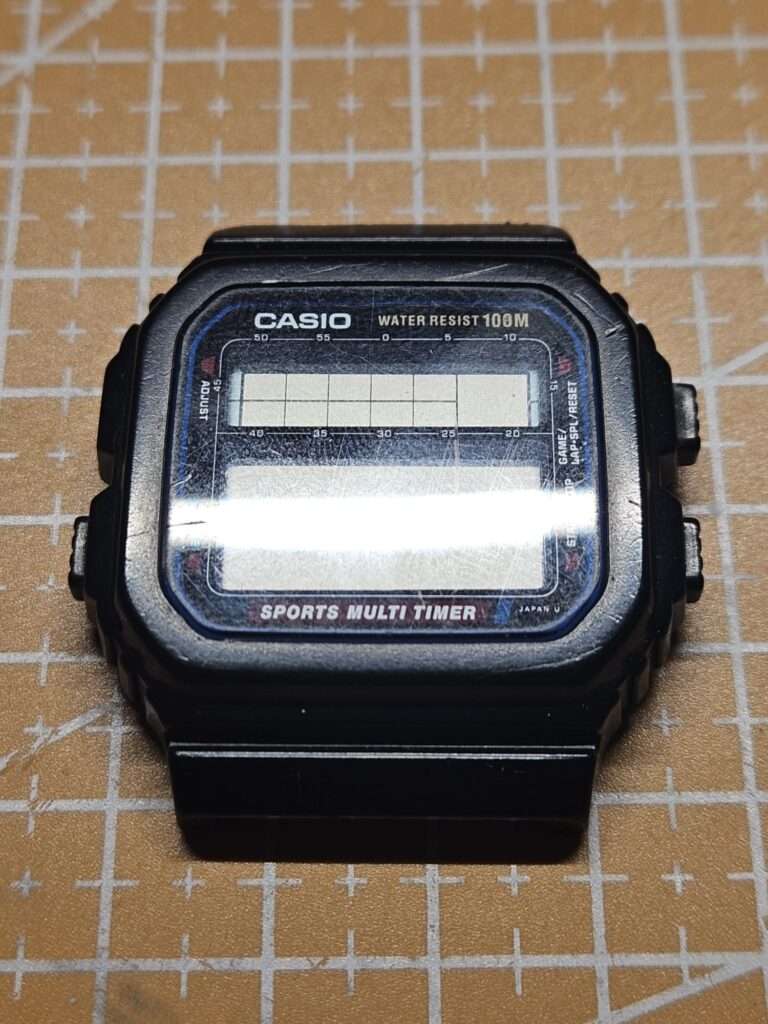
The electrical side was a different story. After the reset, the display came on but it wasn’t right. Faint, flickering, pulsing — like the watch was struggling to stay on.
The first thing I suspected was a display connector issue. That’s usually where you start. I cleaned the module, checked and reseated the zebra strip, tried again. Nothing changed. The display kept pulsing, still faint, still unstable. The module was alive but clearly not getting clean power.
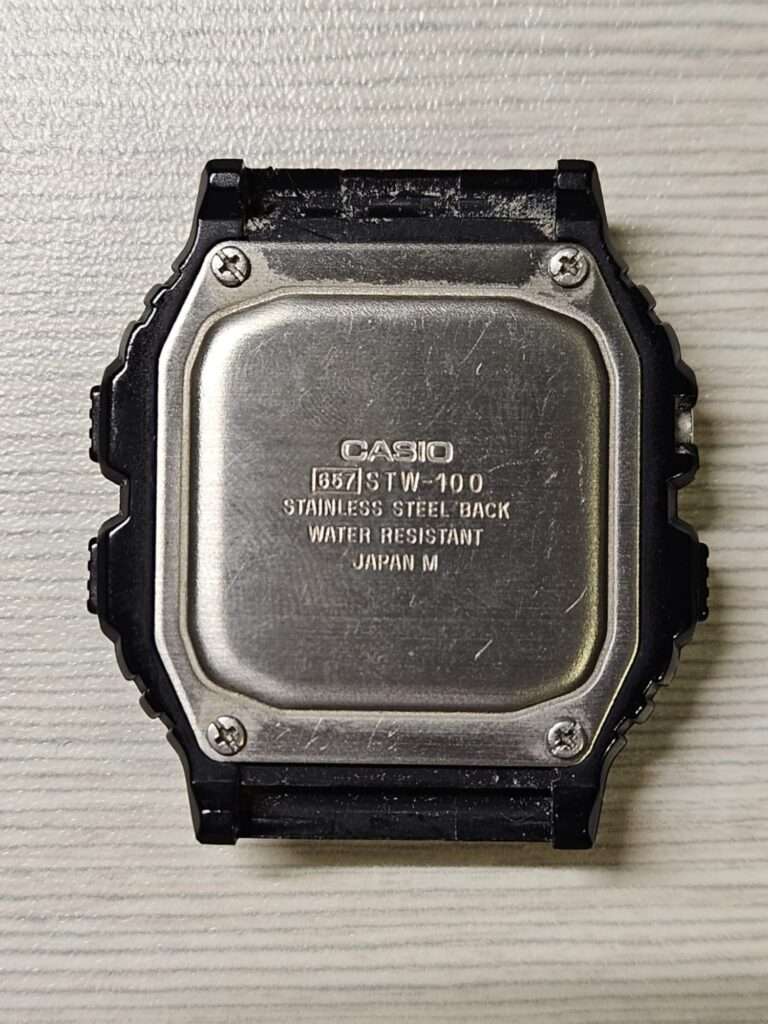
At that point I didn’t have an immediate answer, so the watch went into the drawer. Not abandoned — just waiting. Sometimes a restoration needs a pause while you figure out what you’re actually dealing with. This was one of those times. 😅
Here’s the full restoration process section:
The Restoration Process
Step 1: Diagnosing and Fixing the PCB
After some time with the watch sitting in the drawer, I came back to it with a clearer plan. The display symptoms — faint, pulsing, unstable — pointed to a power delivery problem on the board. The most likely cause: damaged capacitors on the PCB.
I ordered a small book of sorted ceramic capacitors, organized by capacitance. The kind of purchase that sits on the shelf until you need it, and then becomes the most useful thing in the workshop. The STW-100 has four capacitors in total: one on the upper part of the board, and three in a row below it, with two of them bridged on the reverse side.
The original capacitors measured around 300nF. I started replacing them and testing, one combination at a time. Several evenings of this — soldering, assembling, powering on, checking the display, taking it apart again. Trial and error, done slowly and carefully with a hot air soldering station. Eventually I found the right set: 3× 2.2µF capacitors. Larger than the originals, but at those values the display came on clean, bright, and stable. All functions worked correctly. The module was finally fixed. 👍
Step 2: Crystal Polishing
With the module sorted, I moved to the cosmetic work. The crystal had deep scratches that needed more than a standard polish. I started with the super glue method: applying tiny drops of glue into the deeper cuts using a thin pin, letting it set, then sanding it flush with the crystal surface. After that, I wet sanded through the grits — 800 through 7000 — working progressively until the surface was smooth. The final step was Polywatch paste with a felt pad. The crystal came out completely clear.
Step 3: Case Refinishing
The case followed the same sanding process as the crystal, but I stopped at 2500 grit. For the finish, I used a white magic eraser, worked both wet and dry, to bring back the original matte texture of the case. The back cover got a pass with an abrasive pad to remove micro-scratches and restore the factory cross-brushed finish. No over-polishing, no glossy result — just the original look the watch had when it left the factory in 1986.
Step 4: Strap
The last piece was the strap. While sourcing parts for the module repair, I came across an original strap for the STW-100 in an online shop. I ordered it immediately. Finding a correct original strap for a 1986 model is not something that happens often, so when it does, you don’t hesitate. It fitted perfectly on reassembly. 🛠️
The Final Result
The STW-100 came out better than I expected when I first opened that package from Finland. The module runs clean — display bright, all ten sport modes working correctly, no flickering, no instability. Whatever those capacitors were doing to the power delivery, it’s gone. The watch behaves exactly as it should.
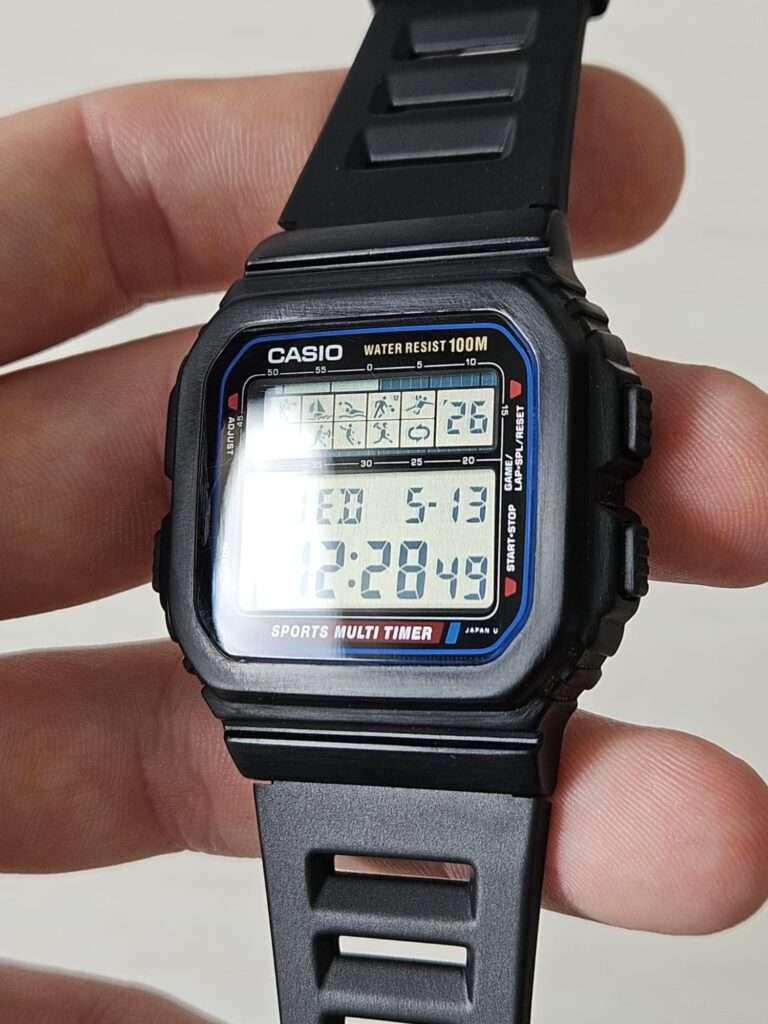
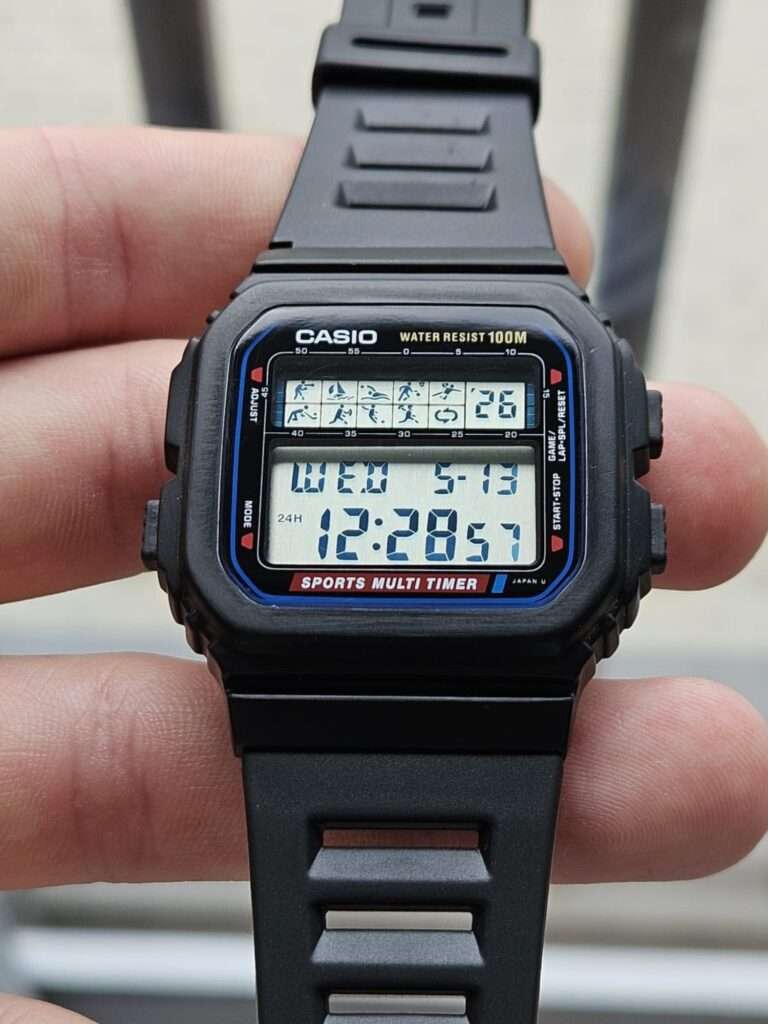
The crystal is clear, no trace of the scratches that were there before. The case has its matte finish back, the back cover shows the original cross-brushed texture, and the original strap ties the whole thing together. It looks like a watch that was taken care of, not one that spent decades in a drawer.
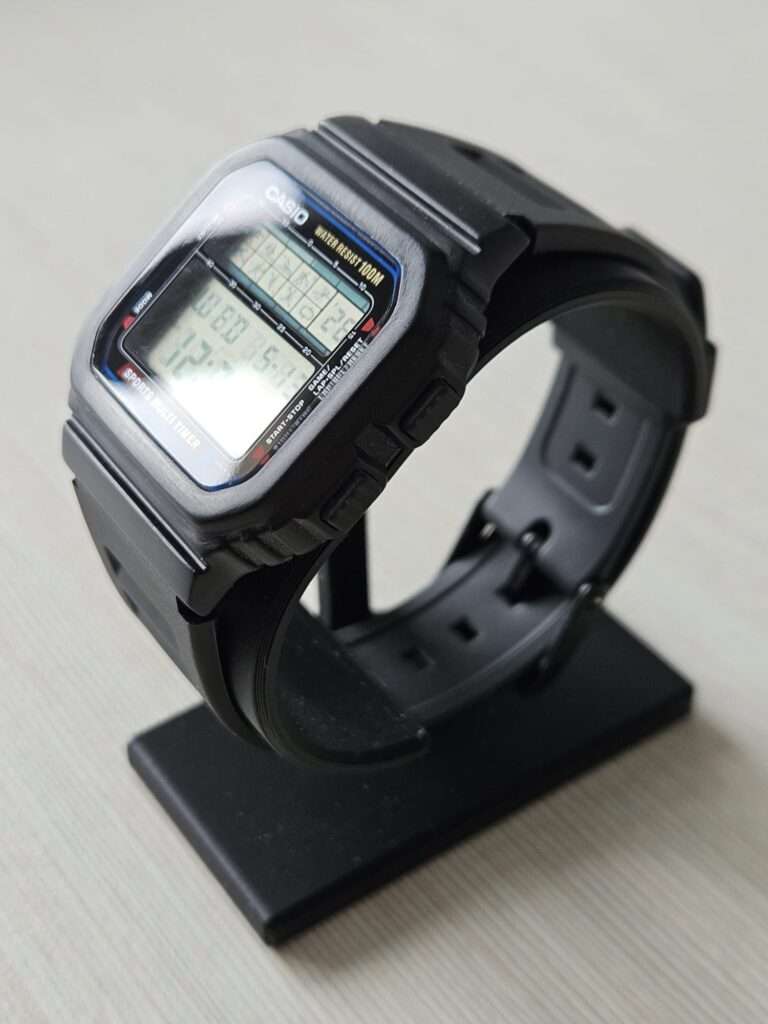
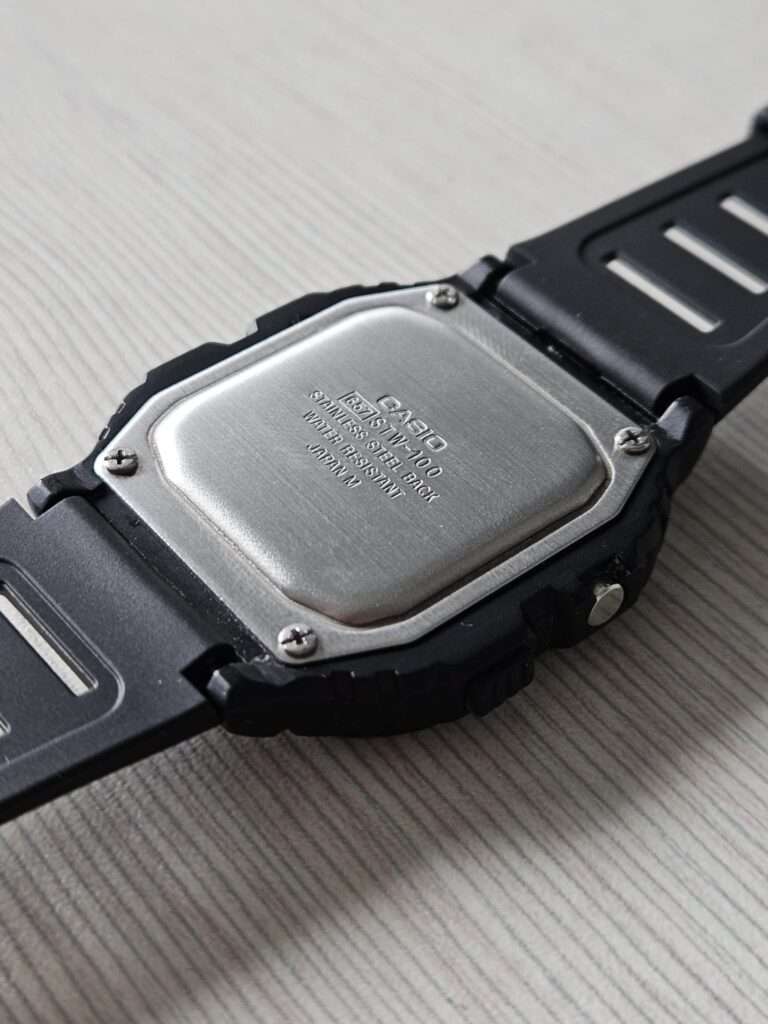
What makes this one stick with me is the rarity. The STW-100 doesn’t show up often. When it does, it’s usually priced high or in rough shape. Finding one at a reasonable price, fixing the PCB, and bringing it back to this condition — that feels like it means something. One watch for ten sports, designed in 1986, and it’s keeping time correctly again. ⌚
If you own an STW-100 or have one sitting broken somewhere — the capacitor issue I described is worth investigating. It took patience and a few evenings of trial and error, but it’s solvable. Don’t give up on it too quickly.
Want Your Vintage Casio Restored?
This STW-100 is one example of the restorations I do. I restore vintage Casio watches for collectors and enthusiasts around the world — everything from straightforward cleanups to more complex repairs like the PCB work on this one.
You can see more of my previous projects here: 👉 casiorestore.com/projects-restorations


I work internationally and shipping is not a problem. I have already completed restorations for collectors from the UK, Scotland, Sweden, Ireland, Spain, France, and more. Every project is discussed individually, so we always agree on the scope and price before starting. 🛠️
The process is simple:
- Write to me on Instagram: @vintage.casio.restore
- Or send me an email: vintagecasiorestore@gmail.com
- Describe the problem with your watch, send clear photos, and tell me your country.
If your vintage Casio deserves a second life, I will be happy to help. 👍

Daniel is the person behind Vintage Casio Restore, a project dedicated to restoring and documenting vintage Casio digital watches from the 80s and 90s. Based in Poland, he combines technical precision with a passion for retro design, bringing forgotten models back to life and sharing their stories online.Outside the workshop, Daniel works in a digital agency, managing SEO and content strategy for technology clients, blending his professional experience with his love for classic tech and design.
Leave a Reply