
One of my blog readers, Michał from the Republic of Ireland, sent me a message about his Casio ABX-53. He’d had it for over 20 years. Fully working, no issues at all. Just looking rough after two decades on his wrist.
The ABX-53 is a watch worth saving. Here’s why collectors still care about it:
- Analog and digital display combined, two ways to read the time on one dial
- Released in the mid-90s, during Casio’s most creative and experimental period
- Chunky retro-futurist design that still looks bold today
Back then, having both an analog and a digital screen on one watch felt like something out of a sci-fi movie. Michał’s ABX-53 had survived 20+ years with that same energy intact. It just needed its looks to match. That’s where I came in. 🛠️
What Did the ABX-53 Look Like Before I Touched It?
Technically, the watch was in great shape. Buttons responsive, display sharp, everything working exactly as it should. For a 20-year-old Casio, that’s not surprising. These modules are built to last. The good news was the structure underneath was solid too. No cracks, no damage.
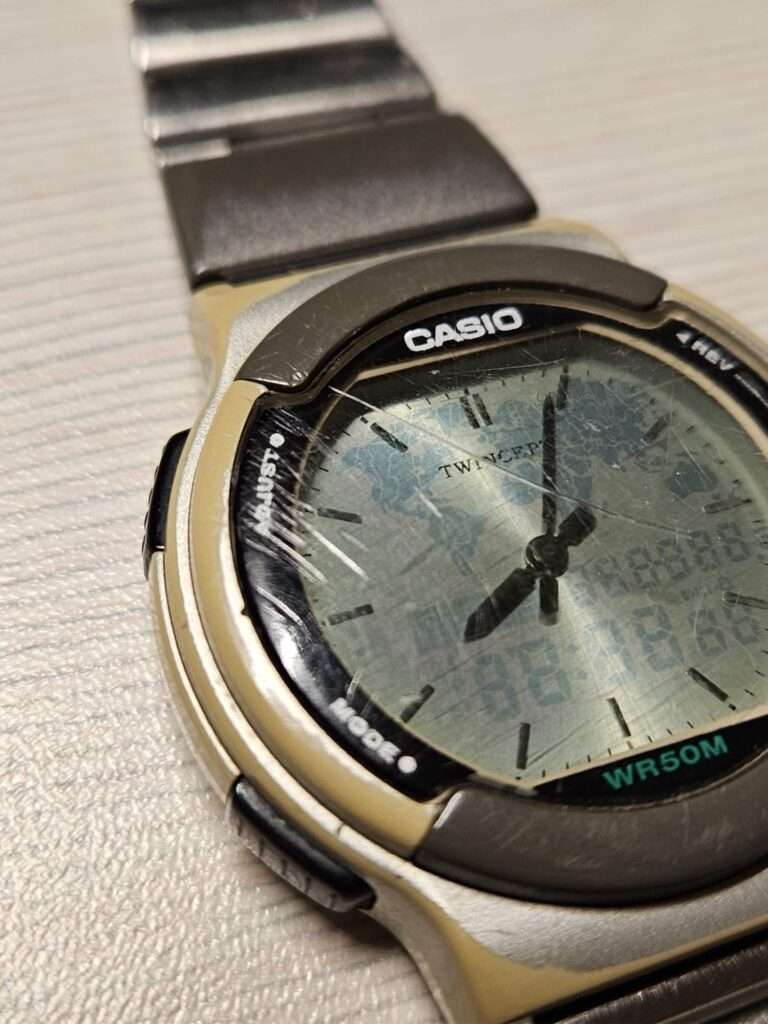
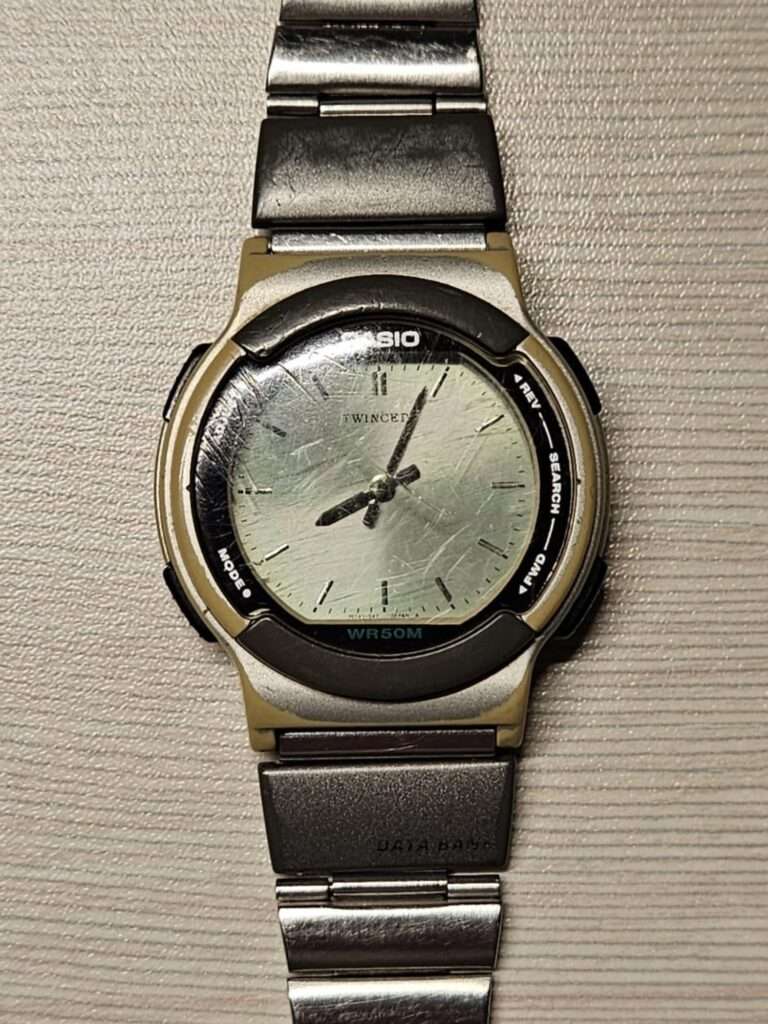
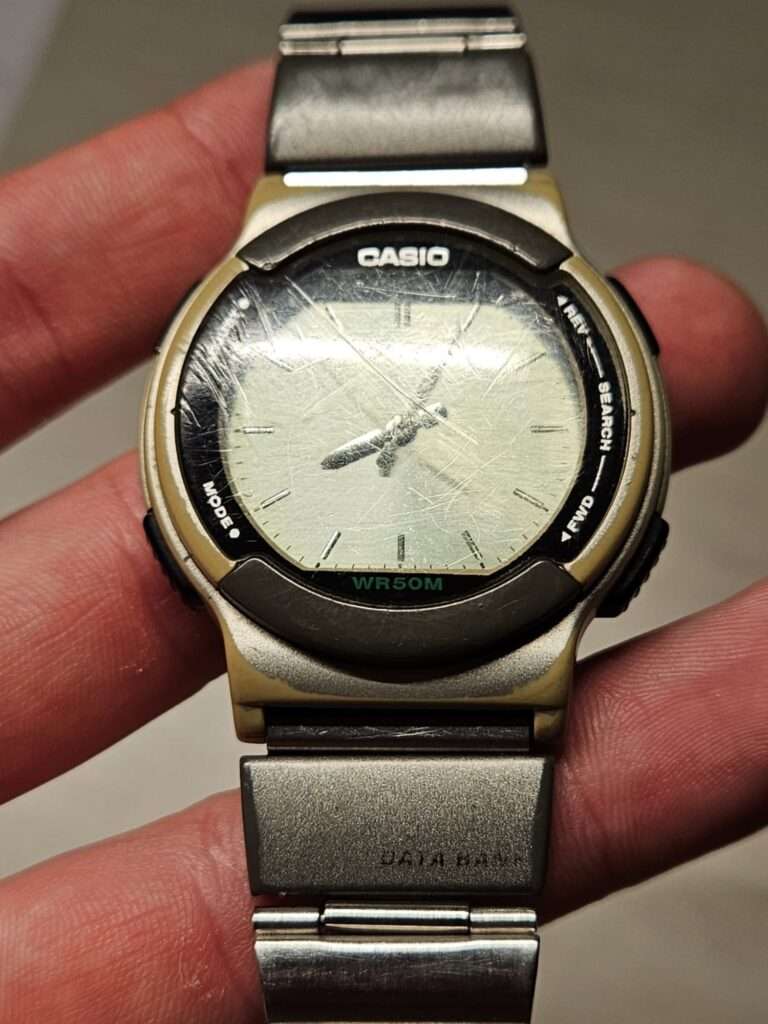
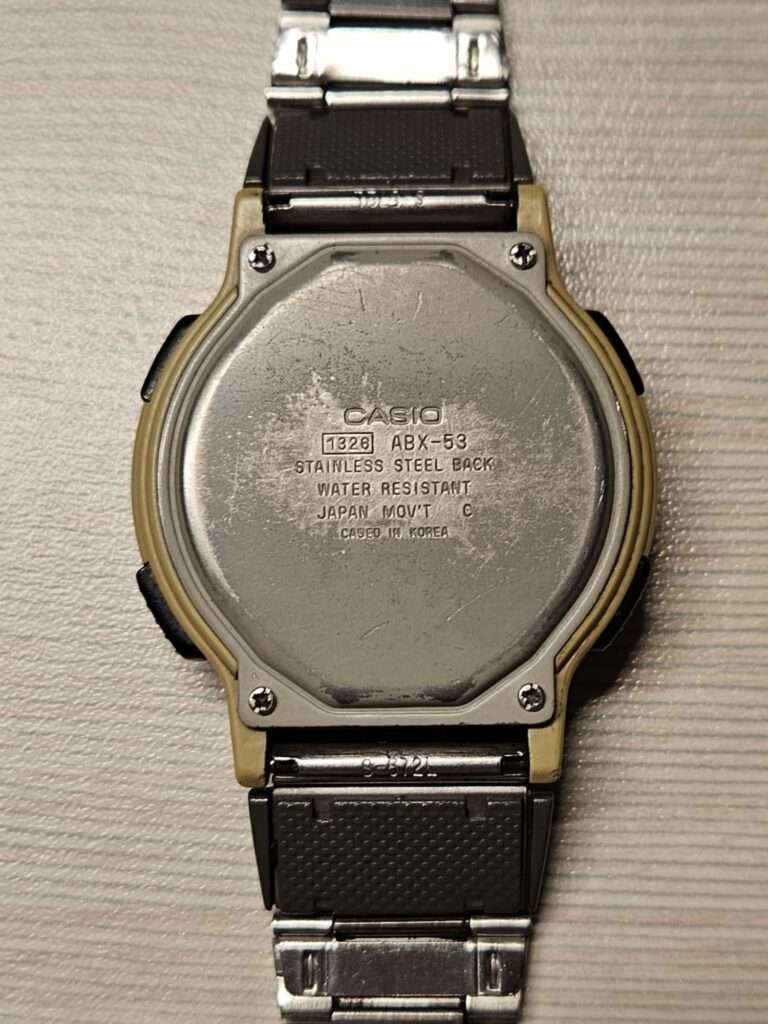
The problem was purely visual. And it was bad. The original grey paint was almost gone. Large areas of the case were down to bare cream colored plastic. The contrast was harsh and impossible to ignore. On top of that, the case had deep scratches across multiple surfaces. This wasn’t light surface wear. This was a watch that had clearly lived a full life on someone’s wrist. It wasn’t “vintage patina.” It wasn’t charming. It just looked rough. 😅
The Restoration Process, Step by Step
1. Removing Scratches from the Crystal and Case
First, I focused on the scratches. Both the crystal and the case had deep scratches from years of daily wear. This step needed to be done before anything else.
The crystal was sanded through a full grit sequence, from 1200 up to 7000. Each grit removes the marks left by the previous one. After sanding, I polished it with a felt wheel and Polywatch. Polywatch is a polish made specifically for plastic crystals and it works really well on Casio resin glass. The result was a clean, clear crystal with no visible scratches.
2. Stripping the Old Paint from the Case
With the crystal done, I moved to the case. I was not going to paint over what remained of the old finish. Painting over worn, flaking paint never works long term. The new layers have nothing solid to grip and the result starts peeling after a few months.
I stripped the entire case back to bare plastic. Then I sanded it with 600-grit sandpaper to create a rough texture on the surface. Smooth plastic doesn’t hold primer well. This step gives the primer something to grab onto.
3. Applying the Primer
With the case prepped, I applied 2 coats of plastic-specific spray primer. Regular primer doesn’t bond well to resin cases, so using the right product here matters. This layer is the foundation for everything that comes after.
4. Painting the Case
Next came 3 coats of grey paint. This is where I hit a problem. The first attempt didn’t adhere the way it should. Instead of trying to fix it, I stripped it back and started the paint stage over from scratch. 😅
It added time to the job. But there was no other option if I wanted a result worth sending back to Ireland.
5. Sealing with Lacquer
After the paint was solid, I applied 3 coats of matte clear lacquer. This seals and protects the paint underneath. Each coat was applied separately with full drying time in between. No rushing this part.
6. Cleaning the Bracelet
The bracelet went into an ultrasonic cleaner. That machine gets into all the small gaps between bracelet links where dirt and grime builds up over decades. 🔧 After cleaning, it came out looking fresh and ready to match the newly painted case.
7. The Caseback
The caseback had remnants of old paint that had already started lifting. I stripped it completely and left it as bare, clean metal. No paint, no coating. It looked clean and honest, and it was the right call for a surface that wasn’t going to hold paint reliably anyway.
The Final Result
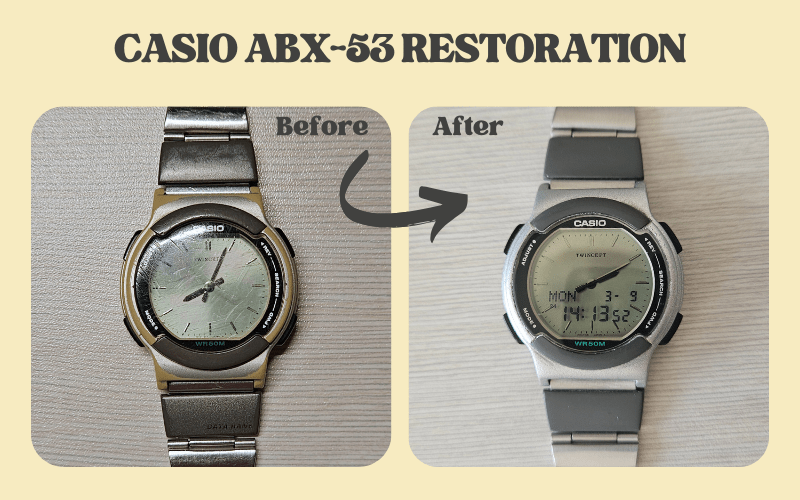
The finished ABX-53 looked completely different from what arrived on my workbench. Clean matte grey across the entire case, uniform from every angle. No cream patches, no worn edges, no trace of what it looked like before.
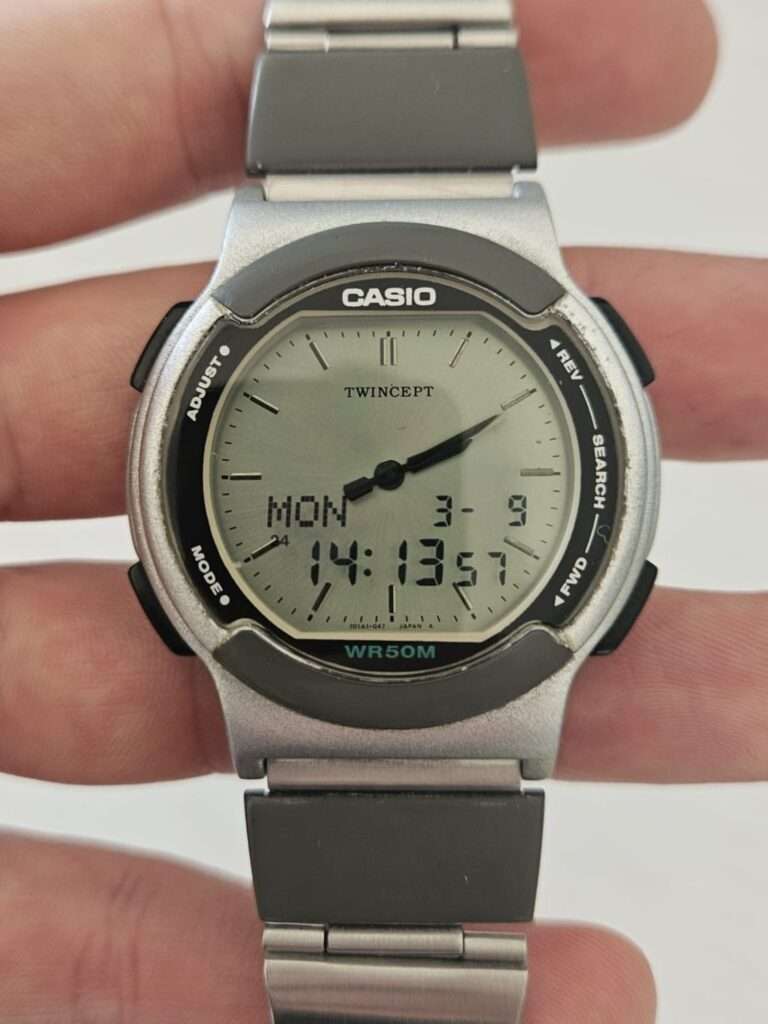
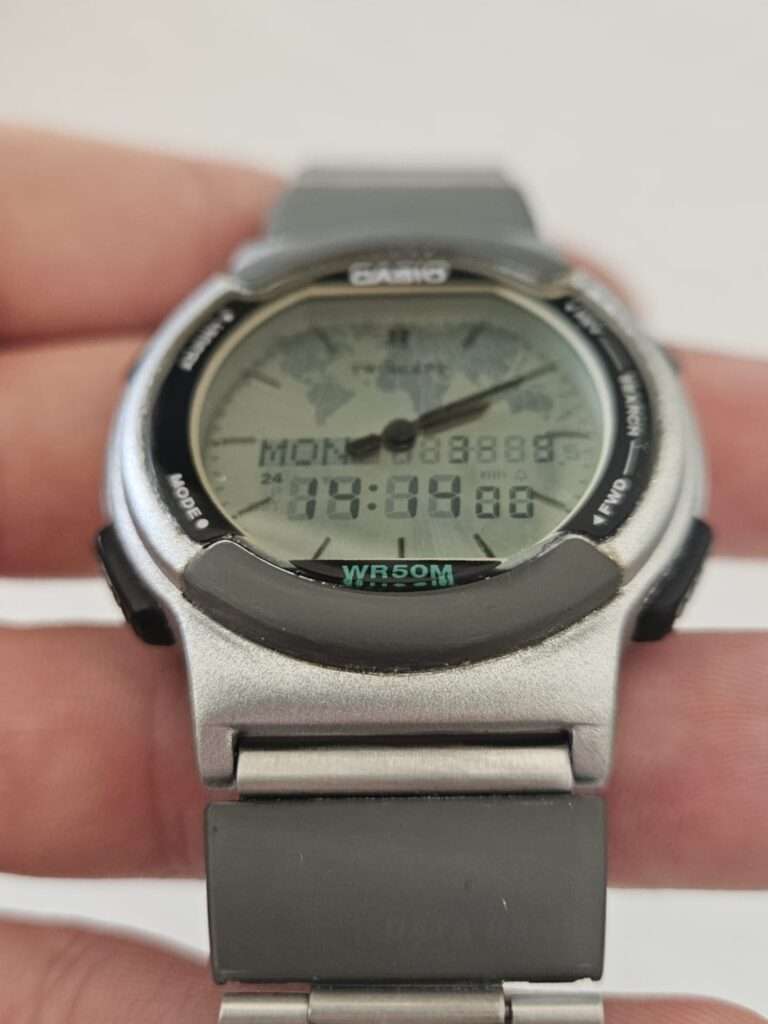
Painting a watch like this takes more time than you might expect. The ABX-53 has a complex shape with buttons, display edges, and bracelet attachment points that all needed to stay paint-free. Every single one had to be carefully covered with masking tape before each coat. Getting the tape around curves and into tight spots took patience. One wrong move and paint gets where it shouldn’t. 😅 Time consuming, but skipping it wasn’t an option.
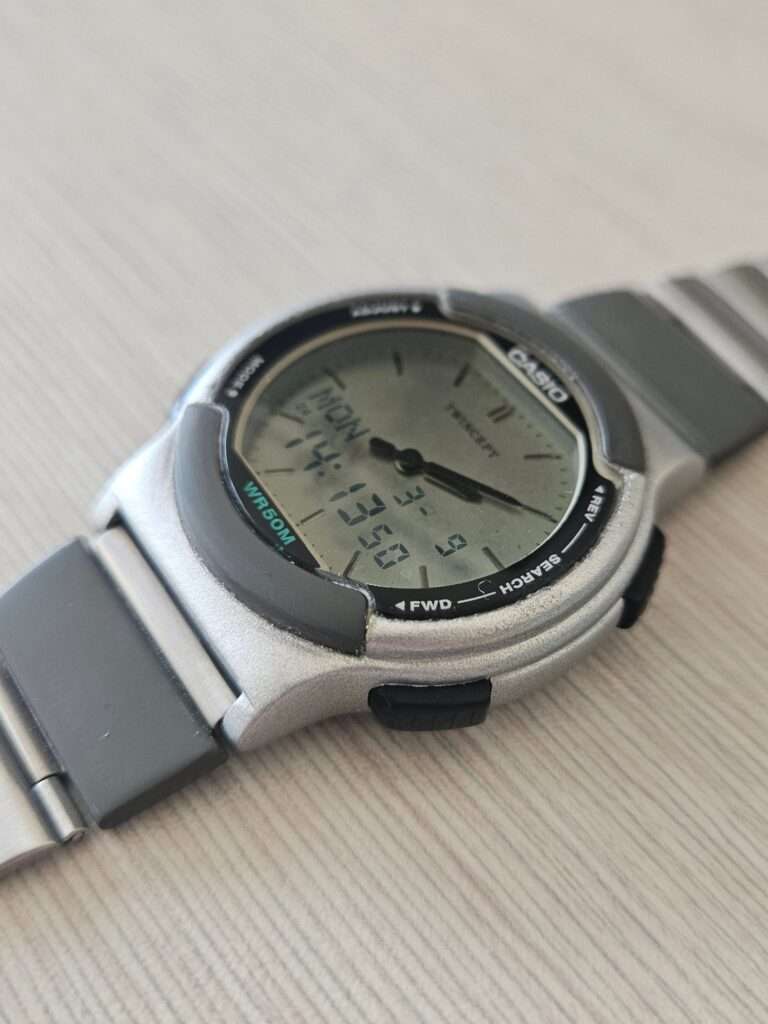
The crystal came out clear and scratch-free after the full sanding and Polywatch polish. The bracelet looked fresh out of the ultrasonic cleaner. The bare metal caseback was a small detail that ended up working really well. Clean, honest, and a nice contrast to the matte painted case.
Michał got his Casio ABX-53 back in Ireland looking better than it had in years. The electronics were always fine. Now the outside finally matches. ⌚
Want Your Vintage Casio Restored?
Michał’s ABX-53 is one example of the restorations I do ⌚. I restore vintage Casio watches for collectors all over the world. You can see examples of my previous projects here: 👉 casiorestore.com/projects-restorations


I work internationally and shipping is not a problem. I have already completed restorations for collectors from Ireland, the UK, Sweden, Poland, and France. Every project is discussed individually, so we always agree on the scope, price, and shipping before starting. 🛠️
The process is simple:
- Write to me on Instagram: @vintage.casio.restore
- Or send me an email: vintagecasiorestore@gmail.com
- Describe the problem with your watch
- Send clear photos
- Tell me your country
If your Casio deserves a second life, I will be happy to help. 👍

Daniel is the person behind Vintage Casio Restore, a project dedicated to restoring and documenting vintage Casio digital watches from the 80s and 90s. Based in Poland, he combines technical precision with a passion for retro design, bringing forgotten models back to life and sharing their stories online.Outside the workshop, Daniel works in a digital agency, managing SEO and content strategy for technology clients, blending his professional experience with his love for classic tech and design.



Leave a Reply