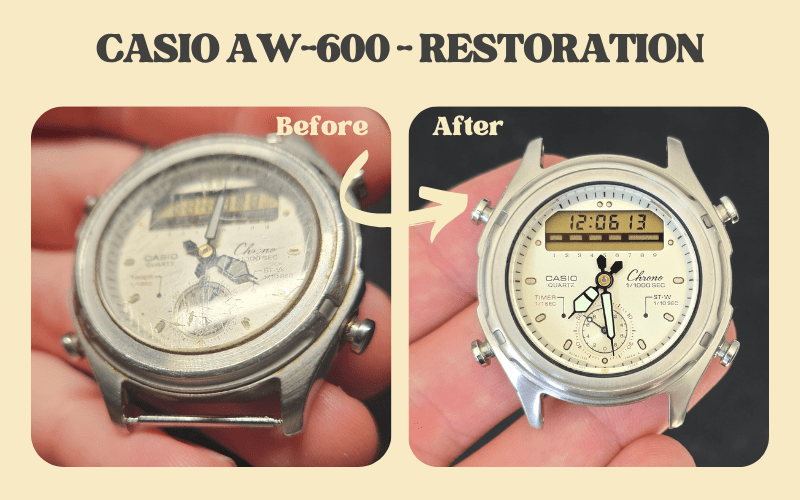
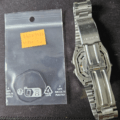
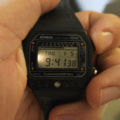
One day, Simon from Sweden wrote to me. He found my blog and asked if I could bring his old Casio AW-600 back to life. The watch had seen better days: the bezel was missing, the glass was scratched up, the seal was cracking, and it did not run anymore. On top of that, the buttons were sluggish and the whole thing was dirty inside and out.
Simon had already been thinking about solutions on his own. He mentioned that finding an original bezel would be almost impossible, so he was considering a CNC service or even 3D printing one himself. That told me right away he was the kind of collector who likes to tinker, not just someone looking for a quick fix.
What Did the Watch Look Like When It Arrived?
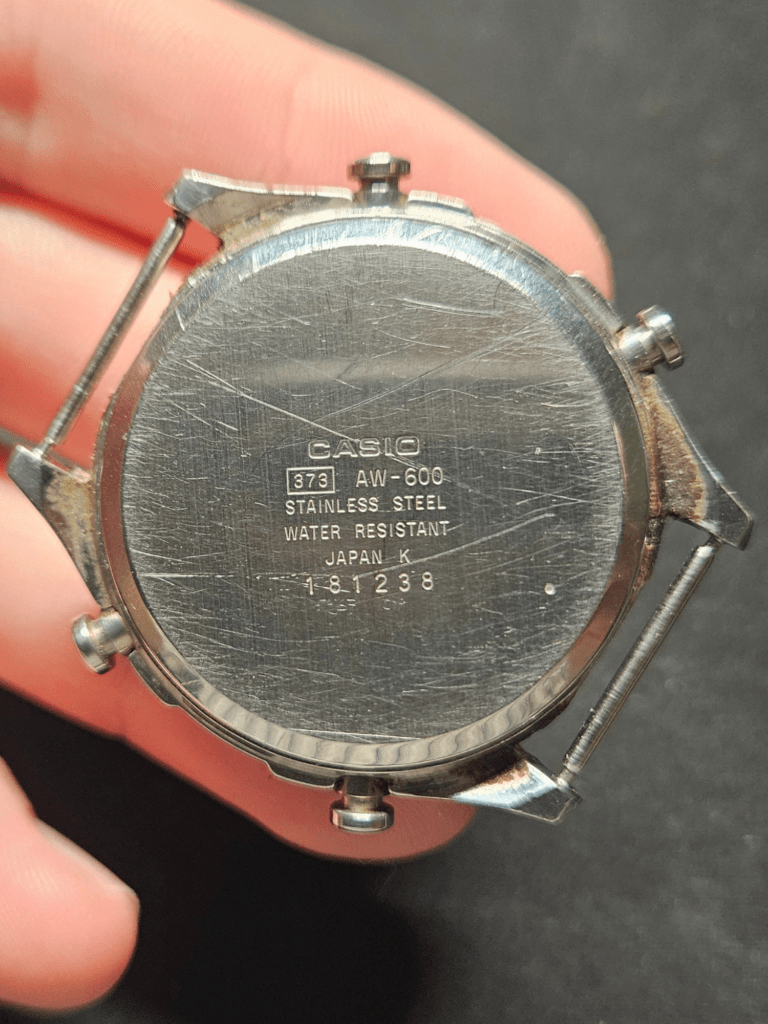
When the AW-600 landed on my desk, it was rough. The bezel was gone completely, so the case looked bare around the crystal. The glass itself was covered in deep scratches, cloudy enough that it was hard to read the dial clearly. The seal around the case back was cracking too, which explained why dust and grime had worked their way inside over the years.
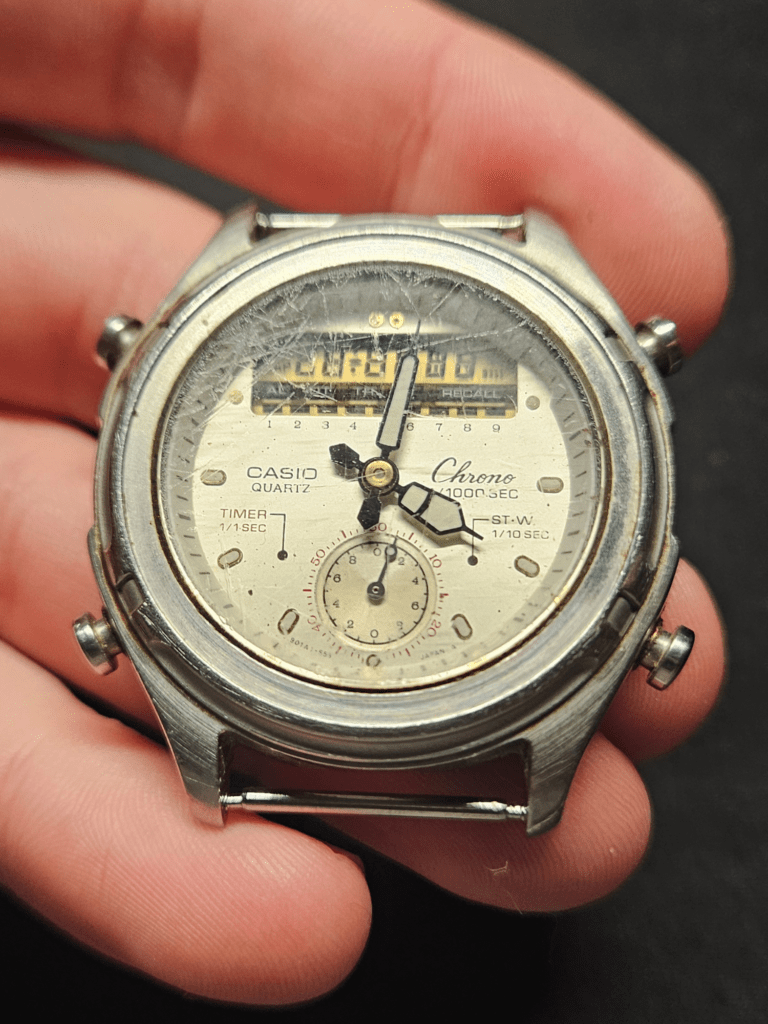
On the movement side, things were just as messy. The second hand was ticking, but it stuttered and kept jumping back to the same spot instead of moving smoothly. The hour and minute hands were not moving at all. I suspected a dead battery at first, but with these old ana-digi modules, you never really know until you open them up. Sometimes it is just gunk in the gears, sometimes the coil itself has failed, and that is a much harder problem to fix.
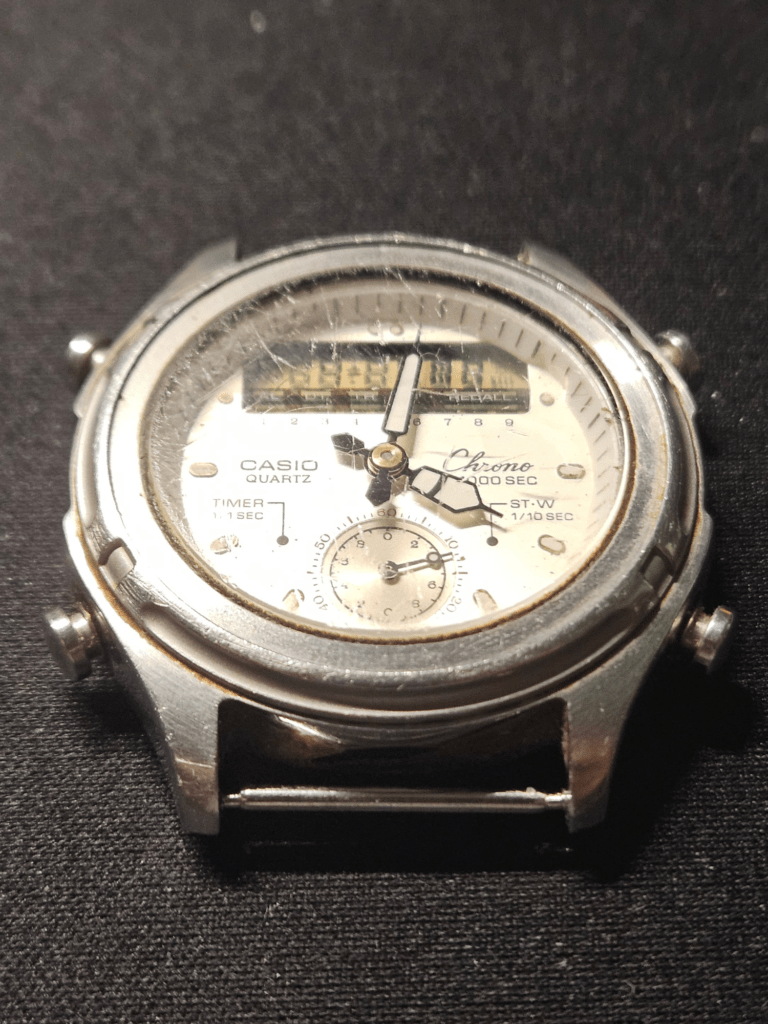
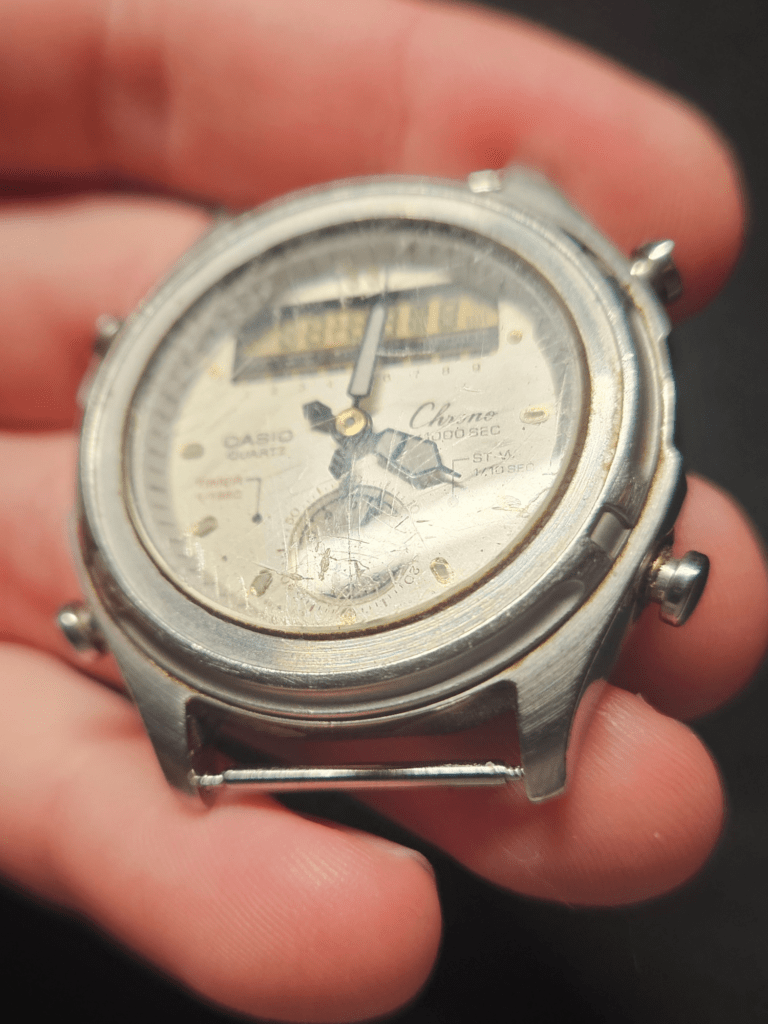
The buttons were sluggish too, barely responding when pressed. And inside the case, the inner ring had rotated slightly out of place, a small detail but one more thing to sort out during reassembly. All in all, this was a watch that needed a full strip-down before I could even guess how much of it could be saved. 🛠️
Casio AW-600 – Restoration Process
Step 1: Disassembly
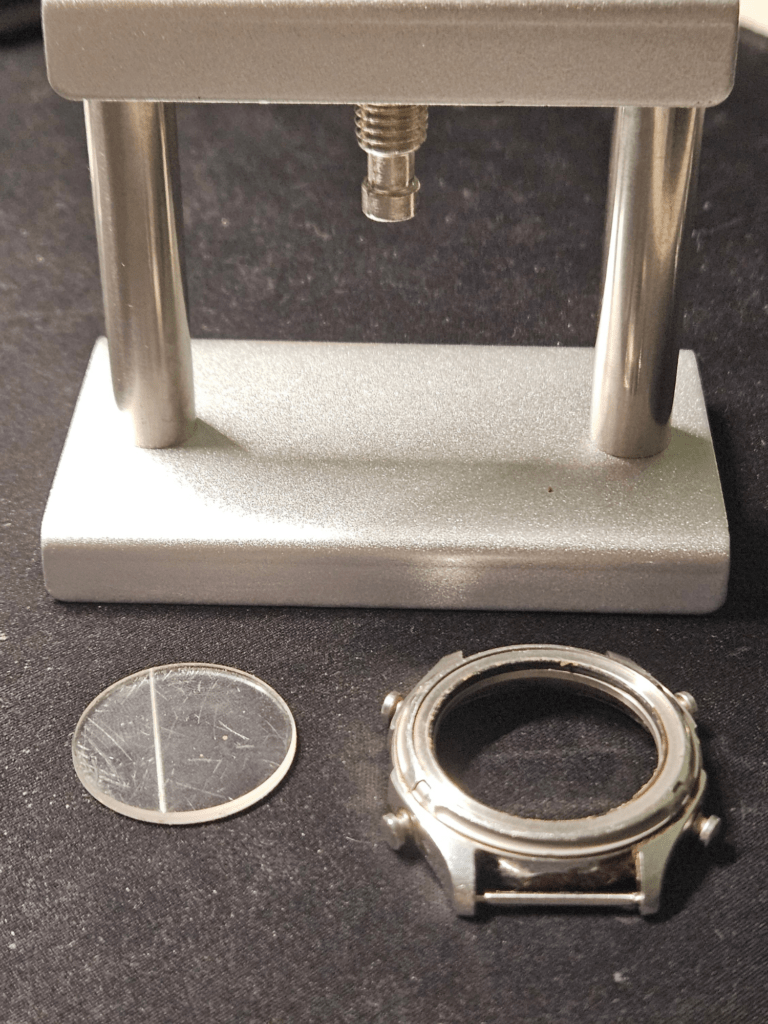
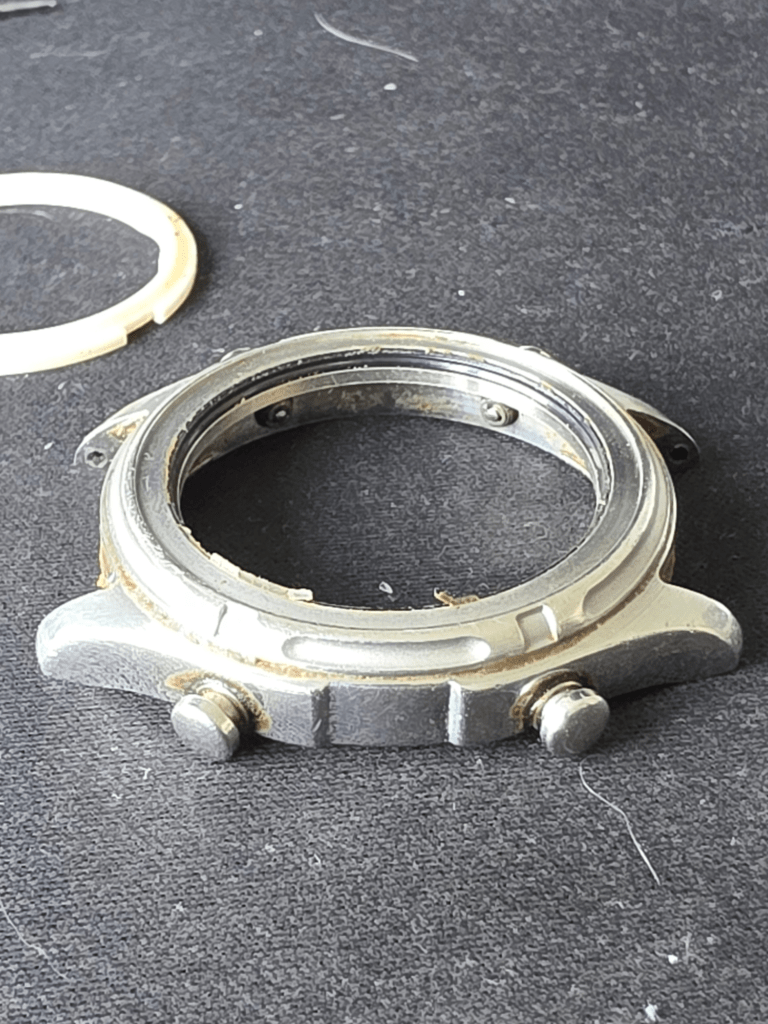
First things first, I took the whole watch apart. The case came open, the module came out, and I could finally see what I was really dealing with. This step always matters because you cannot judge a Casio module from the outside. You need to get in there and look at the coil, the contacts, and the gears with your own eyes.
Step 2: New Glass
Good news here: the original glass was mineral, not acrylic. That meant a straightforward swap instead of a search for an obscure part, but I could not order it blind. Only after removing the old glass with a watchmaker’s press could I actually measure the diameter and thickness properly. With those numbers in hand, I ordered a new mineral glass, clear and scratch-free.
Step 3: Case Restoration (Polishing)
The steel case needed real work. Before any polishing happened, I went through the scratches by hand using a hand sanding tool, working through grits from 400 up to around 3000. This step levels out the deep scratches so the polishing paste has an even surface to work with, not just skips over the damage. Once the sanding was done, I polished the flat surfaces back to a mirror shine using my usual 3-paste Luxor method: red paste first to cut down the remaining haze, then white paste applied with a felt wheel to refine it, and finally orange paste on a lambswool wheel to bring out the final shine.
Step 4: Case Restoration (Brushed Finish)
Not every surface on the AW-600 is polished. Some parts, like the top of the lugs, are meant to have a brushed finish. For this, I used an abrasive pad to recreate the brushed texture in the original direction, matching the factory grain instead of just polishing everything to a shine. Getting the direction right is what makes a restoration look correct instead of just “shiny.” 😅
Step 5: Buttons and Ultrasonic Cleaning
Next, I freed up the sluggish buttons so they moved smoothly again. Then the case and parts went through an ultrasonic cleaning bath, which is the only real way to get decades of grime out of tiny crevices that a cloth or brush simply cannot reach.
Step 6: Gasket Lubrication
After that, I lubricated the gaskets. This keeps the seals supple and helps the case close properly again, since a dried-out gasket is often the reason dust gets in over the years.
Step 7: Module Service and Battery
This was the moment of truth. I disassembled the module and cleaned it in IPA (isopropyl alcohol), which is the go-to method for clearing out old residue and gunk from the contacts. Then I fitted a new battery. And the watch started running again. Turns out the stutter and dead hands were exactly what I hoped for: dirt and a dead battery, not a failed coil. 👍
Step 8: Reassembly
Finally, I put everything back together: case, module, new glass, and all. The inner ring settled back into place naturally during this step, sorting out that small rotation issue on its own.
The Result
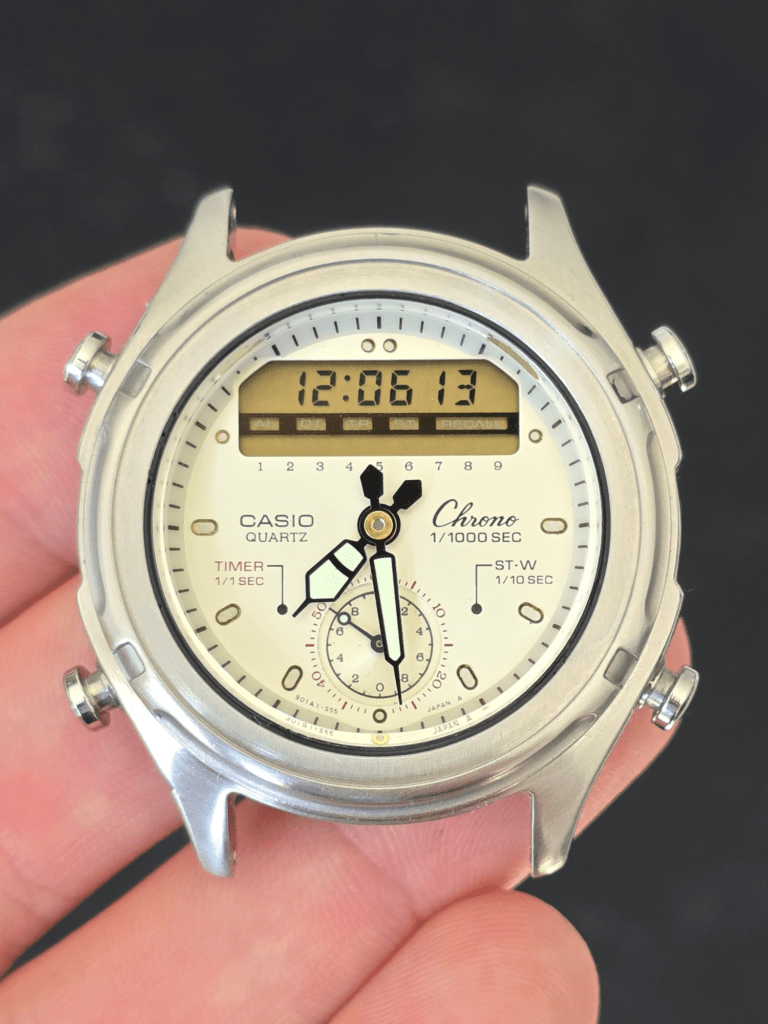
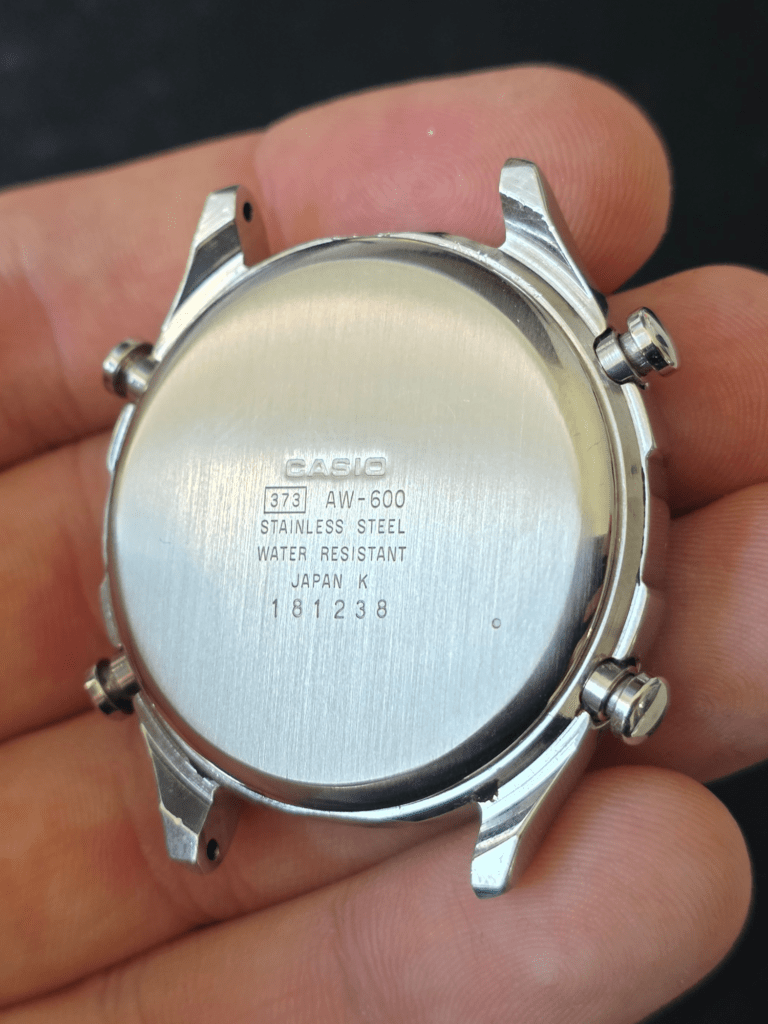
The transformation on this Casio AW-600 turned out great. The case looks sharp again, with the polished surfaces catching light the way they did when the watch was new, and the brushed sections showing a clean, even grain. The new glass sits clear and scratch-free on top, and the watch is running properly for the first time in who knows how long. Even the inner ring found its way back into place during reassembly, so that small quirk sorted itself out.
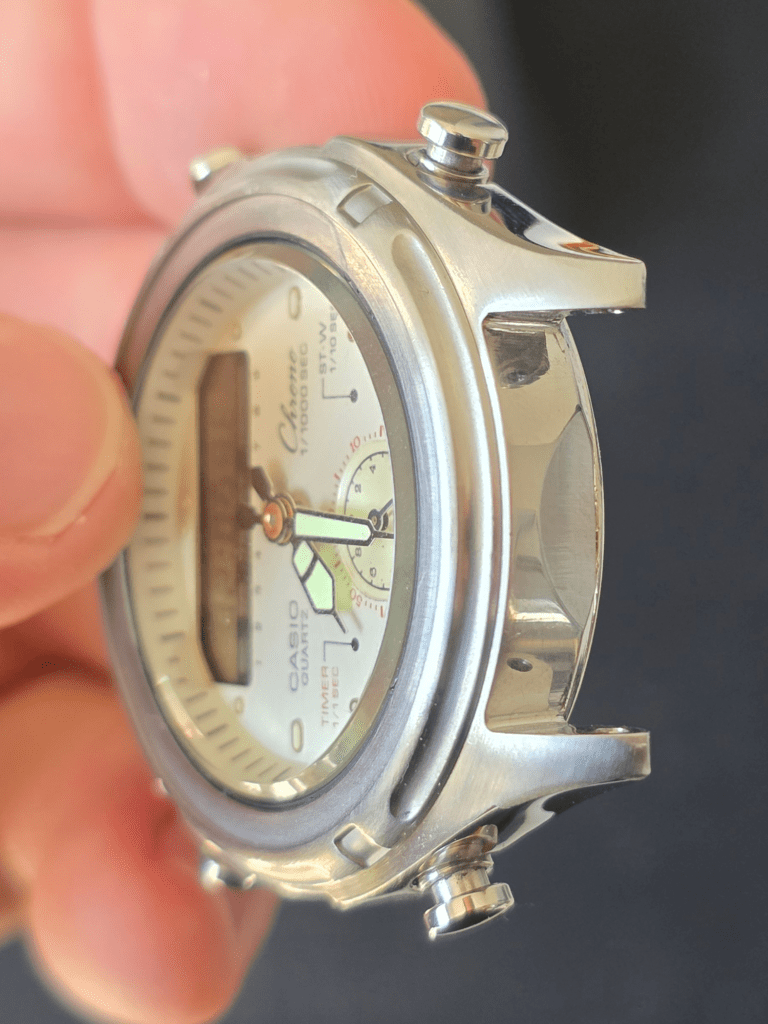
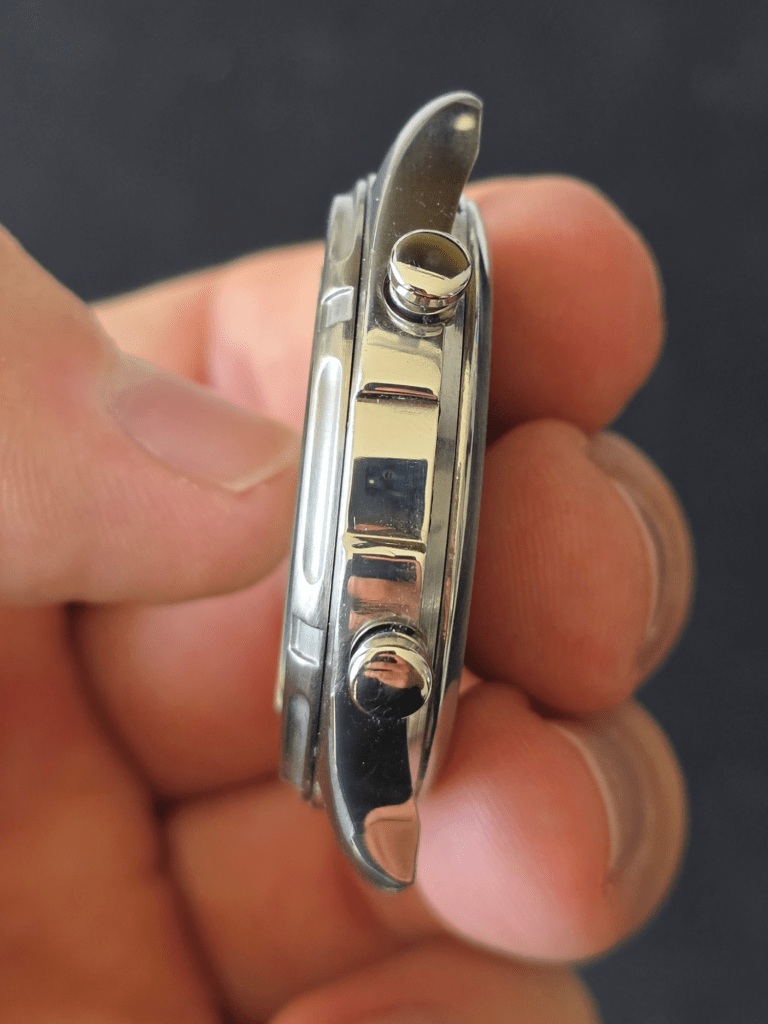
One honest note: there is still no bezel on this watch. Simon had already mentioned he wanted to try 3D printing one himself, so I left that part for him to tackle. It is a fun little project on its own, and I would love to see what he comes up with. ⌚
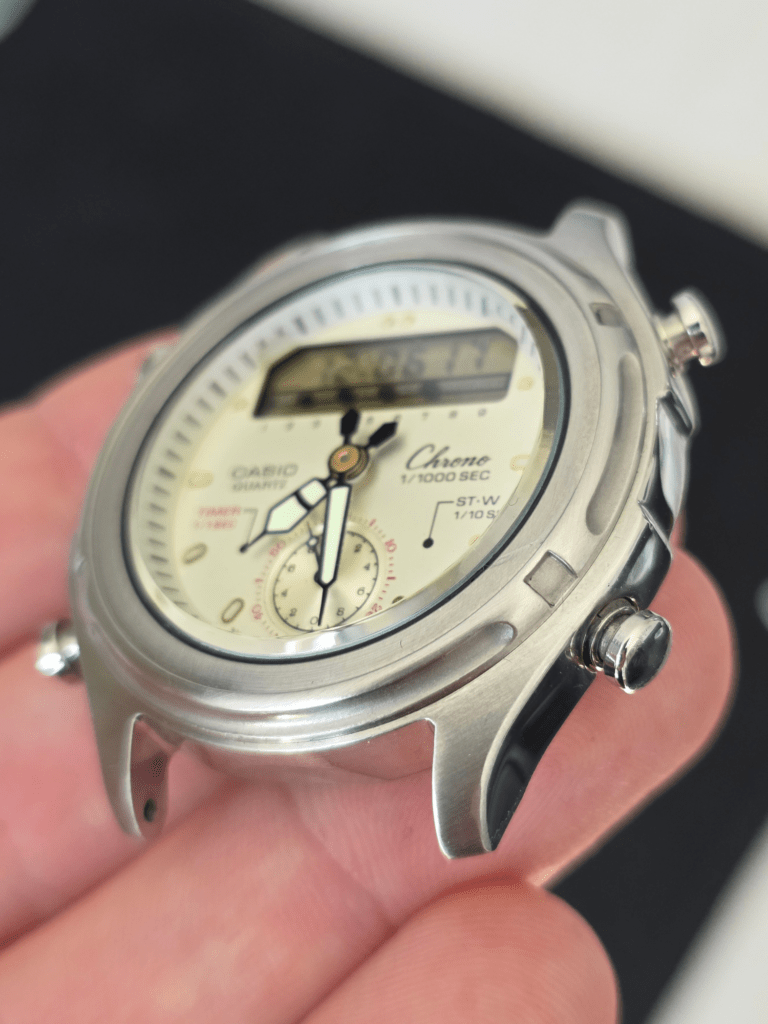
Going from a dead, scratched-up, dirty watch to something that actually ticks and looks the part again is always satisfying. It is a good reminder that most of these old ana-digi Casios are not gone for good, they usually just need someone to clean out the gunk and give the module a fair chance.
Want your vintage Casio restored?
This CA-505 is one example of the restorations I do. I restore vintage Casio watches for collectors and enthusiasts around the world — everything from straightforward cleanups to more complex repairs like this one.
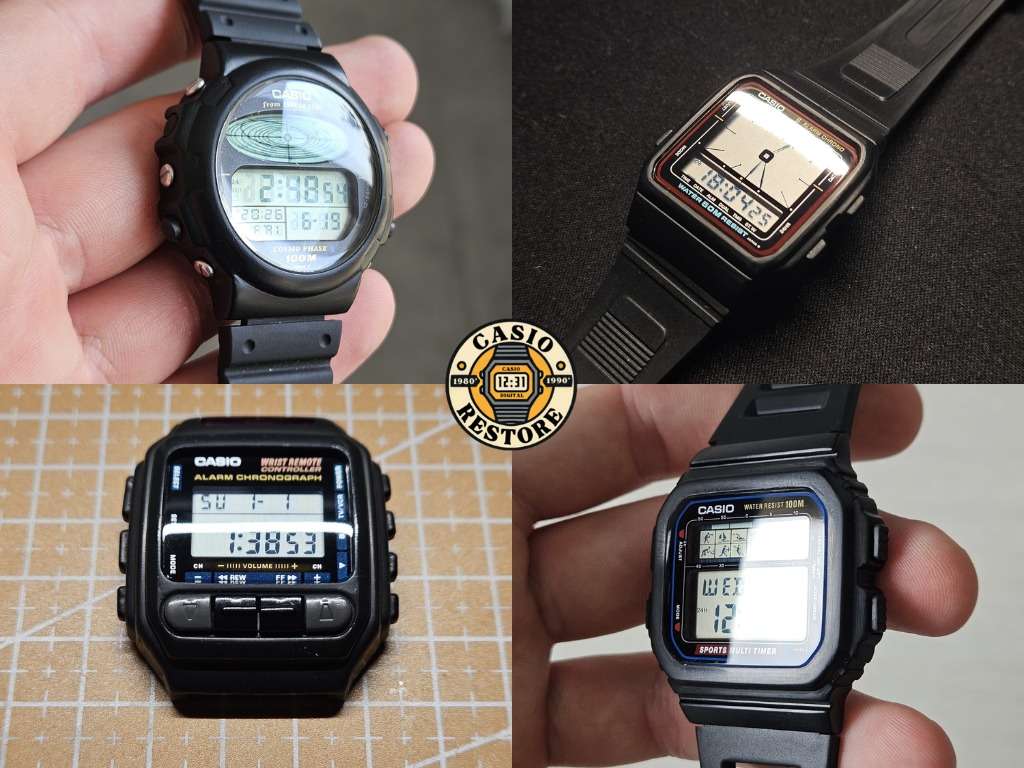
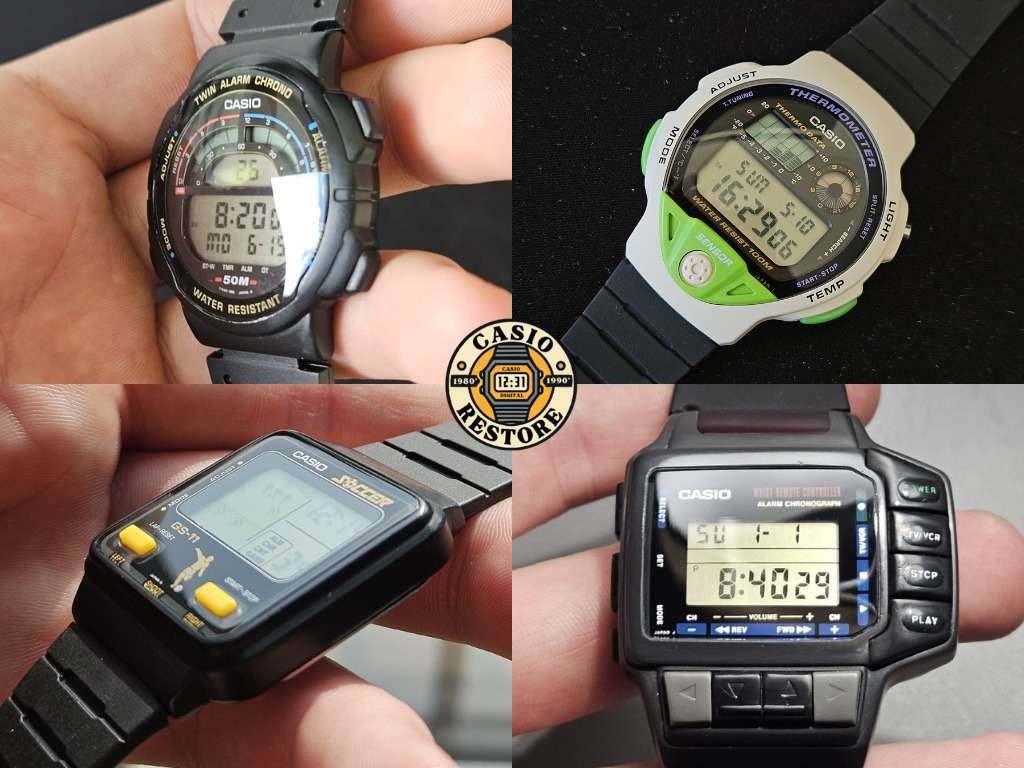
You can see more of my previous projects here: 👉 casiorestore.com/projects-restorations
I work internationally (mainly Europe). I have already completed restorations for collectors from the UK, Scotland, Sweden, Ireland, Spain, France, and more. Every project is discussed individually, so we always agree on the scope and price before starting. 🛠️
The process is simple:
- Write to me on Instagram: @vintage.casio.restore
- Or send me an email: vintagecasiorestore@gmail.com
- Describe the problem with your watch, send clear photos, and tell me your country.
If your vintage Casio deserves a second life, I will be happy to help. 👍

Daniel is the person behind Vintage Casio Restore, a project dedicated to restoring and documenting vintage Casio digital watches from the 80s and 90s. Based in Poland, he combines technical precision with a passion for retro design, bringing forgotten models back to life and sharing their stories online.Outside the workshop, Daniel works in a digital agency, managing SEO and content strategy for technology clients, blending his professional experience with his love for classic tech and design.
Leave a Reply