One day I got a message from Bastien, a Casio collector from France who runs Trek-expe.com. He had a Casio ALT-7000 that had clearly been through a lot, and he wanted to know if it could still be saved.
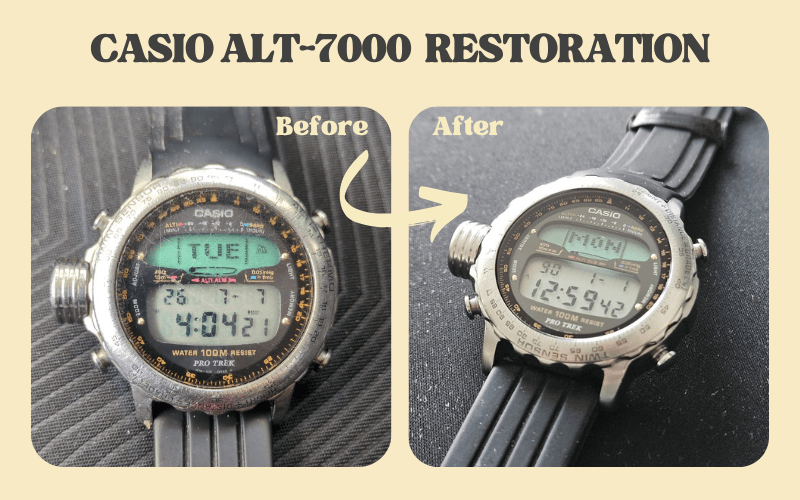
Right from the start, the mineral glass was the detail that stood out. Mineral crystals are tougher to work with than acrylic, and I could already tell this one would need some careful thinking before I touched a single tool. We agreed on the scope of the restoration, covering the case, the button contacts, the glass, and a full clean and diagnostic, and the watch was on its way to me from France not long after.
The ALT-7000 belongs to Casio’s Pro Trek line, built with the twin sensor system for altitude and barometric pressure readings. It is a proper 90s outdoor tool watch, and every one of these projects reminds me why collectors still love them today.
What Did the Watch Look Like When It Arrived?
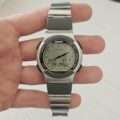
When the ALT-7000 arrived, it was clear this was not a watch that spent its life in a drawer. Bastien runs Trek-expe.com, a company organizing expeditions to places like Chile, Kyrgyzstan, Peru, Norway, and Tanzania, so this tool watch had almost certainly been out on real trips, doing the job it was built for. The scratches on the case and bezel told that story clearly, this was a watch that had been worn hard, in tough conditions, exactly what the Pro Trek line was designed for.
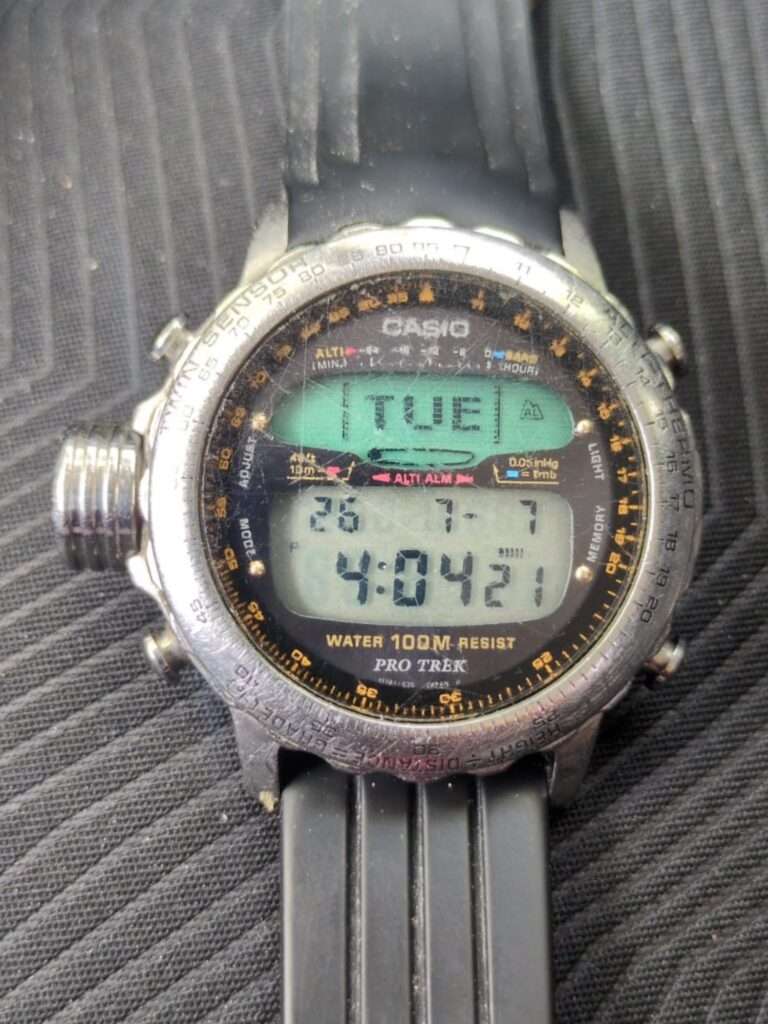
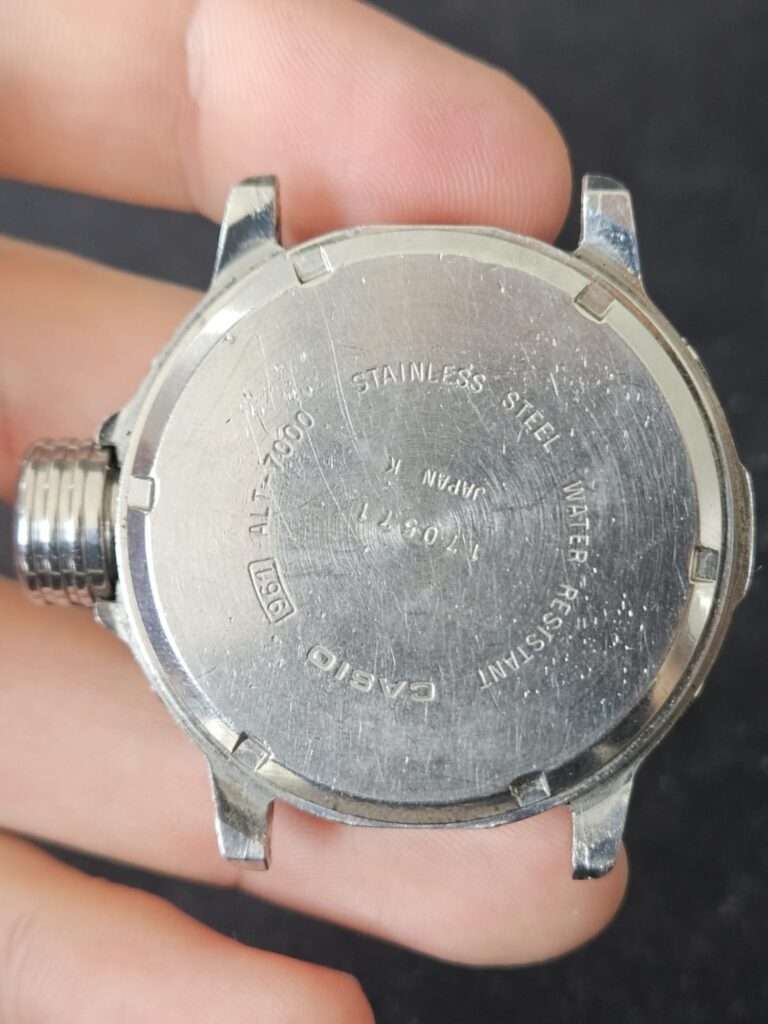
The mineral glass was the worst part. It was covered in deep scratches across the whole surface, bad enough that I originally planned to just replace it with a new piece cut to the right dimensions once I got it off. That plan did not last long once I actually opened the watch up, but at first glance, the glass looked like the main problem to solve.
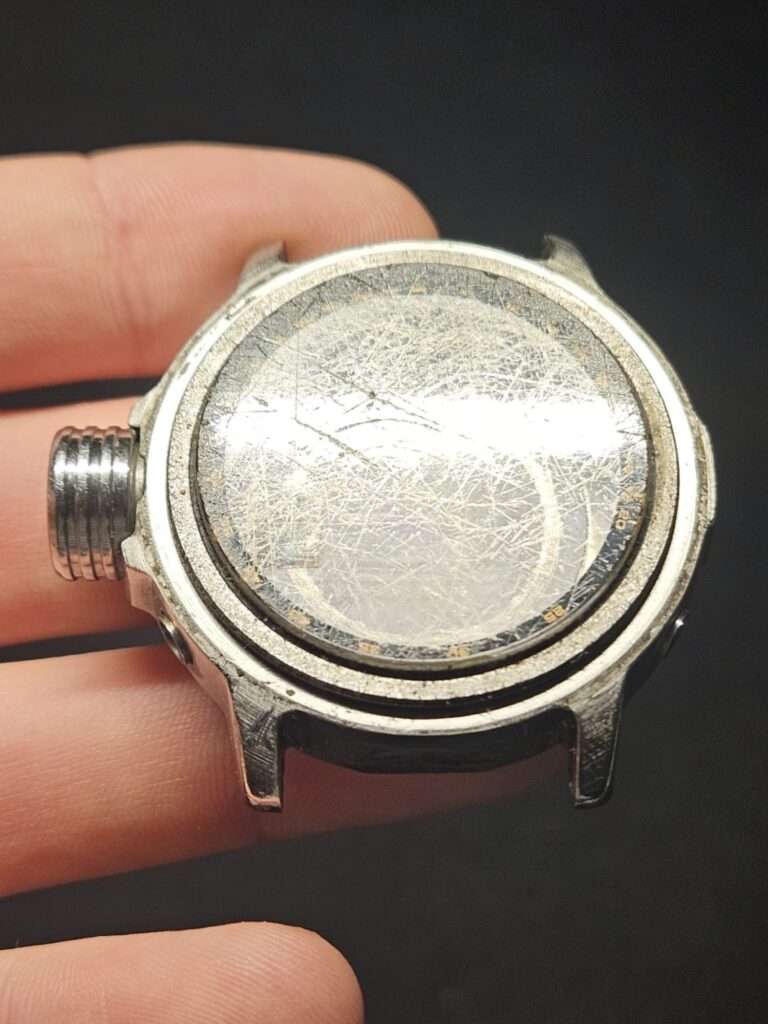
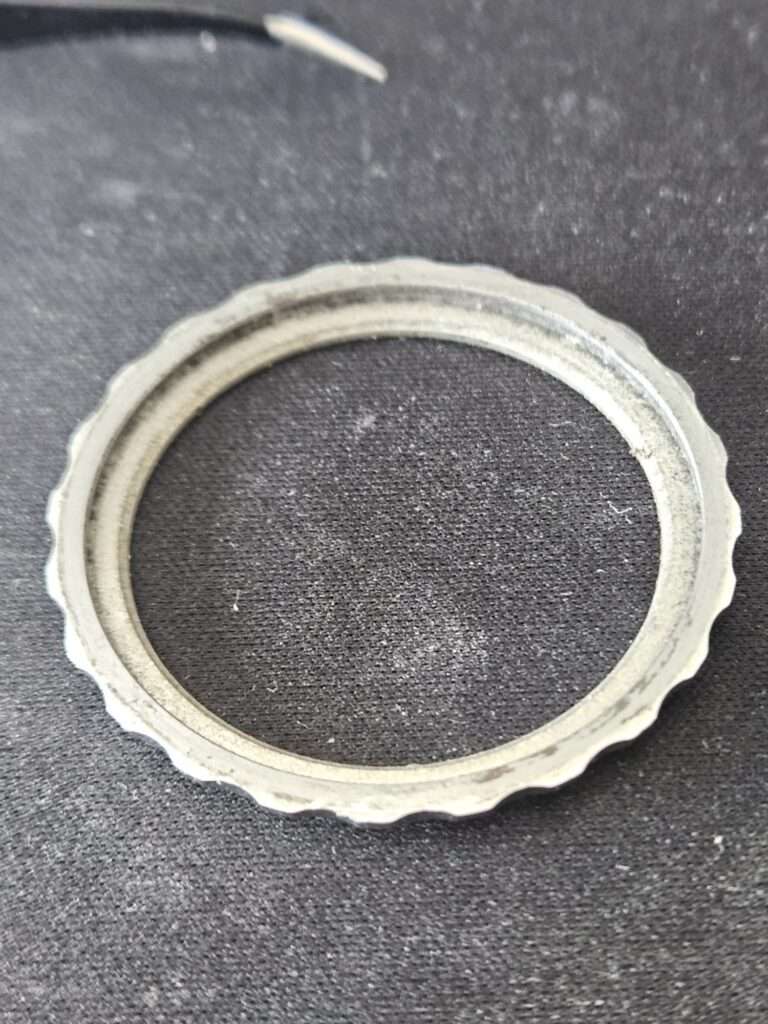
Underneath all the wear, the watch was still structurally solid. Given the kind of use it had clearly seen, that is exactly what you want from a tool watch, and with the twin sensor system for altitude and barometric pressure still intact, I had a good feeling the bones of the watch were fine. It was really a cosmetic and mechanical cleanup job waiting to happen.
Casio ALT-7000 – Restoration Process
Step 1: Diagnosing the Glass
My original plan was to remove the bezel, pull the damaged mineral glass, and swap in a replacement cut to the right dimensions. That is usually the fastest way to deal with a heavily scratched crystal.
Once I had access to the glass, the plan changed. It turned out the scale markings were printed directly on the underside of the glass itself, so a straight swap was out of the question, any generic replacement would have come without those markings. I decided to save the original crystal instead and polish the scratches out by hand, which meant a lot more work ahead. 🛠️
Step 2: Removing the Bezel and Sanding the Glass
With the decision made to save the original glass, I removed the bezel to get proper access to the crystal. That gave me a flat, open path to work on without anything in the way.
From there it was a long, patient job of hand sanding, moving the watch face-down across sandpaper to work the glass flat in a single plane. I started at 240 grit, since mineral glass is much harder to work than acrylic and the scratches were deep, then worked up gradually through the grits to around 4,000 to 5,000, taking my time so I would not introduce new marks while removing the old ones.
Step 3: Polishing with Polywatch Mineral Glass
Once the sanding was done, I moved on to Polywatch Mineral Glass, following the process on the packaging: first the repair paste to work out the remaining haze, then the finish paste to bring out the final shine.
The result honestly surprised me. Mineral glass has a reputation for being tough to bring back to a clear finish, but the sanding progression combined with the Polywatch system got it looking close to new. Seeing a mineral crystal come back this clean is not something I get to enjoy often. 💎
Step 4: Case and Bezel Refinishing
The case scratches came off without much trouble using a hand grinder, followed by polishing and finishing with abrasive fleece to bring back a clean satin finish in the correct grain direction.
The bezel was trickier. It has grooves machined into it, and the deeper scratches sat right in that grooved area, so sanding those out completely would have meant grinding into the printed markings. I left the deeper marks alone and only removed the smaller surface scratches, taping the bezel to a flat holder on a rotary tool and working it with abrasive fleece for a clean, round satin finish.
Step 5: Case Back Refinishing
The case back got the same treatment first, scratches ground down by hand grinder. But a flat sand alone was not enough, I wanted to bring back the original centre-satin finish, with its subtle circular grain radiating out from the middle.
To do that, I mounted the case back on a flat holder using double-sided tape, then took a wooden stick wrapped with 600 grit sandpaper, pressed it to the centre while rotating, and slowly worked outward toward the edge. A few deep scratches stayed behind even after this, the kind that would need a laser welder to fully erase, which is not something I have in the workshop.
Step 6: Cleaning Under the Bezel and Lubrication
With the cosmetic work done, I cleaned out everything hiding underneath the bezel, years of grime tend to build up in that gap. Once it was clean, I lubricated the rotating bezel mechanism with professional Molykote DX grease.
That kind of maintenance matters even more on a watch that actually gets used outdoors, so it was worth doing properly and not rushing.
Step 7: Gaskets, Buttons, and Battery
The case back gasket and the button seals were cleaned and re-siliconed to keep the watch properly sealed against moisture, an important step for a tool watch that is meant to be worn in the field.
The buttons were fully disassembled and cleaned individually, since years of use had left them stiff and gritty. I also replaced the battery with a Panasonic 2025, the correct spec for this module, swapping out the old one that had been running since 2016.
Step 8: Ultrasonic Cleaning
For the final clean, I ran all the parts through the ultrasonic cleaner, with one exception. The case itself houses a sensor, so it could not go in the machine.
That piece I cleaned entirely by hand instead, to avoid any risk to the internals. 😄
The Result
The finished ALT-7000 looks like a completely different watch compared to how it arrived. The mineral glass came out about 99% clear of scratches, which still feels hard to believe given the state it was in at the start. The case and case back have their satin finish back in the correct grain direction, the bezel turns smoothly again with fresh lubrication, and the buttons move the way they should.
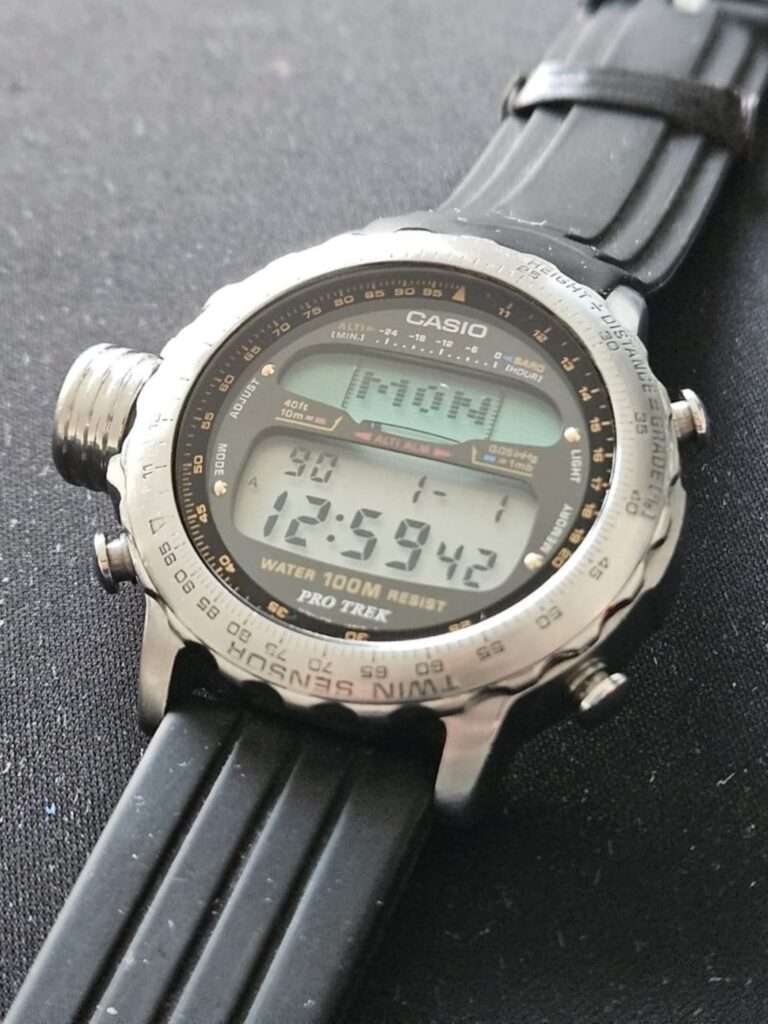
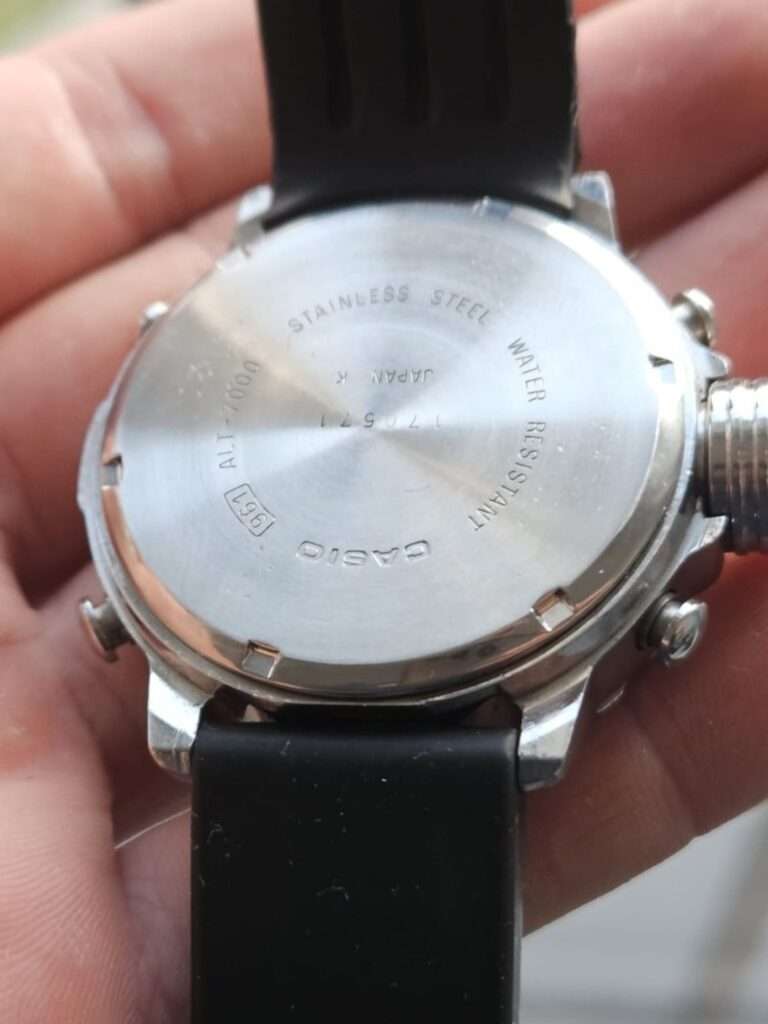
Honestly, a few deep scratches remain on the bezel grooves and on the case back. Removing those completely would have meant grinding into the printed markings on the bezel, or would have needed a laser welder for the case back, something I do not have in the workshop. So those marks stay as a small reminder of the watch’s history rather than a flaw I could not handle.
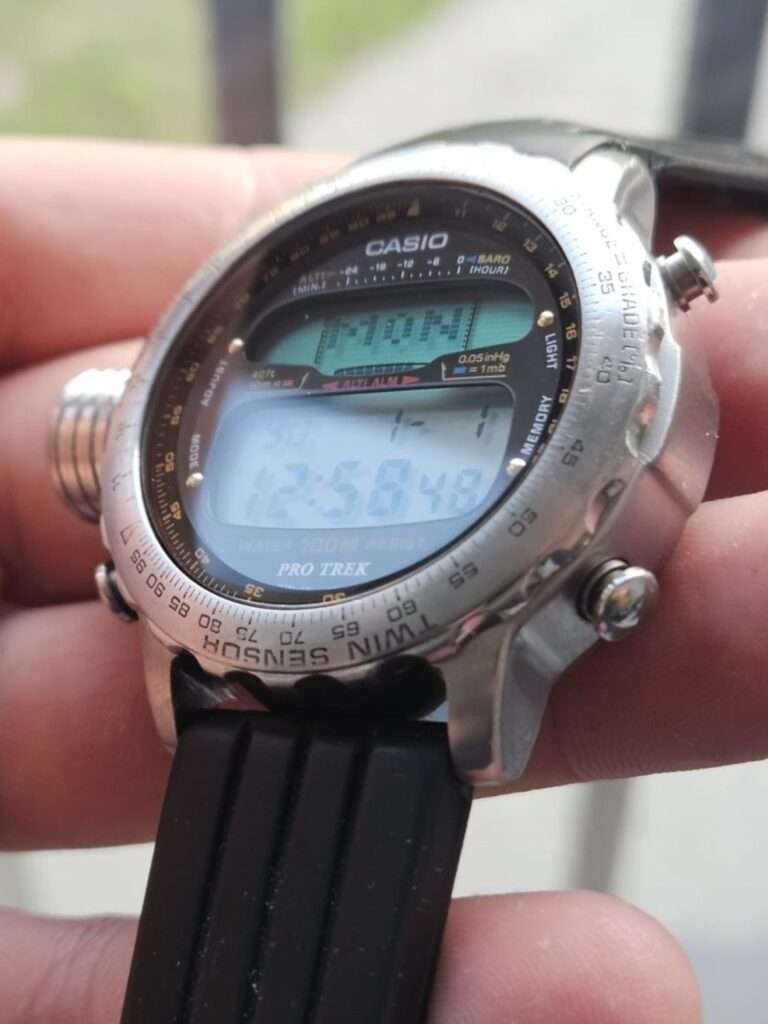
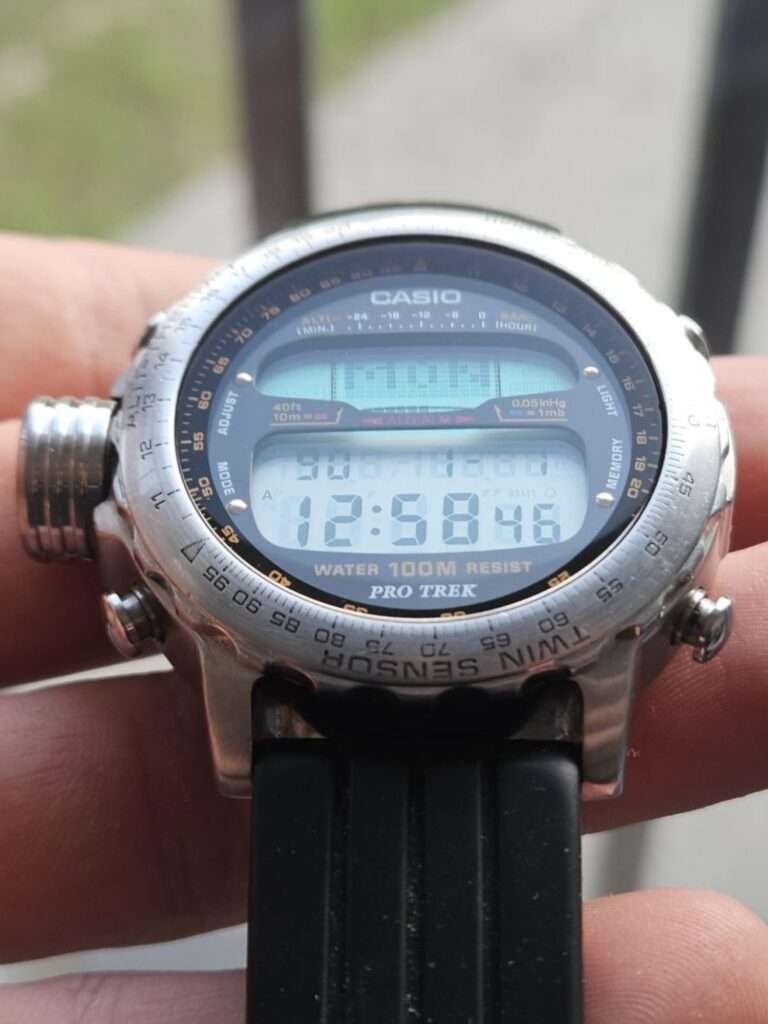
This one turned out to be one of the most satisfying restorations I have done recently, mostly because I did not expect mineral glass to respond this well to hand polishing. Have you ever had a tool watch with damage you assumed was permanent? I would love to hear about it in the comments. ⌚
Want Your Vintage Casio Restored?
This Casio ALT-7000 is one example of the restorations I do. I restore vintage Casio watches for collectors and enthusiasts around the world, everything from straightforward cleanups to more complex repairs like polishing out deep scratches from a mineral glass crystal.
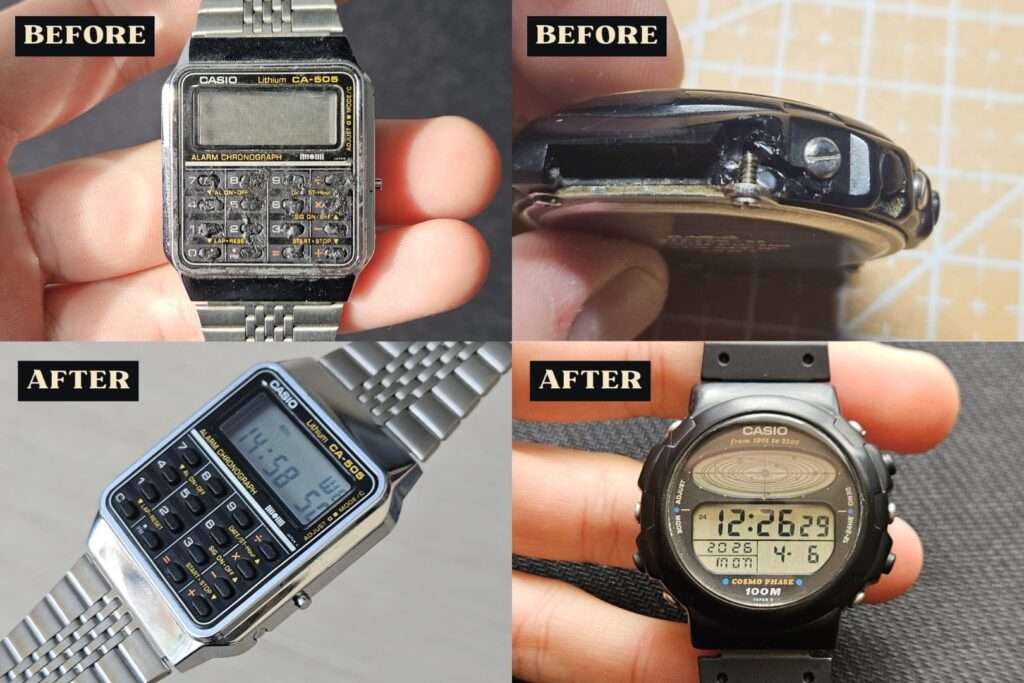
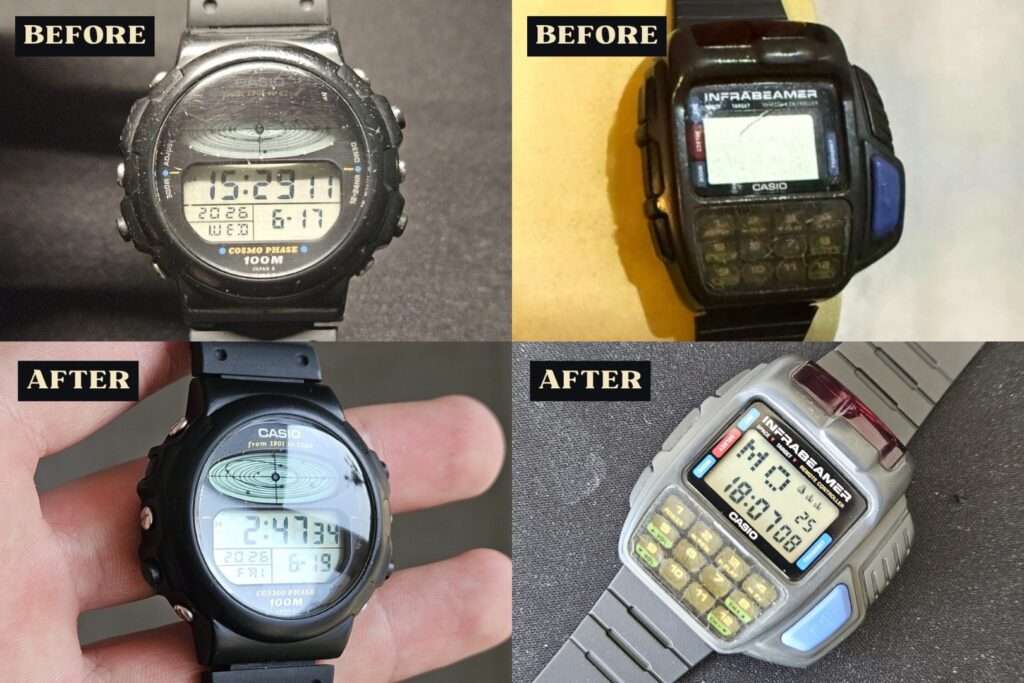
You can see more of my previous projects here: 👉 casiorestore.com/projects-restorations
I work mainly with collectors across Europe and shipping is not a problem. I have already completed restorations for collectors from the UK, Scotland, Sweden, Ireland, Spain, France, and more. That said, sometimes logistics from outside Europe can be worked out too, it just takes a bit of creativity. 😄 Every project is discussed individually, so we always agree on the scope and price before starting. 🛠️
The process is simple:
- Write to me on Instagram: @vintage.casio.restore
- Or send me an email: vintagecasiorestore@gmail.com
- Describe the problem with your watch, send clear photos, and tell me your country.
If your vintage Casio deserves a second life, I will be happy to help. 👍

Daniel is the person behind Vintage Casio Restore, a project dedicated to restoring and documenting vintage Casio digital watches from the 80s and 90s. Based in Poland, he combines technical precision with a passion for retro design, bringing forgotten models back to life and sharing their stories online.Outside the workshop, Daniel works in a digital agency, managing SEO and content strategy for technology clients, blending his professional experience with his love for classic tech and design.
Leave a Reply