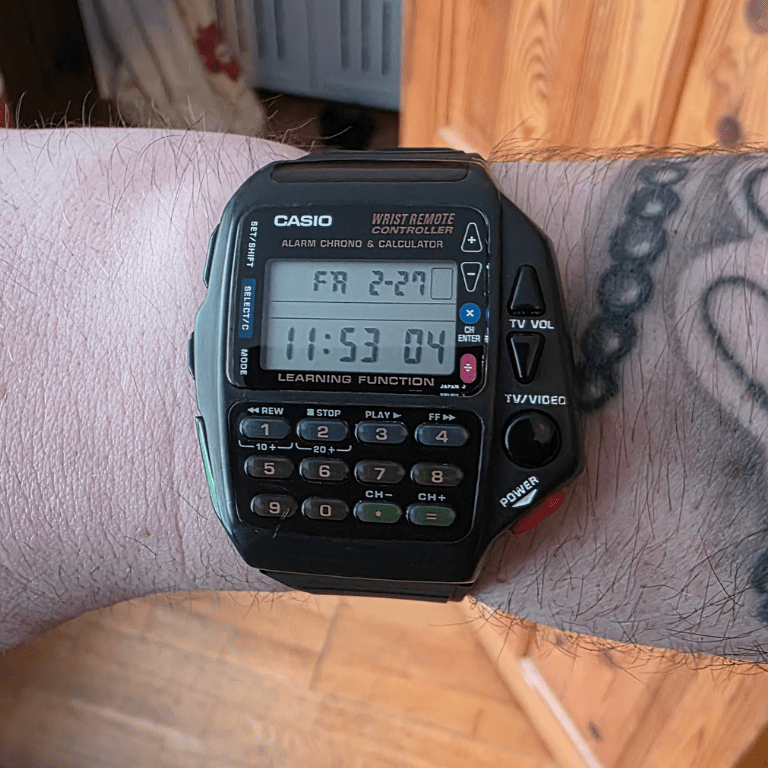
One day I got an email from Craig. He wrote from Scotland about his Casio CMD-30 — a watch he’d had since he was around 10 years old. It had spent the last 20+ years sitting in his loft. At some point he’d opened it up himself, and that’s when he spotted the problem: a small component had fallen off the circuit board.
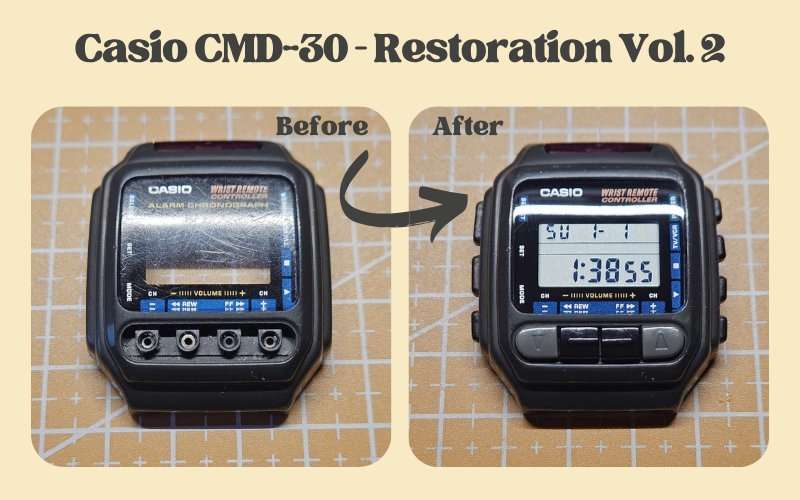
He wasn’t sure if anything else was broken. He just wanted to know if I could bring it back.
The scope he asked for was clear: fix the module, polish the crystal, clean everything up, and re-silicone the seals. No sanding the case. No cosmetic overhaul. He liked the worn look — and honestly, I respect that. Not every restoration needs to erase 30 years of history.
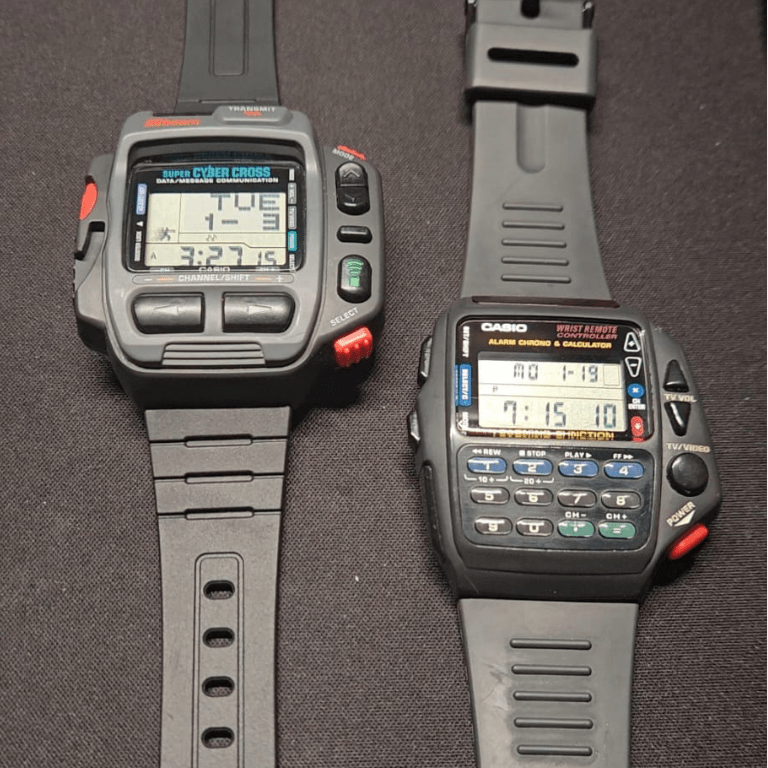
If you’ve seen the CMD-30 on this blog before, you might remember the first one. That restoration was a different story — mostly cosmetic work on a mechanically sound watch. You can read it here:
This time, the challenge was different. The watch was dead. And the reason was one tiny component missing from the PCB.
For a full overview of the model, specs, and history, check the CMD-30 model page.
Casio CMD-30 – what did the watch look like when it arrived?
The CMD-30 arrived from Scotland in a small Miffy tin box. 🐰 Not your typical watch shipping method, but honestly — it worked, and it made me smile when I opened it.
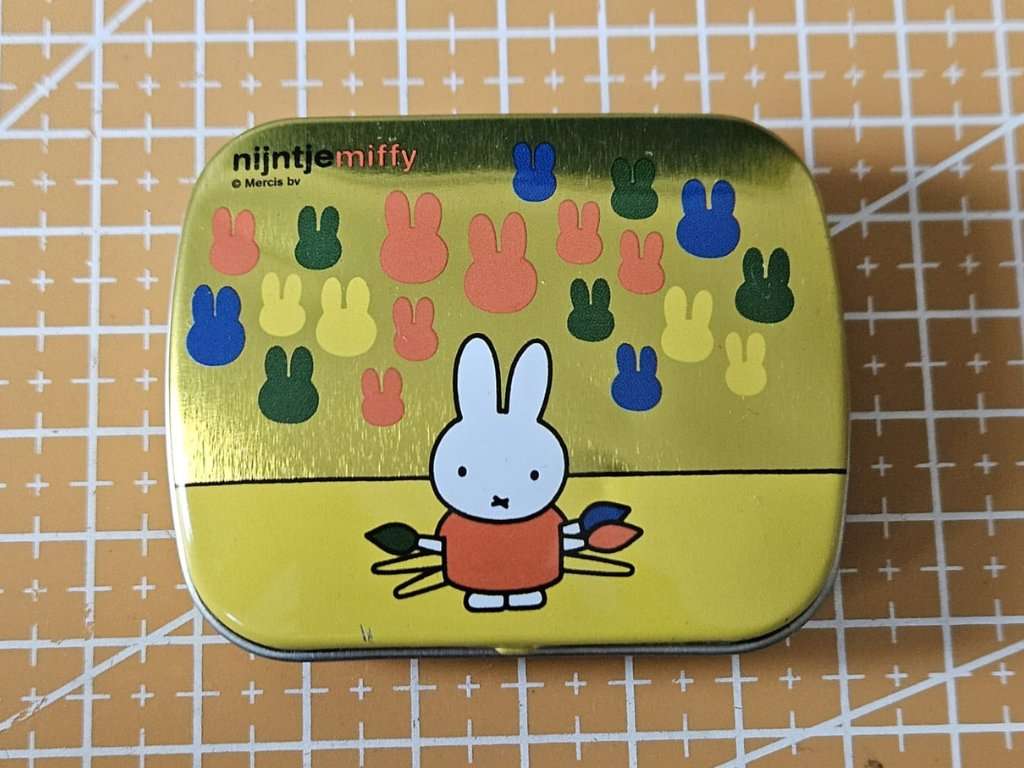
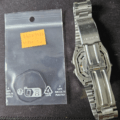
Inside, Craig had sent the watch already disassembled. He’d opened it himself before sending — that’s how he found the problem in the first place. So instead of a complete watch landing on my workbench, I got a disassembled module and a case waiting to be dealt with.
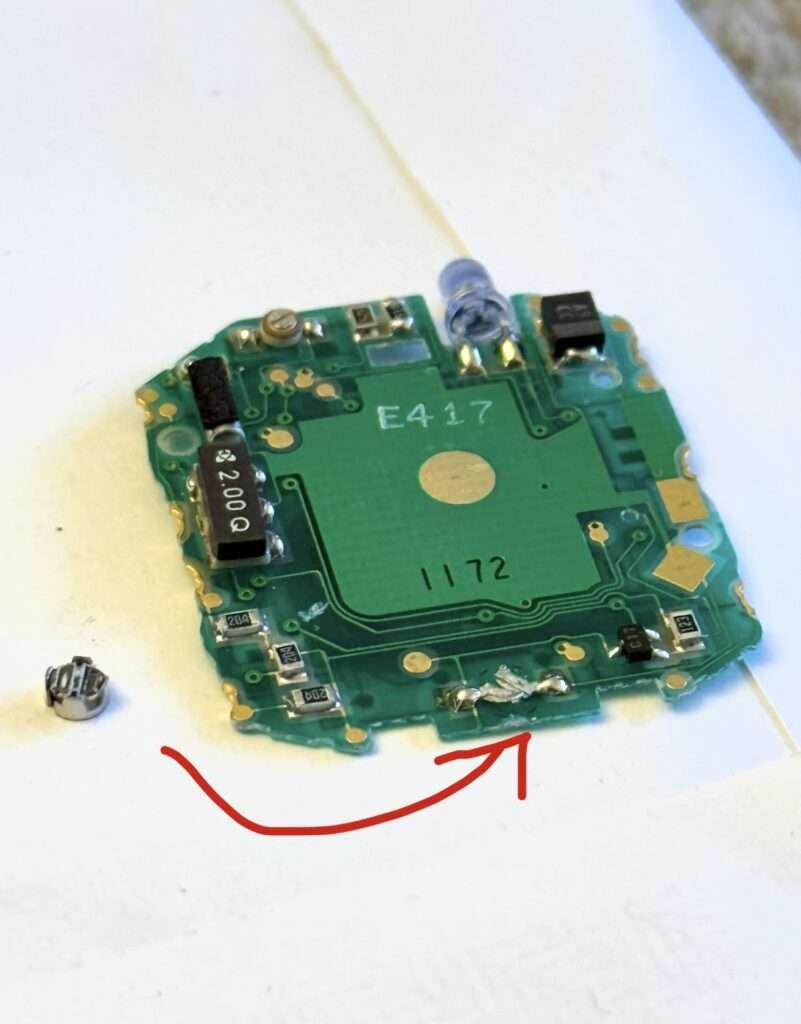
The first thing I checked was the PCB. And there it was — a coil (SMD inductor) missing from the board. A tiny component, but without it the watch was completely dead. No display, no functions, nothing.
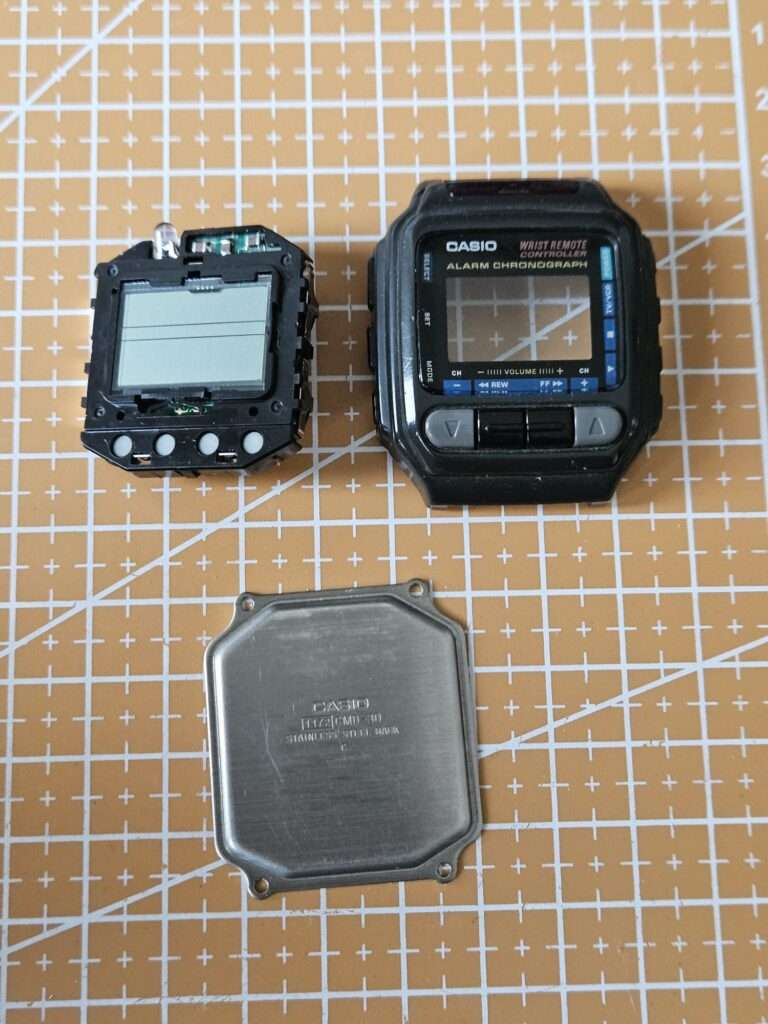
The crystal was scratched. Not dramatically, but visibly — the kind of wear you’d expect from a watch that was actually used and lived in. The acrylic had done its job for decades and it showed.
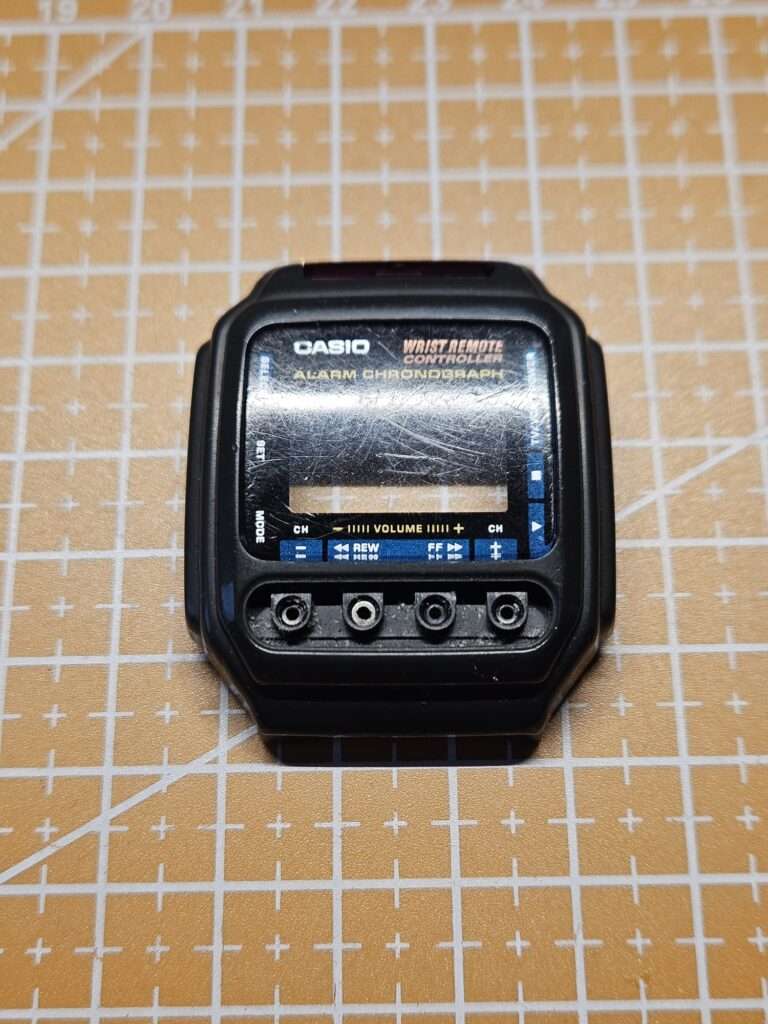
The case and buttons were worn too. Scuffs, marks, the usual signs of a watch that had a real life before ending up in a loft. Craig was clear about this part — he wanted to keep that look. No sanding, no refinishing. Just clean it up and leave the patina alone.
Mechanically, I couldn’t confirm anything beyond the missing coil until I fixed the board and powered it on. That was the unknown. 😅
The restoration process
Step 1: Finding the part
Before I could do anything, I needed the coil. Ordering a generic SMD inductor online is possible, but matching the exact spec on a vintage Casio board is tricky. I had a better option.
In my parts collection I had a Casio JP-200W sitting on the shelf. I’d bought it a while back for its LCD. The PCB was fine, but the case was too damaged to use, so the whole thing stayed as a donor. That day, the JP-200W finally earned its place. 🛠️
I desoldered the coil from the JP-200W board and had exactly what I needed.
Step 2: PCB repair
With the part ready, I got the CMD-30 module on the workbench. I used a hot air soldering station for the repair. The right tool for SMD work on vintage Casio modules. Trying to do this with a regular iron on a component this small is asking for trouble.
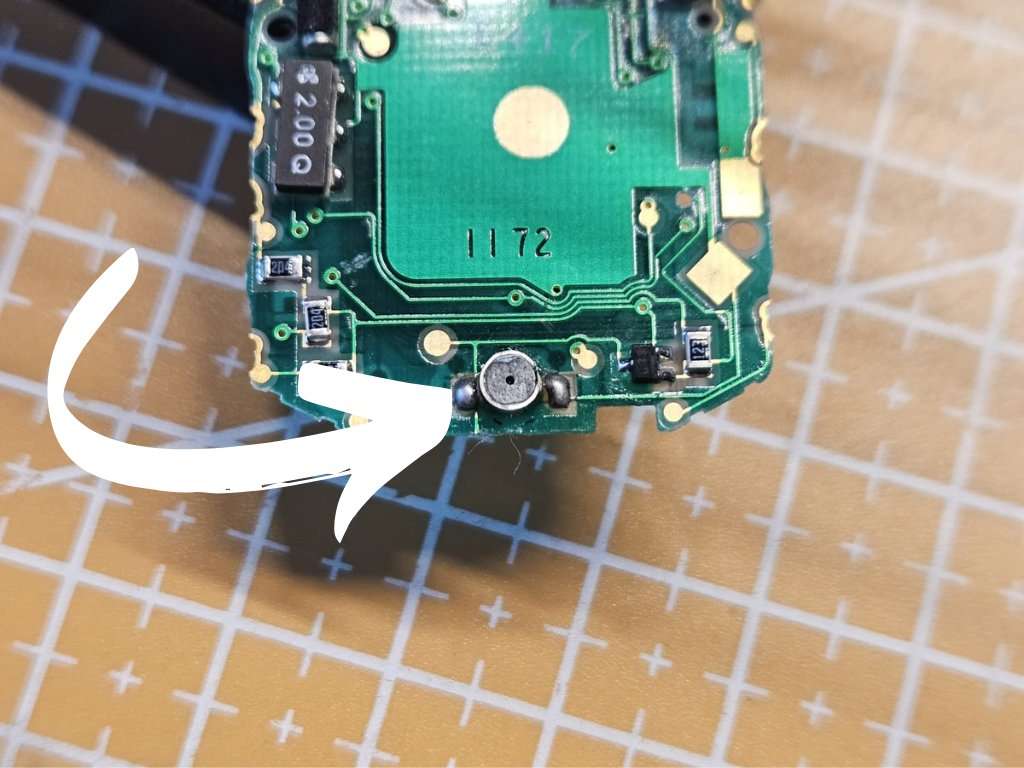
I placed the coil on the correct pads, applied heat, and soldered it into place. Clean job.
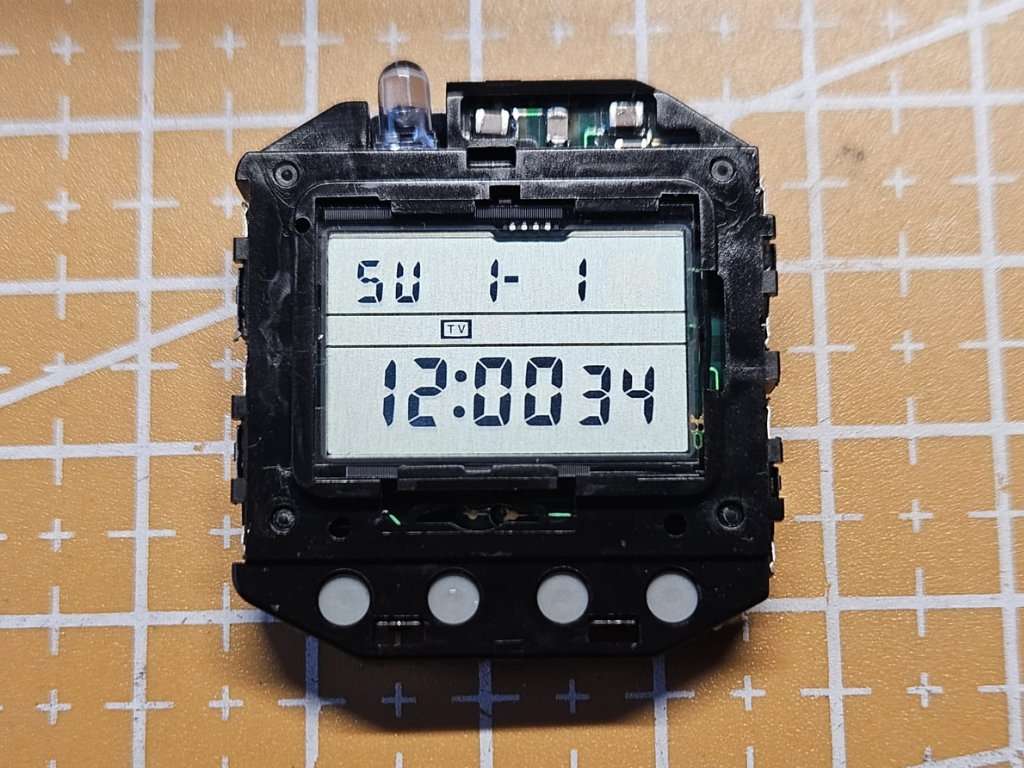
Next came the moment of truth. I assembled the module and powered it on. The display lit up. Everything worked — buttons, sound, all functions. The coil was the only problem. 👍
Step 3: Crystal polishing
The acrylic crystal had scratches from years of use. Nothing catastrophic, but visible enough to notice. I started by filling the deeper scratches with small drops of super glue, applied with a thin pin. Once set, I wet sanded through the grits: 1000 → 7000. After that, I finished with Polywatch paste for the final polish.
The crystal came out clear. Like new.
Step 4: Cleaning and seal maintenance
With the crystal done, I moved to the case. Craig wanted the worn look preserved, so no sanding here. Just a thorough clean to remove the dirt and grime that had built up over the years.
After that, I re-siliconed the button seals and the rear gasket. Standard step on any CMD-family restoration. Fresh silicone keeps the buttons feeling right and gives the watch at least basic protection against moisture.
Then I reassembled everything.
The final result
The CMD-30 came out great. Really great, especially considering it arrived dead and in pieces inside a Miffy tin.
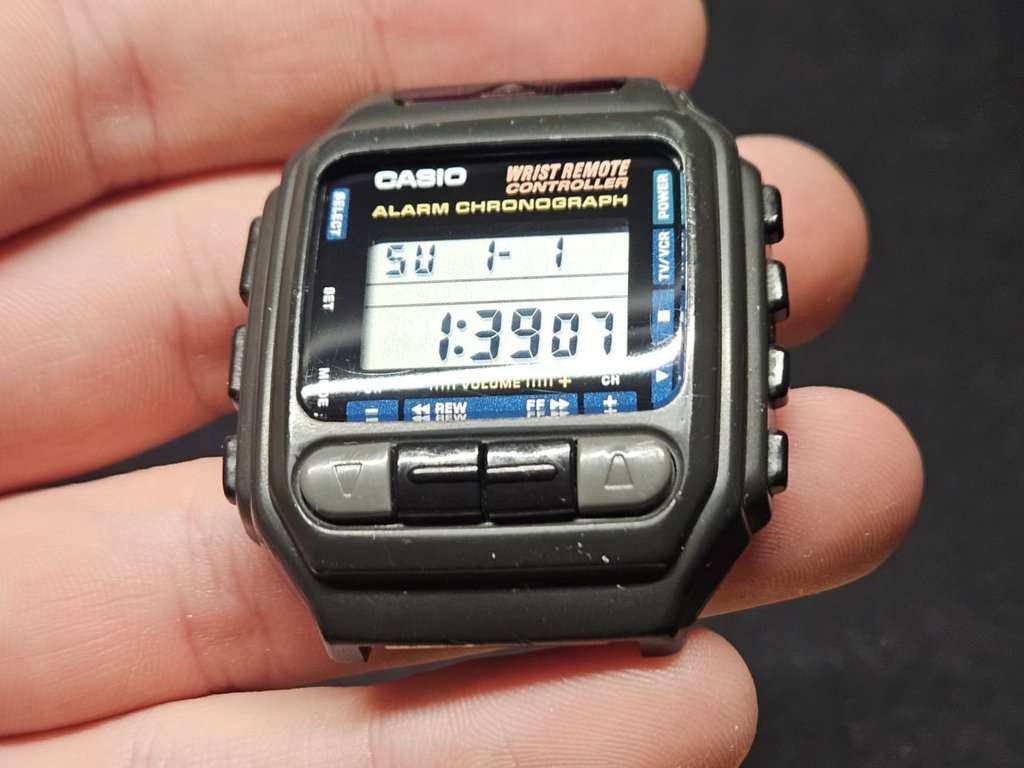
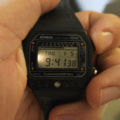
The module is fully working. I tested every function — display, buttons, sound, IR remote signal. All good. The crystal is clear, no trace of the scratches that were there before. The case still carries its 30 years of history — worn, lived-in, exactly as Craig wanted it.
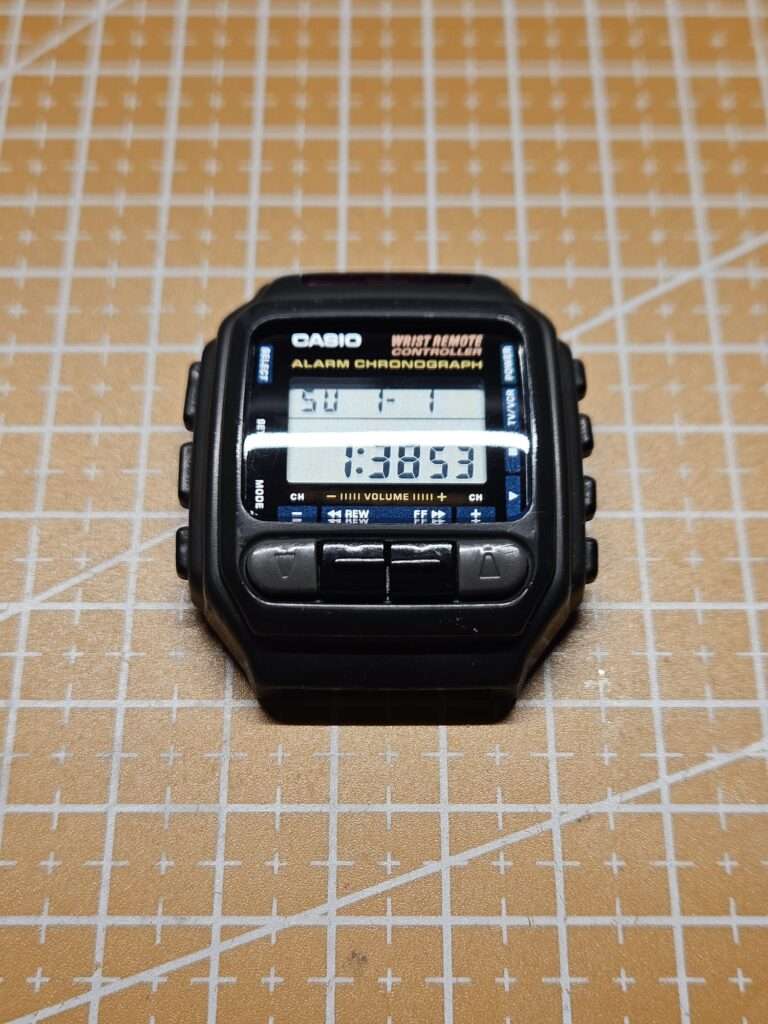
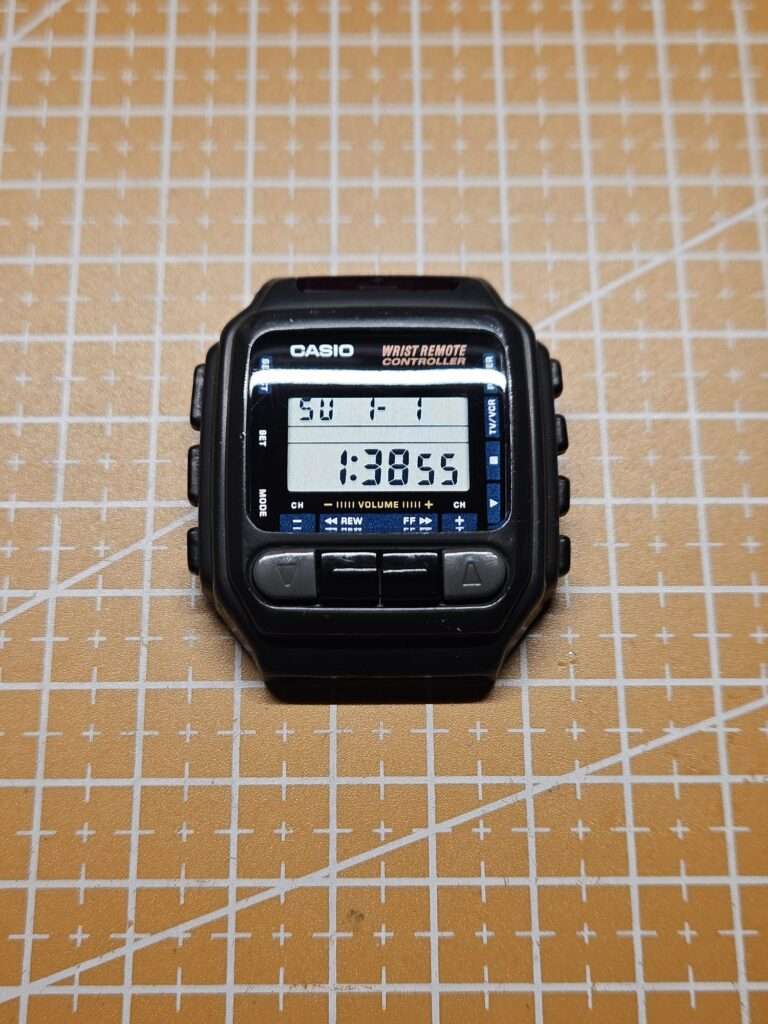
There’s something satisfying about a restoration like this one. No dramatic before/after on the case. No aggressive refinishing. Just a watch that works again, with its patina intact. It still looks vintage. It just works like it should.
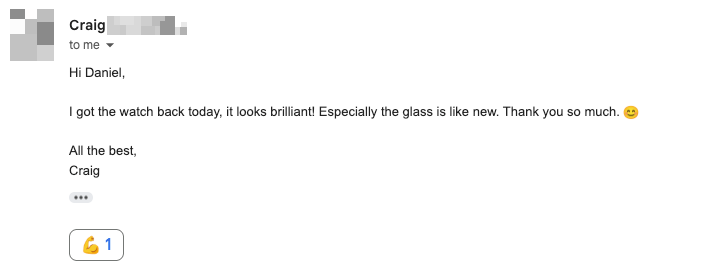
Craig confirmed the watch arrived safely and was happy with the result. That’s always the best part. ⌚
Want your vintage Casio restored?
This CMD-30 is one example of the restorations I do. I restore vintage Casio watches for collectors around the world. You can see more of my previous projects here: 👉 casiorestore.com/projects-restorations


I work internationally and shipping is not a problem. I have already completed restorations for collectors from the UK, Scotland, Sweden, Ireland, Spain, France, and more. Every project is discussed individually, so we always agree on the scope and price before starting. 🛠️
The process is simple:
- Write to me on Instagram: @vintage.casio.restore
- Or send me an email: vintagecasiorestore@gmail.com
- Describe the problem with your watch
- Send clear photos
- Tell me your country
If your vintage Casio deserves a second life, I will be happy to help. 👍

Daniel is the person behind Vintage Casio Restore, a project dedicated to restoring and documenting vintage Casio digital watches from the 80s and 90s. Based in Poland, he combines technical precision with a passion for retro design, bringing forgotten models back to life and sharing their stories online.Outside the workshop, Daniel works in a digital agency, managing SEO and content strategy for technology clients, blending his professional experience with his love for classic tech and design.

Leave a Reply